

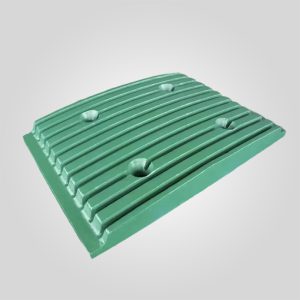
Jaw Crusher Side Liners Metallurgical Optimization for abrasion Resistance and Structural Frame Protection
Extended Service Life: 40% longer than standard plates due to impact-resistant manganese steel
Overload Protection: Sacrificial design prevents crusher frame damage
Precision Fitment: ±0.5mm dimensional tolerance ensures perfect frame alignment
Corrosion Resistance: Special coating minimizes rust degradation
库存 182 件
PRODUCT
Description
Jaw Crusher Cheek Plates, Metallurgical Engineering, Wear Kinetics, and Frame Protection Strategies
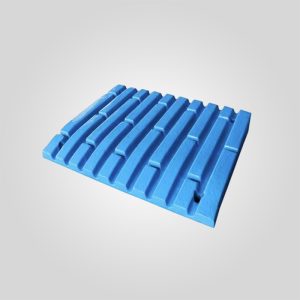
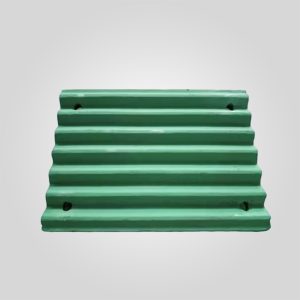
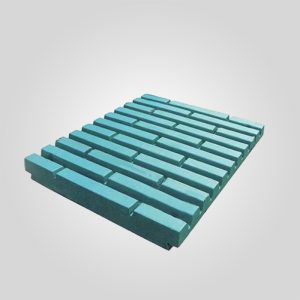
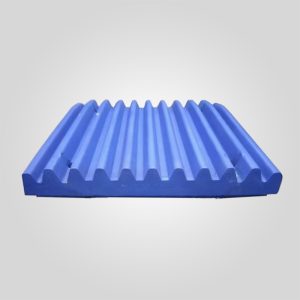
In the hierarchy of jaw crusher maintenance, side liner plates—often referred to as cheek plates—are frequently undervalued compared to the primary jaw dies. However, their structural role is critical: they serve as the sacrificial barrier protecting the crusher’s main frame side walls from catastrophic abrasion and impact deformation. A failure in the cheek plate system does not merely require a part replacement; it exposes the structural ASTM A514 steel of the crusher frame to direct material flow. Once the side frame is compromised by gouging or “wash-out” erosion, on-site weld repairs often lead to thermal stress concentrations, requiring expensive stress-relief annealing or total frame replacement costing upwards of $80,000.
This technical analysis evaluates cheek plates from a strict materials engineering perspective. We will dissect the work-hardening mechanics of manganese alloys, analyze the dimensional tolerances required to prevent fines compaction, and provide actionable data to optimize service life in high-silica (>15% SiO2) applications.
Metallurgical Composition and Work Hardening Mechanics
The performance of a cheek plate is defined by its ability to balance ductility (to absorb impact) and surface hardness (to resist sliding abrasion). We utilize three primary metallurgical grades, each engineered for specific crushing environments.
1. Mn18Cr2 (ASTM A128 Grade C) The Industry Standard
Unlike legacy Mn13Cr2, the Mn18Cr2 alloy increases manganese content to 17-19% and Carbon to 1.1-1.5%. This shift stabilizes the austenitic microstructure. Under impact loads exceeding 30 MPa, the surface latice structure transforms from austenite to martensite.
Technical Behavior: The component installs with a base hardness of approx. 220 HBW. Under operation, the surface work-hardens to 500-550 HBW (approx. 52 HRC), while the core remains ductile (200 HBW) to arrest crack propagation.
Application: Primary crushing of basalt, granite, and river stone with compression strengths up to 320 MPa.
2. Mn22Cr2 (Super-High Manganese) For Extreme Impact
With Manganese content pushed to 21-23%, this alloy exhibits an accelerated work-hardening rate. It is designed for applications where standard Mn18 plates deform or “mushroom” before they can sufficiently harden.
Technical Behavior: Achieves surface hardness >55 HRC under heavy impact.
Application: Hard rock mining (Iron ore, Copper ore) and large feed sizes (>600mm) where impact energy is high.
3. High Chromium Alloy (ASTM A532) For Pure Abrasion
For secondary applications or recycling where impact is low but abrasion is extreme, manganese steels fail to work-harden and wear prematurely. High Chrome iron utilizes carbide precipitation to achieve initial hardness.
Technical Behavior: Through-hardness of >60 HRC immediately upon installation. Brittle nature requires zero-impact environments.
Application: Asphalt recycling, highly abrasive silica sand processing.
Detailed Material Specifications
| Material Grade | Chemical Composition (Weight %) | Initial Hardness (HBW) | Work Hardened Potential (HRC) | Charpy Impact (J @ -20°C) |
|---|---|---|---|---|
| Mn13Cr2 | C:1.0-1.3, Mn:11-14, Cr:1.5-2.0 | 190-210 | 46-48 | ≥ 80J |
| Mn18Cr2 | C:1.1-1.5, Mn:17-19, Cr:1.8-2.5 | 210-230 | 50-55 | ≥ 100J |
| Mn22Cr2 | C:1.1-1.4, Mn:21-23, Cr:1.8-2.5 | 220-240 | 55-58 | ≥ 120J |
| High Chrome | C:2.0-3.3, Cr:23-27, Mo:0.5-1.5 | 600+ | 60-64 (Constant) | < 10J (Brittle) |
Manufacturing Process and Dimensional Precision
The lifespan of a cheek plate is not solely dictated by chemistry; casting integrity and dimensional tolerance are equally decisive. Loose fitment allows “fines packing”—the accumulation of dust between the liner and the frame. This material packing creates localized pressure points that can bulge the frame steel or snap the liner bolts under load.
- Foundry Method We utilize V-Process (Vacuum Sealed Molding) or Resin Sand Casting rather than green sand. This ensures surface finishes of Ra 12.5 or better and minimizes casting defects like sand inclusions.
- Solution Annealing Castings are heated to 1050°C-1100°C and held for 1 hour per inch of thickness to dissolve carbides into the austenitic matrix.
- Water Quenching Rapid cooling prevents carbide precipitation at grain boundaries, ensuring toughness. Improper quenching leads to brittle plates that crack within 100 hours.
- Machining Tolerances: Bolt holes and mating surfaces are CNC machined to tolerances of ±0.5mm. This precision ensures that upper and lower cheek plates align perfectly without creating “steps” that accelerate localized wear.
Wear Life Analysis vs. Mineral Hardness
Service life forecasting relies on the Bond Work Index (Wi) and Mohs hardness of the feed material. The following data is derived from field logs in 10-hour/day operations.
| Mineral Type | Mohs Hardness | Material Grade Selection | Projected Lifespan | Wear Mechanism |
|---|---|---|---|---|
| Limestone / Dolomite | 3 – 4 | Mn13Cr2 | 12 – 16 Months | Low Stress Abrasion |
| River Gravel / Basalt | 5 – 6 | Mn18Cr2 | 8 – 12 Months | Impact & Gouging |
| Granite (High Silica) | 6 – 7 | Mn18Cr2 / Mn22Cr2 | 4 – 7 Months | High Stress Grinding |
| Quartzite / Iron Ore | 7+ | Mn22Cr2 | 3 – 5 Months | Micro-cracking & Spalling |
OEM Model Compatibility Engineering
Our casting patterns are reverse-engineered from OEM geometric data to ensure bolt-hole alignment and wedge fitment. We do not use “universal” molds; specific patterns are maintained for distinct generations of crushers (e.g., distinguishing between Metso C100 and C100N).
Metso® Nordberg C-Series
- Legacy: C80, C100, C110, C125, C140
- New Gen: C106, C116, C120, C130, C150, C160
- Configuration: One-piece and Two-piece (Upper/Lower) designs available.
Sandvik® / Extec
- CJ Series: CJ409, CJ411, CJ412, CJ612, CJ613
- JM Series: JM806, JM907, JM1108, JM1208
- Features: Optimized thickness for heavy-duty jaw boxes.
Terex® Finlay & Pegson
- Models: J-1175, J-1170, J-1480, XA400, XR400
- Mobile Units: Weight-optimized designs for track-mounted crushers.
McCloskey® International
- J-Series: J40, J44, J45, J50, J55
- Upgrade: Available in Mn22 for extended service intervals.
Total Cost of Ownership (TCO) & Value Analysis
Procuring aftermarket wear parts often traps operators in a cycle of “false economy.” A generic cheek plate priced 20% lower than an engineered Mn18Cr2 plate may seem attractive. However, consider the metallurgy: generic foundries often skip the precise heat treatment cycle to save energy costs, resulting in a plate with undissolved carbides.
The Failure Cascade:
1. Brittle plate cracks under impact in Week 3.
2. Unplanned shutdown requires 8 hours of cooling and 6 hours of labor ($3,000+ cost).
3. Lost production of 4,000 tons of aggregate (approx. $40,000 revenue).
4. Risk of frame damage if the crack goes unnoticed.
Our engineered plates are tested to guarantee microstructure homogeneity, ensuring predictable wear rates that align with your scheduled maintenance intervals (SMI).
Engineer’s Field Advice: Installation & Maintenance
The “Bedding” Imperative
Never install cheek plates directly metal-to-metal against a worn frame. Over time, the crusher frame develops minor undulations. I strongly recommend applying a layer of heavy-duty silicon sealant or a thin rubber backing sheet between the frame and the cheek plate during installation. This fills the voids, prevents “chatter” vibration, and most importantly, stops ultra-fine silica dust from packing behind the plate. Packed fines act like a hydraulic ram, bulging the plate outward and snapping the retention bolts.
Rotation Strategy
In a 600 TPH granite quarry, we observed that the lower cheek plates were wearing 40% faster than the uppers due to higher material density at the discharge zone. However, many operators simply scrap the set. We implemented a rotation protocol: for crushers with symmetrical upper/lower designs (like certain C-Series models), rotate the plates top-to-bottom at 50% wear life. This simple procedural change extended the effective service life of the set by 2.5 months, saving the client $18,000 annually in parts procurement.
Quality Assurance Protocols
Our manufacturing facility operates under ISO 9001:2015 standards with a rigorous 4-step validation process for every batch:
- Spectral Analysis: Verification of C, Mn, Cr, Si, and P/S levels (Phosphorus kept < 0.04% to prevent cold shortness).
- Microstructure Check: 500x magnification to ensure >95% austenitic structure and proper carbide solution.
- Dimensional Mapping: Laser scanning of mounting points to ensure deviation does not exceed ±0.5mm.
- Dye Penetrant Inspection (DPI): Performed on high-stress areas (bolt holes) to detect surface micro-fractures.
By controlling the chemistry, the heat treatment, and the geometry, we transform the cheek plate from a simple consumable into a precision-engineered shield for your capital asset.
“Authoritative Engineering Data: All critical metallurgical specifications and dimensional tolerances (e.g., ±0.05mm) are strictly governed by the master English documentation. While localized versions are provided for operational reference, the English original remains the sole binding authority for quality inspection and technical compliance.”
 English
 French
 German
 Spanish
 Russian
 Arabic
 Portuguese
 Turkish