

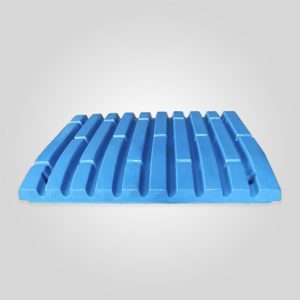
Sandvik CJ409 Stationary Jaw Plate | 400.0418-001 JM907 Spares | Mn18Cr2
- Materials: Mn13, Mn18, Mn13Cr2, Mn18Cr2, Chrome-Moly Alloy
- Hardness: HB190-250 (customizable up to HB400)
- Thickness: 50-150mm (liner plates), 70-200mm (jaw plates)
- Compatibility: All major crusher brands and models
库存 182 件
PRODUCT
Description
Technical Specifications: Sandvik CJ409 Stationary Jaw Plate (400.0418-001)
| Specification Attribute | Engineering Standard |
|---|---|
| Part Name | Stationary Jaw Plate (Fixed Jaw Die) |
| OEM Part Number | 400.0418-001 |
| Profile Code | C M1 (Coarse Profile, Type 1) |
| Compatible Equipment | Sandvik CJ409 / Extec C-10 / JM907 |
| Material Grade | Mn18Cr2 (ASTM A128 Grade C) |
| Net Weight | 794.85 kg |
| Heat Treatment | Water Toughening (Solution Annealing) |
| Hardness (Work Hardened) | Up to 550 HB |
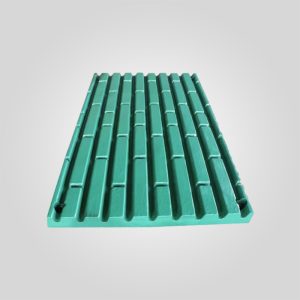
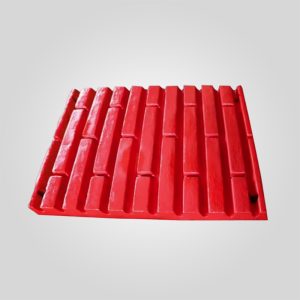
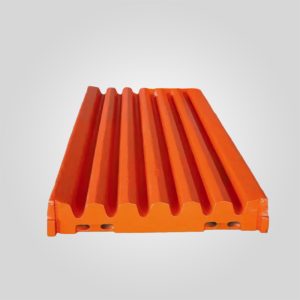
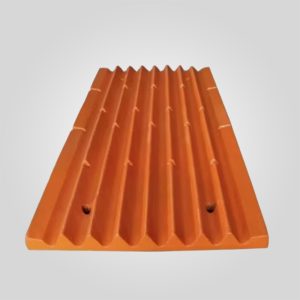
The Stationary Jaw Plate (400.0418-001) is the anvil against which the Sandvik CJ409 crushes rock.
As specialized crusher part suppliers, we manufacture this 795kg casting to withstand the punishing cyclic loads of primary crushing.
Unlike standard aftermarket parts, our Spare parts feature the specific “C M1” coarse profile, optimized for maximum tonnage in granite and basalt applications.
Core Advantages: Metallurgy & Profile Design
For the CJ409 / JM907, material integrity is paramount. Our engineering approach ensures reliability:
- Mn18Cr2 Metallurgy: We strictly adhere to ASTM A128 Grade C standards.
By alloying 18% Manganese with 2% Chromium, we create a plate that is tough enough to resist cracking under impact, yet rapidly work-hardens on the surface to resist abrasive wear from silica-rich ores. - Coarse (C) Profile: The “C M1” profile features wider teeth and deeper valleys.
This geometry allows for better material flow and higher throughput compared to fine corrugated plates, making it ideal for primary crushing stages where capacity is the priority. - Precision Machined Back: The rear face of our Wear parts is CNC machined to a flat tolerance of 0.1mm.
This ensures full contact with the crusher’s front frame, eliminating the “air gaps” that cause plates to crack due to bending stress.
Performance Comparison: Why Profile Matters
Choosing the right tooth profile for your Crusher spares affects your bottom line.
See how the “C” profile compares:
| Performance Metric | Standard Corrugated | Our Coarse (C M1) Profile |
|---|---|---|
| Throughput Capacity | Medium | High (+15% flow rate) |
| Wear Life in Abrasive Rock | Standard | Extended (More wearable metal) |
| Product Shape | Cubical | Slightly Flakier (Trade-off for speed) |
Field Diagnosis: Inspecting the Stationary Jaw
The Stationary Jaw is static, but it tells a story about your crushing chamber.
Monitor it for:
- The “Clicking” Sound: If you hear a metallic clicking or knocking sound from the front of the crusher under load, the Stationary Jaw is loose.
This means the wedges have backed off, or the jaw plate has stretched. Tighten it immediately to save the frame. - Scalloped Wear: If the plate wears deeply in horizontal bands, it indicates the rock is slipping rather than being nipped.
The profile may be too flat (worn out) or the nip angle is too large. - Bottom Wear Rate: The bottom 30% of the Stationary Jaw does 80% of the work.
Once the teeth are worn flat in this zone, crushing efficiency drops. Rotate the plate (if reversible) or replace it.
Expert Tip: Installation & Protection
Save Your Front Frame: The Sandvik CJ409 front frame is expensive.
The Stationary Jaw Plate (400.0418-001) protects it.
Critical Step: When installing this plate, ensure the Cheek Plates (Side Liners) are also in good condition.
Worn cheek plates create a gap where rocks can wedge between the jaw plate and the side frame, preventing the jaw plate from seating flat.
Torque Check: After the first 4 hours of operation with a new plate, re-torque the upper fixing wedges.
Manganese steel flows slightly as it settles, and the bolts will loosen.
Frequently Asked Questions (FAQ)
Q1: Is this plate reversible?
A1: Yes. The 400.0418-001 Stationary Jaw Plate is designed with a symmetrical profile.
When the bottom section becomes worn, you can rotate it 180 degrees to utilize the unworn top section, effectively doubling the service life.
Q2: What is the difference between CJ409 and JM907?
A2: They are essentially the same machine.
JM907 is the older legacy model designation, while CJ409 is the current Sandvik nomenclature.
This jaw plate (400.0418-001) fits both generations perfectly.
Q3: Can I use Mn22Cr2 for this plate?
A3: Mn18Cr2 is the standard recommendation for 90% of applications.
Mn22Cr2 is harder but more brittle. Unless you are crushing extremely abrasive material like quartzite or silica glass, Mn18Cr2 offers the best protection against breakage from tramp iron.
Workshops And Warehouses
“Authoritative Engineering Data: All critical metallurgical specifications and dimensional tolerances (e.g., ±0.05mm) are strictly governed by the master English documentation. While localized versions are provided for operational reference, the English original remains the sole binding authority for quality inspection and technical compliance.”
 English
 French
 German
 Spanish
 Russian
 Arabic
 Portuguese
 Turkish