
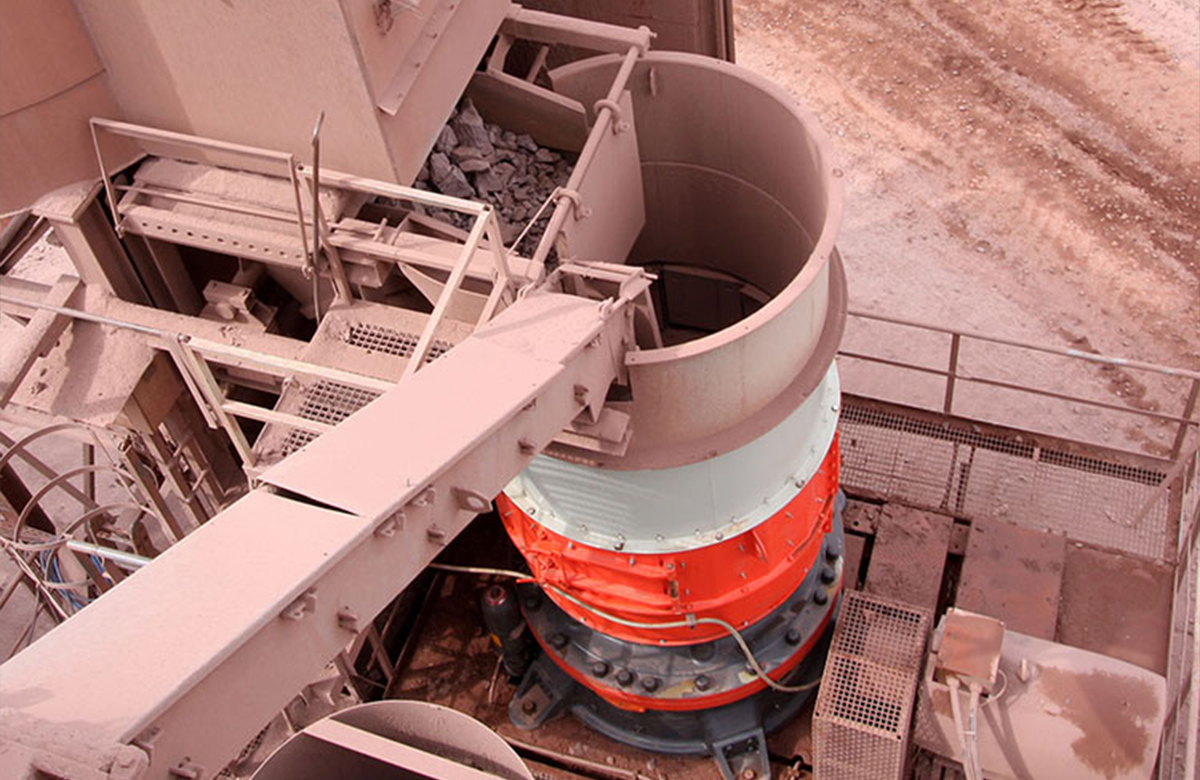
A limestone quarry in Quang Ninh Province recorded a catastrophic bushing failure after only 2,840 operating hours—68% below the expected 10,000-hour service life. Post-mortem metallurgical analysis revealed two critical defects: lead segregation exceeding 3% variance across the bushing wall (ASTM B505 permits ≤1.5%), and a surface finish of Ra 3.2 μm that prevented stable hydrodynamic wedge formation. The root cause traced back to a sand-cast bushing supplied by an unverified vendor, resulting in $22,000 in lost production during the 72-hour emergency replacement.
This incident underscores why procurement teams must enforce strict material specifications when sourcing from any cone crusher spare parts supplier. For Metso HP400 eccentric bushings operating under compressive loads of 400–480 MPa, the margin for material deviation is zero.
Centrifugal Casting vs. Sand Casting: Microstructure Impact on Bearing Performance
The operational reliability of a bronze bushing depends on its grain structure density. While some crusher parts suppliers offer sand-cast components at 30% lower cost, the inherent porosity (1%–3% void volume) creates micro-voids that disrupt the oil film required for boundary lubrication during startup sequences. Under thermal cycling between 40°C (ambient) and 95°C (operating temperature), these voids propagate into macro-cracks, accelerating fatigue failure.
Centrifugal casting eliminates this risk by subjecting molten bronze to 60–80 G-forces, forcing impurities and gas bubbles toward the inner bore (which is machined away post-casting). The result is a void-free, dense grain structure capable of maintaining the critical 0.80mm nominal oil clearance specified in ISO 286-2 H7/s6 tolerance standards.
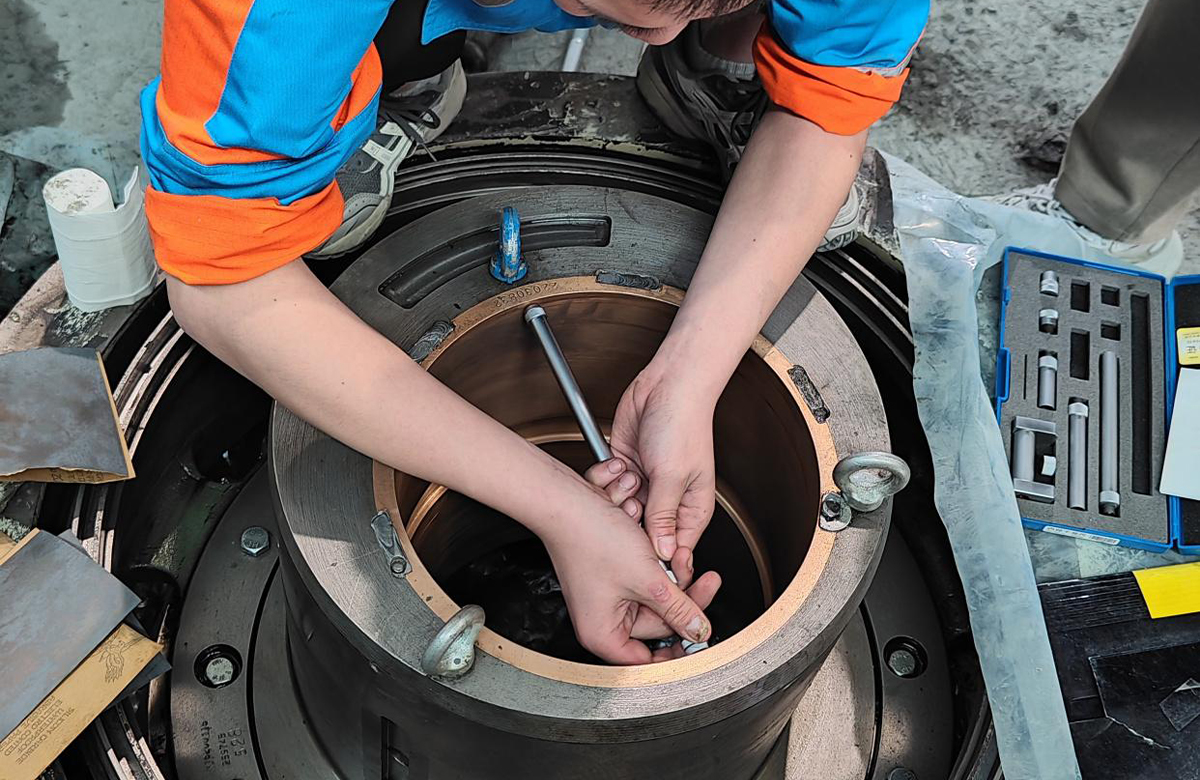
Material Specification Comparison: C93800 High-Lead Tin Bronze
When auditing hp crusher parts suppliers, maintenance engineers should verify compliance with ASTM B505 (UNS C93800) or equivalent ISO standards. The following table compares the technical superiority of centrifugally cast bushings against generic sand-cast alternatives.
| Parameter | Sand-Cast Specification | Centrifugal-Cast Specification | Operational Impact on HP400 |
| Material Grade | Generic CuSn12 | UNS C93800 / SAE 67 | 13–16% Lead content enables boundary lubrication during startup/shutdown cycles when hydrodynamic film collapses. |
| Brinell Hardness | 70–85 HBW | 90–110 HBW | Resists scoring from silicate particles <50μm embedded in lube oil contaminated by quarry dust infiltration. |
| Tensile Strength | 220 MPa | ≥300 MPa | Prevents plastic deformation under crushing forces of 3.5–4.5 kN/mm² at CSS (Closed Side Setting) of 16mm. |
| Porosity | 1.5–3.0% void volume | <0.3% void volume | Eliminates micro-crack initiation points that propagate under thermal cycling (40°C–95°C). |
| Machining Tolerance | ±0.10 mm | ±0.02 mm (Ra ≤0.8 μm) | Ensures consistent 0.75–0.95mm radial oil clearance to prevent metal-to-metal contact during choke-fed operation. |
| Weight (HP400 Part #55208901) | 31–33 kg | 32 kg ±0.5 kg | Precision mass distribution prevents eccentric imbalance (target: ≤0.05mm runout at 400 RPM). |
Standard Operating Procedure: HP400 Bronze Bushing Replacement
The following protocol aligns with OEM service bulletins but incorporates field-validated modifications to prevent common installation errors. This procedure assumes vibration monitoring has detected readings >1.5mm/s RMS or oil return temperatures exceeding 60°C—both indicators of imminent bushing failure.
Phase 1: Safe Isolation and Component Extraction
Step 1 – Lockout/Tagout (LOTO): De-energize the 400V/690V main motor and hydraulic power unit. Drain ISO VG 320 gear oil from the lubrication reservoir. Verify accumulator pressure is relieved to 0 bar before disconnecting hydraulic lines feeding the tramp iron release system.
Step 2 – Disassembly Sequence: Remove the feed hopper and top frame using a 10-ton overhead crane. Inspect the socket liner for wear depth—if scoring exceeds 5mm, schedule concurrent replacement to avoid premature failure of the new bushing.
Step 3 – Bushing Extraction: Apply a three-jaw hydraulic puller to the worn bushing. Inspect the eccentric bore for fretting corrosion (micro-vibration wear). Any galling deeper than 0.05mm requires honing with 800-grit silicon carbide stones to restore surface finish to Ra 1.6 μm before new bushing installation.
Phase 2: Precision Installation Using Thermal Interference Fit
Reliable hp crusher parts suppliers recommend thermal fitting to avoid shaving bronze during insertion, which creates debris that contaminates the lube system.
Step 4 – Thermal Preparation (Critical Temperature Control):
- Eccentric Heating: Preheat the eccentric housing to 60°C–80°C using induction heating coils. Avoid open flame, which causes uneven expansion and distortion.
- Bushing Cooling: Submerge the NewReg C93800 bushing in dry ice (solid CO₂ at -78°C) or liquid nitrogen. This creates a thermal differential of approximately 138°C.
Step 5 – Interference Fit Calculation: Using the coefficient of thermal expansion (CTE) for bronze (α ≈ 18.5 × 10⁻⁶/°C), the dimensional change is calculated as:
ΔD = D × α × ΔT
For an HP400 bushing with outer diameter D = 450mm and ΔT = 138°C:
ΔD = 450 × 18.5 × 10⁻⁶ × 138 ≈ 1.15mm shrinkage
This allows the supercooled bushing to drop freely into the heated eccentric bore. Crucially, align the lubrication holes within ±2mm of the eccentric oil galleries—misalignment starves the bearing, causing seizure within 4 operating hours.
Step 6 – Stabilization Period: Allow the assembly to normalize to ambient temperature (25°C) for a minimum of 4 hours. The final interference fit should lock the bushing in place with approximately 0.08–0.12mm radial compression.
Phase 3: Reassembly and Commissioning Protocol
Step 7 – Fastener Torque Specification: Reinstall the top frame. Torque Grade 10.9 bolts to 1,200 N·m using a calibrated hydraulic wrench in a star pattern sequence. Uneven bolt loading causes frame warping, which propagates eccentric misalignment and premature bushing wear.
Step 8 – Lubrication System Commissioning: Refill the reservoir with fresh ISO VG 320 oil containing EP (Extreme Pressure) additives (typically 3–5% zinc dialkyldithiophosphate). Cycle the lube pump for 15 minutes to purge air pockets. Verify flow rate meets the HP400 specification of 150–200 L/min at operating pressure of 0.8–1.2 bar.
Step 9 – Break-in Procedure:
- No-Load Run (30 minutes): Monitor oil return temperature (target: <55°C) and vibration (target: ≤0.8mm/s). Any reading exceeding these thresholds indicates misalignment or contamination.
- Gradual Load Introduction: Feed material at 50% cavity level for 1 hour. Monitor motor current draw—a spike >10% above baseline suggests inadequate lubrication or bushing binding. Increase to choke-fed condition (1,200 TPH at CSS 16mm) only after confirming stable thermal and vibration metrics.
Step 10 – Documentation and Trending: Record baseline vibration, oil temperature, and hydraulic pressure in the maintenance management system. Schedule follow-up vibration analysis at 500-hour intervals to detect early degradation patterns.
Post-Installation Results: Quantifiable Performance Improvement
Following the installation of a NewReg centrifugal-cast bushing, the quarry documented the following performance gains:
- Vibration Reduction: From 1.8mm/s (alarm threshold) to 0.6mm/s—a 67% improvement indicating proper hydrodynamic film formation.
- Thermal Stability: Oil return temperature stabilized at 52°C, eliminating the thermal cycling that accelerates bushing fatigue.
- Throughput Recovery: Crusher returned to rated capacity of 1,200 TPH within 48 hours, avoiding an estimated $16,000 in lost production.
Strategic Sourcing: Qualifying a Cone Crusher Spare Parts Supplier
The distinction between a transactional vendor and a technical partner lies in their ability to provide metallurgical traceability and field support. When validating a cone crusher spare parts supplier, procurement teams must enforce the following pre-qualification criteria:
- Material Certificates: Demand spectrographic analysis reports (OES or XRF) confirming alloy composition per ASTM B505. Verify lead distribution homogeneity (standard deviation <1.5% across bushing wall).
- Dimensional Verification: Request CMM (Coordinate Measuring Machine) reports confirming bore concentricity (<0.03mm TIR) and surface finish (Ra ≤0.8 μm).
- Inventory Depth: For critical items like Metso HP400 Part #55208901, confirm regional stock levels to guarantee <72-hour emergency delivery. A supplier with <10 units on hand cannot support unplanned shutdowns.
- Field Service Capability: Verify availability of technical personnel for on-site installation supervision, particularly for thermal fitting procedures where ±5°C temperature control is critical.
Technical Partnership: Beyond Transactional Supply
NewReg’s approach to aftermarket parts supply demonstrates the value of engineering collaboration. Beyond stocking OEM-equivalent components, their technical team provides:
- Failure Analysis Support: Metallurgical inspection of failed bushings to identify root causes (material defect, installation error, or contamination).
- Predictive Maintenance Integration: Vibration trending protocols to schedule replacements during planned shutdowns, avoiding reactive emergency repairs.
- Application-Specific Recommendations: For quarries processing highly abrasive materials (>12% silica content), NewReg specifies bushings with higher tin content (11–13%) to improve wear resistance.
Engineering Consultation: Next Steps
If your operation has experienced recurring bushing failures or struggles with extended lead times from generic crusher parts suppliers, a technical audit may be warranted. Key diagnostic questions include:
- Are your bushings meeting the 10,000-hour service life benchmark?
- Do you have documented material certificates confirming ASTM B505 compliance?
- Is your current supplier capable of emergency delivery within 72 hours?
For operations running Metso HP400, HP500, or Sandvik CH440 crushers, partnering with a qualified cone crusher spare parts supplier with proven metallurgical expertise and regional inventory is essential to maintaining uptime targets above 92%.
Contact NewReg’s technical team for a no-obligation bushing failure analysis and supply chain assessment. Request material certificates and CMM reports for comparison against your current supplier’s documentation.



 English
 French
 German
 Spanish
 Russian
 Arabic
 Portuguese
 Turkish