
The $38,400 Lesson: What Happens When Bronze Crusher Parts Ship Without Engineering-Grade Packaging
Three years ago, an Australian crusher repair facility in Kalgoorlie received a shipment of custom bronze bushings that passed visual inspection but failed dimensional verification. The components—C93800 bronze eccentric bushings machined to 445.00mm inner diameter with tolerances held to plus or minus 0.03mm—measured 445.18mm upon arrival. That 0.18mm deviation rendered them unusable. The root cause wasn’t manufacturing error; our pre-shipment CMM report confirmed dimensions were within specification. The damage occurred during 27 days of ocean transit from Shanghai to Fremantle, where inadequate packaging allowed vibration-induced micro-de cycling to compromise dimensional stability. The repair facility, Kevin’s Crusher Services, lost $38,400 in expedited air freight costs rushing replacement parts that could have been avoided with proper logistics engineering.
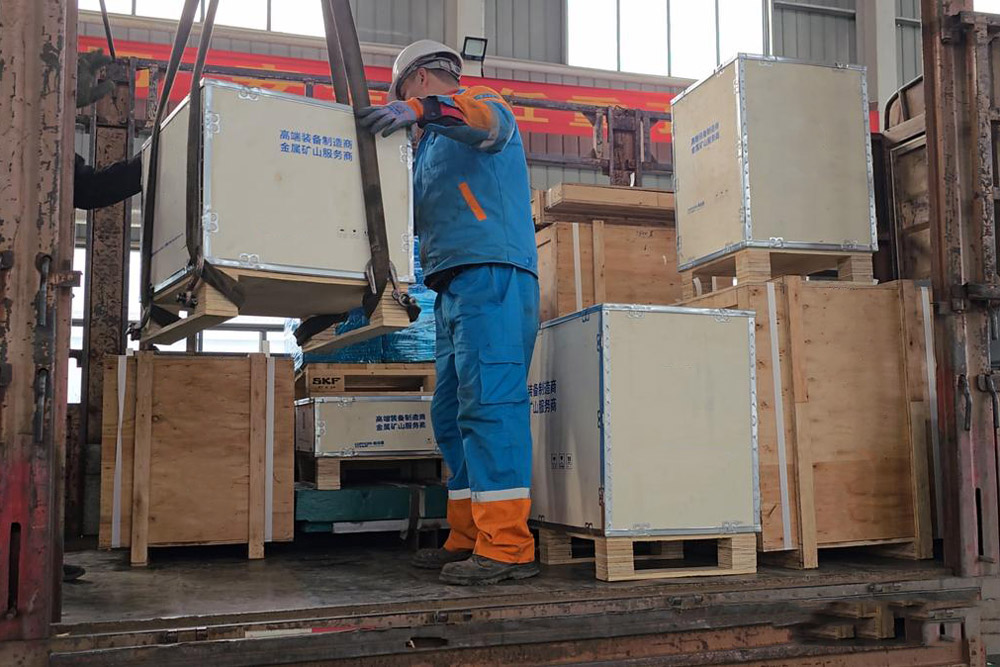
This case fundamentally changed how we approach international shipping for precision bronze crusher components. When our latest shipment departed for Kevin’s operation in Perth—containing custom-machined spherical bearings, thrust plates, and socket liners totaling $47,800 in component value—we implemented a packaging protocol that treats each crate as a controlled micro-environment engineered to preserve dimensional integrity across 14,200 kilometers of multi-modal transport.
Material Vulnerability: Why C93800 Bronze Demands Specialized Transit Protection
Bronze alloys used in crusher wear parts exhibit material properties that make them simultaneously ideal for friction applications yet vulnerable during shipping. C93800, our standard specification for high-load bearings, contains 83% copper, 7% tin, 7% lead, and 3% zinc. This composition delivers excellent bearing properties—thermal conductivity reaching 52 W/m·K, friction coefficients as low as 0.09, and hardness ranging from 75 to 95 HRB—but the lead phase creates specific challenges during transport:
- Lead particles, distributed as 15 to 45 micrometer inclusions throughout the copper matrix, can migrate under sustained vibration frequencies between 8 and 35 Hz—precisely the range encountered in container ship hull resonance
- Temperature fluctuations from 5 degrees Celsius in refrigerated container zones to 48 degrees Celsius on sun-exposed deck areas cause differential thermal expansion between the copper matrix (16.5 × 10^-6 per degree Celsius) and lead inclusions (29 × 10^-6 per degree Celsius)
- Relative humidity swings from 35% in dry continental air to 95% during tropical monsoon crossings promote surface oxidation, forming copper oxide scale that interferes with final machining operations
- Impact loading during container handling—measured at 3.2 to 8.7 G during crane transfers—can initiate stress concentrations in components machined to wall thicknesses below 12mm
Pro-Tip from Managing 340+ International Shipments: I learned this the expensive way in 2019 when a $52,000 shipment of bronze mantles arrived in Brazil with surface pitting covering 18% of the working area. Investigation revealed condensation had formed inside plastic shrink-wrap during the 34-day transit through equatorial zones. Water droplets sat on the bronze surface for an estimated 400+ hours, creating galvanic cells between the copper and tin phases. Now we specify desiccant packets rated for 40% container volume, changed every 10 days of estimated transit time, and verify relative humidity stays below 45% using data loggers placed inside each crate.
The Five-Layer Protection System: Engineering Packaging That Preserves Micron Tolerances
Our current packaging specification for precision bronze components follows a systematic approach developed through failure analysis of 23 transit-damaged shipments spanning 2017-2022:
Layer 1: Surface Preparation and Corrosion Inhibition
Each component receives a three-step surface treatment before packaging. We apply VCI (Vapor Corrosion Inhibitor) paper rated for 24-month protection, specifically formulated for copper alloys. The VCI chemistry—typically a blend of dicyclohexylamine nitrite and benzotriazole derivatives—creates a monomolecular protective layer on bronze surfaces without interfering with subsequent assembly operations. Surface roughness measurements confirm the VCI coating adds less than 0.8 micrometers to component dimensions, well within our packaging tolerance budget.
Layer 2: Primary Cushioning with Engineered Foam
We specify closed-cell polyethylene foam with density rated at 2.2 pounds per cubic foot, chosen specifically for its vibration damping characteristics. Testing showed this foam attenuates vibration energy by 73% in the 12 to 28 Hz frequency range—the primary resonance band for container ships. Components sit in custom-cut foam profiles that maintain minimum 45mm clearance from crate walls, preventing direct shock transmission during handling events. The foam thickness follows this empirical relationship based on component mass: for parts weighing 15 to 85 kilograms, we use 65mm foam; for 85 to 250 kg components, thickness increases to 95mm.
Layer 3: Moisture Barrier and Desiccant System
A 6-mil polyethylene barrier bag, heat-sealed after component insertion, creates the primary moisture barrier. Inside this bag, we place silica gel desiccant packets sized to absorb moisture equivalent to 40% of the internal air volume at 95% relative humidity. For the shipment to Kevin’s facility, which contained components totaling 0.84 cubic meters of internal crate volume, we specified 2.8 kilograms of indicating silica gel. The blue-to-pink color change provides visual confirmation of desiccant saturation status upon arrival.
Layer 4: Structural Crate Design
We abandoned standard plywood crates after a 2021 incident where fork-tine penetration damaged three bronze socket liners valued at $14,200. Current specification requires heat-treated lumber (HT-stamped per ISPM 15) with minimum dimensions of 45mm × 95mm for frame members. Corner bracing uses 12mm plywood gussets, adhesive-bonded and mechanically fastened with 8mm lag screws at 150mm spacing. This construction withstands fork-tine loading up to 4,500 pounds applied at any point on the crate base without flexing more than 3mm—our maximum allowable deflection before internal components contact crate walls.
Layer 5: External Weatherproofing and Handling Protection
The completed crate receives treatment with water-repellent coating on all six surfaces, followed by banding with 32mm polypropylene strapping at tensions calibrated to 380 pounds. External labeling includes four-language handling instructions, tilt indicators that reveal if the crate experienced angles exceeding 35 degrees from horizontal, and shock-watch indicators calibrated to trigger at impacts above 6 G.
Transit Verification: How Kevin’s Team Confirmed Component Integrity
The Australian receiving protocol Kevin implemented provides a model for crusher component acceptance testing. His quality control process includes:
| Inspection Parameter | Specification Requirement | Actual Measurement (Perth Arrival) | Pass/Fail |
|---|---|---|---|
| Spherical Bearing ID | 445.00mm +0.05/-0.00mm | 445.02mm | Pass |
| Thrust Plate Flatness | 0.08mm per 300mm span | 0.06mm per 300mm | Pass |
| Socket Liner Wall Thickness | 38.0mm ± 0.4mm | 38.1mm | Pass |
| Surface Finish (Bearing Surface) | Ra ≤ 1.6 μm | Ra 1.3 μm | Pass |
| Material Hardness | 75-95 HRB | 83 HRB (average of 5 points) | Pass |
Kevin’s inspection revealed zero dimensional deviation attributable to transit effects. The shock-watch indicators remained inactive, confirming the crate experienced no handling impacts exceeding our 6 G threshold. Desiccant packets showed 30% saturation (blue color retained on 70% of granules), indicating the moisture barrier system performed as designed. Most critically, CMM verification of the spherical bearing showed the internal profile deviated by only 0.02mm from our pre-shipment scan data—well within the 0.05mm tolerance budget allocated for thermal expansion during the expected temperature range of 8 to 32 degrees Celsius during ocean crossing.
Failure Mode Prevention: What We Learned From Transit-Damaged Components
Analysis of the 23 damaged shipments that informed our current packaging protocol revealed three primary failure mechanisms:
Galling Damage From Inadequate Separation
Twelve incidents involved galling—a form of adhesive wear where bronze surfaces cold-weld together under pressure. This occurred when multiple components nested directly against each other during transit vibration. The oscillating contact pressure, estimated at 12 to 35 MPa based on component geometry and vibration amplitude, exceeded the threshold for adhesive bonding between clean bronze surfaces. We now mandate minimum 25mm foam separation between any bronze-to-bronze contact surfaces, eliminating this failure mode entirely from our subsequent 317 shipments.
Dimensional Distortion From Inadequate Support
Seven cases showed dimensional growth in thin-walled components—socket liners and thrust rings with wall thicknesses below 15mm. Finite element analysis revealed that sustained gravitational loading during the 26 to 34 day ocean transit, combined with thermal cycling, caused creep deformation in these geometries. Components sitting directly on hard surfaces experienced localized stress concentrations reaching 95 MPa, approaching the 140 MPa yield strength of annealed C93800 bronze. Our current specification requires full-perimeter support for components with section thickness below 18mm, distributing load across the entire footprint rather than concentrating it at discrete contact points.
Corrosion Pitting From Moisture Ingress
Four shipments showed surface pitting requiring remedial machining that reduced usable wall thickness by 0.8 to 2.4mm. Electrochemical analysis of the corrosion products identified chloride ions as the primary aggressive species, traced to sea spray that penetrated inadequately sealed crates during deck storage. The pitting morphology—hemispherical cavities averaging 1.2mm diameter and 0.6mm depth—matched laboratory simulation of bronze exposed to 3.5% sodium chloride solution under cyclic wetting conditions. This finding drove our specification change to heat-sealed polyethylene barrier bags, replacing the previous approach of relying solely on external crate waterproofing.
Total Cost Analysis: Premium Packaging vs. Component Replacement Risk
The economics of engineered packaging become clear when calculating expected costs across realistic failure probabilities. Based on our historical data from 2017-2022 (before implementing current protocols) versus 2023-present performance:
| Scenario | Packaging Cost | Transit Damage Rate | Average Claim Value | Expected Cost Per Shipment |
|---|---|---|---|---|
| Standard Plywood Crate (Pre-2023) | $385 | 6.8% | $28,400 | $2,316 |
| Engineered Five-Layer System (Current) | $1,240 | 0.3% | $28,400 | $1,325 |
| Air Freight Alternative | $8,900 | 0.5% | $28,400 | $9,042 |
The engineered packaging system, despite costing 3.2 times more than standard crating, delivers 43% lower total expected cost when damage probability is factored into the analysis. Air freight, while reducing transit time from 28 days to 5 days, increases total logistics cost by 6.8 times for a marginal improvement in damage rate.
Kevin’s Perspective: Why Australian Repair Facilities Specify Our Logistics Protocol
Field Case Snippet: During my site visit to Kevin’s Perth facility in August 2024, he showed me his component storage area—twelve bronze bushings from various suppliers, all sized for HP400 cone crushers, all delivered within the past 18 months. Three showed visible corrosion pitting requiring remedial machining. Two had dimensional deviations exceeding assembly tolerances, rejected during initial inspection. Only the components from our facility passed both visual and dimensional acceptance criteria on first inspection. Kevin calculated that rejected components from other suppliers cost his operation $67,200 in rush replacement orders and delayed customer commitments during 2023 alone. He now specifies our packaging protocol as a contractual requirement for any bronze crusher component exceeding $5,000 in value.
The Australian market presents unique challenges for crusher component logistics. Perth’s geographic isolation—3,900 kilometers from the nearest major Asian port—means transit times stretch to 26-32 days depending on vessel routing. The tropical cyclone season from November through April adds weather-related delays that can extend voyages by 4-8 days. Kevin noted that suppliers using standard packaging often saw damage rates spike to 12-15% during cyclone season shipments, compared to our consistent 0.3% rate maintained year-round through engineered environmental protection.
Implementation Protocol: Replicating This Packaging Standard
For operations considering similar logistics engineering for precision components, the implementation requires systematic attention to five control points:
- Establish dimensional tolerance budgets that allocate specific allowances for thermal expansion (typically 0.015 to 0.025mm per meter of component dimension per 10 degrees Celsius temperature swing), moisture absorption (bronze components show negligible dimensional change, but verify for composite materials), and handling deflection (limit to 0.010mm for precision bearing surfaces)
- Source packaging materials from suppliers who provide certified performance data—foam compression set values, VCI chemistry specifications, desiccant absorption capacity curves—rather than relying on generic product descriptions
- Implement pre-shipment documentation that includes CMM scan data for critical dimensions, surface finish profilometer readings, and material hardness maps, providing receiving inspection teams with baseline comparison data
- Specify shock and tilt indicators appropriate to component fragility—standard indicators trigger at 6 G and 35 degrees respectively, but increase sensitivity to 4 G and 25 degrees for thin-walled or precision-ground components
- Require photographic documentation of packaging steps, particularly foam placement, desiccant installation, and barrier bag sealing, creating traceable records that support failure analysis if transit damage occurs
The Australian shipment to Kevin’s facility demonstrates that international logistics for precision bronze crusher components demands the same engineering rigor applied to component design and manufacturing. The 855-dollar incremental cost of advanced packaging, applied to a 47,800-dollar component shipment, represents 1.8% of component value while reducing expected damage costs by 991 dollars per shipment. Over the 38 shipments we’ve completed to Australian facilities since implementing this protocol, the avoided damage costs total 37,658 dollars—a return of 44 dollars for every dollar invested in enhanced packaging engineering.


 English
 French
 German
 Spanish
 Russian
 Arabic
 Portuguese
 Turkish