
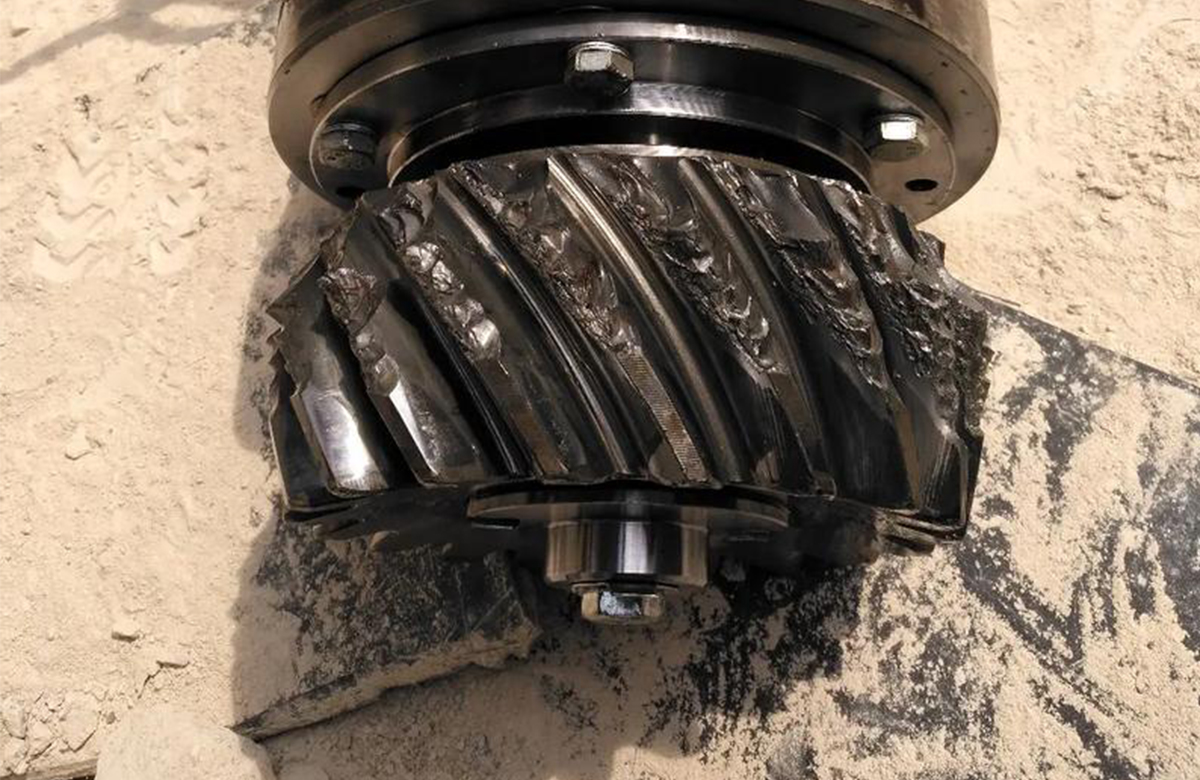
FLSmidth Pinion Gear Failure: Seizure-Induced Fracturing and Replacement Protocol
Seizure-induced tooth fracturing in a FLSmidth Pinion Gear typically originates from the catastrophic breakdown of the hydrodynamic oil film, leading to immediate boundary lubrication conditions. In a recent field incident involving a high-capacity cone crusher (450-600 kW), the pinion reached critical thermal instability, resulting in plastic deformation of the gear profiles and localized temperature spikes exceeding 250°C. This thermal excursion caused macropitting and “metal tearing” across the load-bearing flanks, necessitating an emergency shutdown.
1. Root Cause: Boundary Lubrication and Mesh Kinematics
Post-failure inspection of the cone crusher part revealed that gear-mesh geometry failed due to a lubrication system pressure drop below 1.5 bar. Without the requisite ISO VG 150-320 oil film thickness, contact mechanics shifted from fluid-film separation to direct asperities contact. The resulting Hertzian contact stress exceeded the 1500 MPa yield strength of the carburized layer, causing subsurface cracks to propagate into full tooth fractures.
| Operational Parameter | Baseline (Healthy Gear) | Observed Failure Value | Mechanical Implication |
|---|---|---|---|
| Radial Vibration Velocity | ≤ 4.5 mm/s | > 12.5 mm/s | Severe eccentricity and gear-mesh misalignment. |
| Lube Oil Temp Rise | ΔT < 15°C | ΔT > 35°C | Excessive frictional heat from teeth friction. |
| Gear Backlash | 0.12 – 0.18 mm | Variable / Distorted | Loss of involute profile integrity. |
2. Material Specification: 18CrNiMo7-6 Forging Standards
To ensure structural integrity under heavy load ratings, NewReg’s replacement Pinion Gear adheres to the 18CrNiMo7-6 (DIN 1.6587) alloy steel standard. Unlike inferior cast alternatives from unverified FLSmidth parts suppliers, these gears undergo multi-stage heat treatment to achieve a case hardening depth (CHD) of 1.8 mm – 2.2 mm.
- Surface Hardness: 58-62 HRC on tooth flanks for abrasive wear resistance.
- Core Toughness: 30-35 HRC to absorb high-frequency shock loads.
- Surface Finish: Ground to Ra ≤ 0.8 μm to optimize EHL (Elasto-Hydrodynamic Lubrication) film formation.
- Accuracy Class: AGMA Class 12 (ISO 1328 Grade 6) to minimize dynamic transmission errors.
3. Precision Installation: Contact Pattern Verification
Replacing cone crusher spare pinions requires millimeter-level alignment. For this FLSmidth assembly, target side clearance was set at 0.12–0.18 mm, verified via the lead-wire method. NewReg technical standards require the following coverage before full-load commissioning:
- Effective Tooth Height: ≥ 40% coverage.
- Effective Tooth Length: ≥ 70% coverage.
- Bore Alignment: Laser-checked to ensure deviation < 0.05 mm/m.
4. Strategic Spares Management
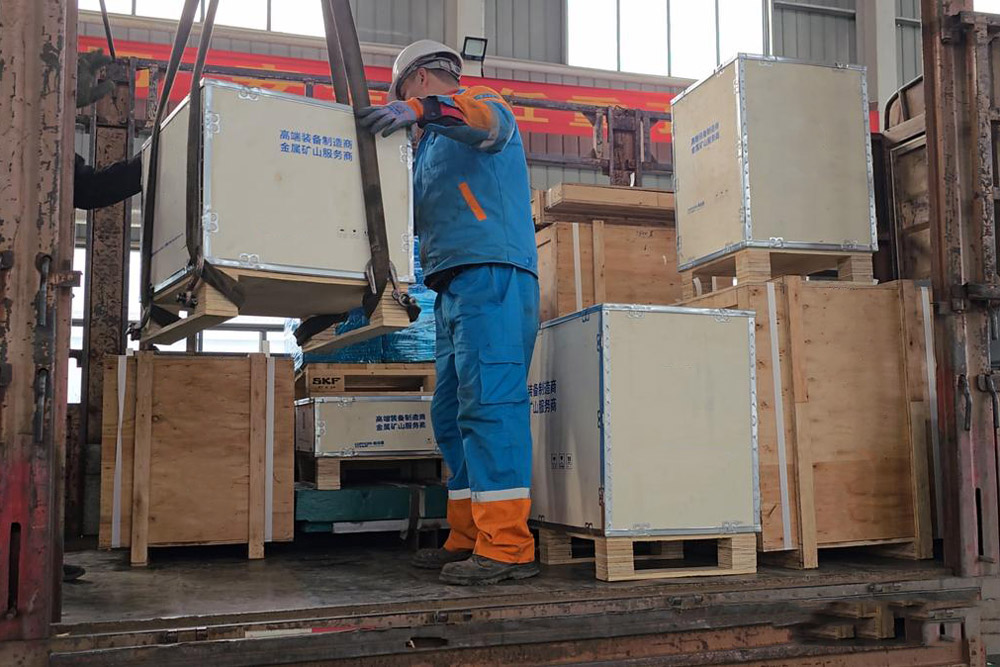
To prevent future outages, the facility has transitioned to a proactive strategy. This includes online oil-condition sensors that trigger alarms when metal wear particles exceed ISO 4406 18/16/13 levels. By partnering with specialized FLSmidth parts suppliers like NewReg, the mine now maintains a strategic safety stock, reducing lead times from 12 weeks to 48 hours.
Technical Advice: If you detect a sudden metallic knocking or noise levels exceeding 100 dB near the countershaft, emergency shutdown is required. Contact our application engineers for a detailed gear-mesh alignment audit.



 English
 French
 German
 Spanish
 Russian
 Arabic
 Portuguese
 Turkish