

Sandvik CH Series Main Shaft | Forged 42CrMo4 Crusher Spares
Name: Mantle Shaft Assembly
Model: Sandvik CH series
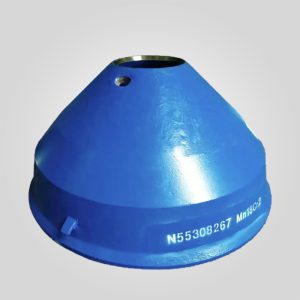
The main shaft assembly is the core parts of cone crusher. The main shaft assembly of the cone crusher includes main shaft, eccentric bushing, bevel gear, the mantle, cone body, the main shaft bushing, locking screw, and locking device. There are eccentric bushings, keys, moving cones, locking nut and spindle bushings on the main shaft.
库存 182 件
PRODUCT
Description
Technical Specifications: Sandvik CH Series Main Shaft
| Specification Attribute | Engineering Standard |
|---|---|
| Component Name | Main Shaft (Mantle Shaft) |
| Compatible Models | Sandvik CH420, CH430, CH440, CH660, CH870 |
| Material Grade | Forged 42CrMo4 (EN 1.7225) / AISI 4140 |
| Manufacturing Process | Open Die Forging + Quenching & Tempering (Q+T) |
| Tensile Strength | ≥ 1000 MPa |
| Yield Strength | ≥ 850 MPa |
| Surface Finish | Ra 0.8 (Bearing Seating Area) |
| Dimensional Tolerance | ISO 2768-mK / h6 for bearing fits |
The Main Shaft is the backbone of the Sandvik CH Hydrocone crusher.
Unlike wear parts, this structural component transmits the entire crushing force from the hydraulic piston to the mantle.
As specialized crusher part suppliers, we manufacture Main Shafts using exclusively forged alloy steel to withstand the extreme cyclic fatigue of high-pressure crushing.
Core Advantages: Forging vs. Casting
For a component subjected to millions of load cycles, the manufacturing method determines the lifespan.
Our Spare parts production strictly follows OEM forging protocols:
- Forged Integrity (42CrMo4): We use high-strength Alloy Steel (42CrMo4) processed via Open Die Forging with a reduction ratio of >3:1.
This aligns the grain flow of the steel with the shaft’s geometry, providing 30% higher fatigue resistance than cast or machined-bar alternatives. - Precision Grinding: The bearing seating areas and the hydraulic piston interface are CNC ground to Ra 0.8 tolerances.
This ultra-smooth finish prevents stress risers and ensures a perfect oil film seal with the step washers and bushings. - Thread Rolling: The threads for the Head Nut are formed or precision-cut with stress-relief radii to prevent cracking at the thread root—the most common failure point in inferior shafts.
Comprehensive Spare Parts Supply
We provide a “One-Stop” solution for the CH Series ecosystem.
Beyond the shaft, we supply the full assembly components:
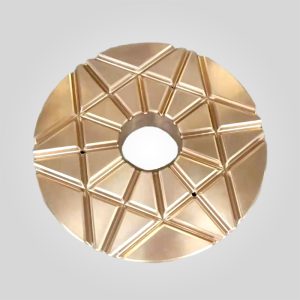
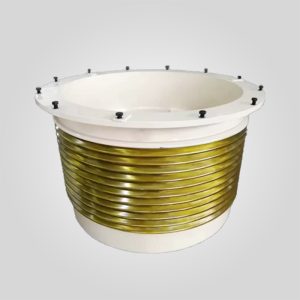
| Structural Components | Drive System | Hydraulic & Sealing |
|---|---|---|
| Main Shaft (Forged) | Drive Gear & Pinion | Hydroset Cylinder |
| Head Center | Eccentric Bushing | Step Washers (Piston Wear Plates) |
| Top Shell / Bottom Shell | Drive Shaft housing | Chevron Packing (V-Seals) |
| Spider Bushing | Pinion Shaft | Dust Seal Ring |
Field Diagnosis: Evaluating Main Shaft Health
Replacing a Main Shaft is a major operation.
Inspect your current shaft for these critical failure signs:
- Fretting Corrosion: Check the tapered area where the Head Center sits.
If you see deep pitting or “red rust” powder, the head center has been loose.
If the wear exceeds 0.5mm, the shaft must be repaired (thermal spray) or replaced to prevent the head from spinning. - Run-out (TIR): Use a dial indicator to measure the shaft’s straightness.
If the Total Indicated Run-out exceeds 0.15mm, the shaft is bent (likely due to a tramp iron event) and will destroy your eccentric bushings rapidly. - Thread Damage: Inspect the top threads (Head Nut area).
Burred or stretched threads prevent proper mantle tightening, leading to loose liners and catastrophic failure.
Expert Tip: Installation & Assembly
The “Cold Shaft, Hot Head” Rule: The Head Center is interference-fitted to the Main Shaft.
Never use a sledgehammer to install the Head Center.
Correct Procedure: Heat the Head Center in an oil bath to approx 80°C – 100°C (do not exceed 120°C).
The expansion allows it to drop onto the shaft effortlessly.
Always use a new burning ring and verify the hydraulic nut pressure to ensure the mantle is locked correctly.
Frequently Asked Questions (FAQ)
Q1: Why is the Main Shaft made of 42CrMo4 and not Manganese Steel?
A1: Manganese steel (Mn18) is designed for wear resistance but has low yield strength (it stretches).
The Main Shaft is a structural part that must resist bending.
42CrMo4 Forged Steel provides the necessary high tensile strength (>1000 MPa) to support the crushing load without deforming.
Q2: Can I repair a worn Main Shaft?
A2: It depends on the damage.
Minor wear on the bearing seating areas can sometimes be repaired using High-Velocity Oxygen Fuel (HVOF) thermal spraying and re-grinding.
However, if the shaft is bent or has cracks in the radius (fillet) areas, it is unsafe and must be replaced.
Q3: Is this shaft compatible with the older H4800 model?
A3: The Sandvik CH440 is the evolution of the H4800.
While many parts are similar, the Main Shaft dimensions may vary slightly depending on the vintage.
Please provide the serial number or OEM part number (e.g., 442.xxxx-xx) to our crusher part suppliers team for verification.
“Authoritative Engineering Data: All critical metallurgical specifications and dimensional tolerances (e.g., ±0.05mm) are strictly governed by the master English documentation. While localized versions are provided for operational reference, the English original remains the sole binding authority for quality inspection and technical compliance.”


 English
 French
 German
 Spanish
 Russian
 Arabic
 Portuguese
 Turkish