

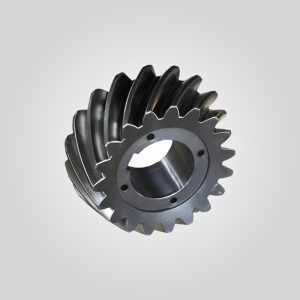
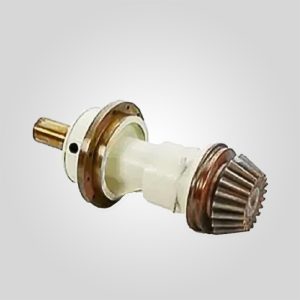
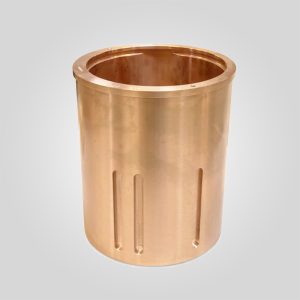
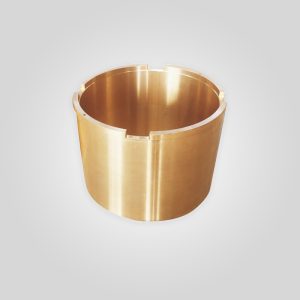
High Manganese Steel Moving Fixed Cone for Crusher/Breaker
- Material: High Manganese Steel (Mn13, Mn13Cr2, Mn18, Mn18Cr2)
- Weight: 2500 kgs
- Process: Lost Foam Casting + CNC Machining
- Heat Treatment: Water Quenching & Tempering
- Tolerance: ±0.05mm (Customizable)
- part name: Moving Fixed Cone
库存 182 件
PRODUCT
Description
| Technical Specification | Data / Standard |
|---|---|
| Material Grade | Mn18Cr2 (ASTM A128 Grade C) / Mn22Cr2 |
| Initial Hardness | 210 – 230 HBW |
| Work-Hardened Hardness | 500 – 550 HBW (In-service) |
| Tensile Strength | ≥ 750 MPa |
| Impact Toughness | ≥ 150 J (Charpy V-Notch) |
| Machining Tolerance | Ra 3.2 μm (Mating Surfaces) / ISO 2768-m |
| Weight Range | 500 kg – 5,000 kg (Customizable) |
| Heat Treatment | Water Quenching (1050°C Solution Annealing) |
High-Manganese Steel Bowl Liners for Severe Crushing Duty
The Bowl Liner (Concave) acts as the stationary wear surface in the crushing chamber. It must withstand extreme compressive forces and abrasive gouging from granite, basalt, and iron ore. Unlike standard steel which wears linearly, our bowl liners are engineered using Mn18Cr2 High Manganese Steel (modified ASTM A128 standard). This material possesses a unique metallurgical property: under impact, the surface lattice structure transforms from Austenite to Martensite, effectively “fighting back” against the rock.
While the surface hardens to over 500 HBW to resist abrasion, the core remains ductile (approx. 220 HBW). This dual-phase characteristic prevents catastrophic shattering even when uncrushable objects (tramp iron) enter the chamber. As a dedicated manufacturer of crusher wear parts, we ensure that every liner matches the precise chamber profile required for your specific product gradation.
Metallurgy and Manufacturing Process
Achieving the perfect balance between hardness and toughness requires precise control over the foundry process:
- Alloy Optimization: We add 2% Chromium to the standard Manganese matrix. This forms hard chromium carbides at the grain boundaries, extending wear life by 30% compared to standard Mn13 liners.
- Water Quenching: The casting is heated to 1050°C and rapidly quenched in water. This “Solution Annealing” process locks the carbides into the austenitic matrix, ensuring the liner doesn’t crack during the initial break-in period.
- Precision Machining: The mounting surfaces (where the liner contacts the adjustment ring) are CNC machined to a flatness tolerance of 0.05mm. This ensures full contact with the backing compound, preventing the liner from loosening under vibration.
Field Diagnosis: When to Change Your Bowl Liner
Optimizing liner change-outs is critical for TCO (Total Cost of Ownership). Look for these technical indicators:
1. The “Cupping” Effect
Inspect the discharge zone (bottom 20% of the liner). If you see a pronounced “cup” or concave wear pattern that exceeds 25mm in depth, the crushing angle has changed. This will reduce throughput and increase recirculating loads.
2. Thickness Measurement
Using an ultrasonic thickness gauge is difficult on work-hardened steel. Instead, use a physical profile gauge. If the liner thickness at the thinnest point is less than 15mm (or 10% of original thickness), replace immediately to prevent the liner from cracking and damaging the adjustment ring.
3. Production Drop
If your amp draw is high but tonnage is low, the liner corrugations (teeth) are likely worn flat, resulting in “slippage” rather than crushing.
Compatibility and Applications
Our bowl liners are designed for direct interchangeability with major crusher brands:
- Metso Nordberg HP / GP / MP Series
- Sandvik CH / CS / H Series
- Symons Standard & Short Head (2ft to 7ft)
- Terex / Cedarapids / Telsmith models
Installation Expert Tip
[Option B: Pro-Tip] When installing a new bowl liner, the quality of the Backing Compound (Epoxy) application is as important as the steel itself. Ensure the mixing ratio is exact. Pour the compound slowly to prevent air pockets. An air gap behind the liner creates a “drumming” effect that will crack the manganese steel from the inside out due to fatigue, regardless of how high the material quality is.
Note on Chamber Selection: We offer various cavity profiles (Extra Fine, Fine, Medium, Coarse). Providing us with your feed size and desired product curve allows us to recommend the correct profile to maximize efficiency.
“Authoritative Engineering Data: All critical metallurgical specifications and dimensional tolerances (e.g., ±0.05mm) are strictly governed by the master English documentation. While localized versions are provided for operational reference, the English original remains the sole binding authority for quality inspection and technical compliance.”

 English
 French
 German
 Spanish
 Russian
 Arabic
 Portuguese
 Turkish