
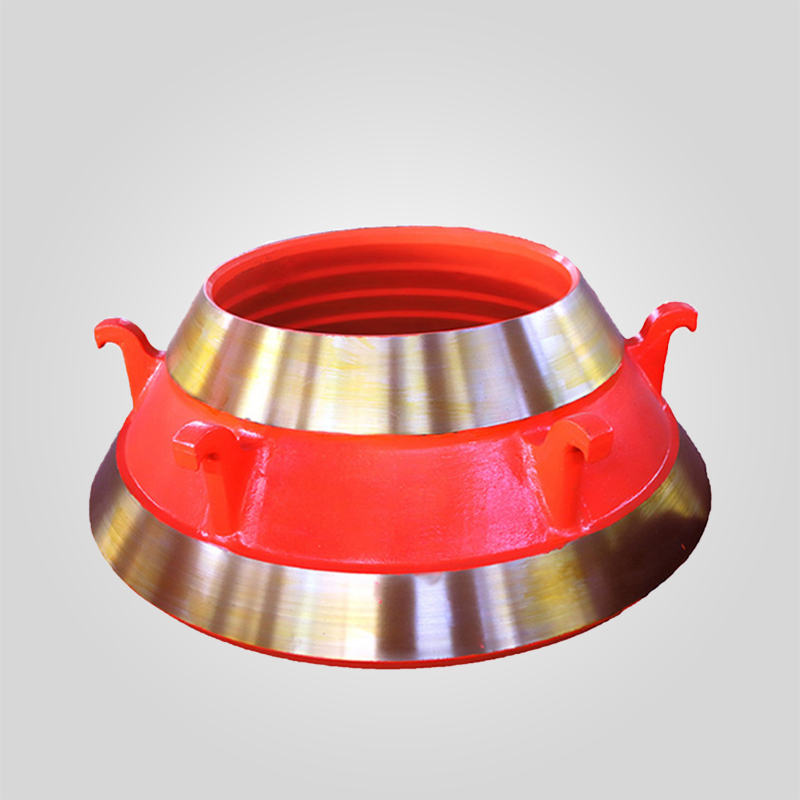
Metso® HP300 Cone Crusher Wear Part #1022734067
Part Type :Mantle/Bowl Liner Set
Compatible Machine :Metso HP300 Cone Crusher (All Versions)
Material Grade :Mn18Cr2 (High Manganese Steel with Chromium Enhancement)
Heat Treatment :Water Quenching + Triple Tempering Process
Hardness Range :HB 200-230 (As Cast) → HB 450-550 (Work-Hardened)
库存 182 件
PRODUCT
Description
| Technical Specification | Data / Standard |
|---|---|
| OEM Part Number | 1022734067 (Bowl Liner) / 1022734068 (Mantle) |
| Compatible Machine | Metso Nordberg HP300 Cone Crusher |
| Material Grade | Mn18Cr2 (ASTM A128 Grade C Modified) |
| Heat Treatment | Solution Annealing + Water Quenching (1050°C) |
| Hardness Profile | Initial: 200-230 HB | Work-Hardened: 500-550 HB |
| Casting Method | Lost Foam Casting (High Dimensional Accuracy) |
| Machining Tolerance | ISO 2768-m (Mating Surfaces) |
Metso HP300 Wear Parts: Premium Mn18Cr2 Liner Set
The crushing efficiency of your Metso HP300 depends entirely on the profile and metallurgy of the wear liners. Our replacement Mantle and Bowl Liner sets (Part Ref #1022734067) are engineered to restore the original factory performance. Unlike generic crusher spares that use standard manganese steel, we utilize Mn18Cr2 High Manganese Steel. This alloy is specifically modified with 2% Chromium to enhance the carbide structure, providing superior resistance to the gouging wear typical of hard rock crushing.
We employ Lost Foam Casting technology to produce these liners. This method eliminates the parting lines and dimensional inaccuracies found in traditional sand casting, ensuring that the liner sits perfectly concentric in the bowl. This precision is critical for maintaining the tight Closed Side Settings (CSS) required for high-quality aggregate production.
Metallurgy: Impact Hardening Explained
Our Mn18Cr2 liners are designed to be “smart” materials:
- Ductile Start: The liner is supplied with a fully austenitic microstructure (approx. 220 HB). This toughness prevents catastrophic cracking when uncrushable objects (tramp iron) pass through the chamber.
- Hard Finish: Under the high-pressure impact of crushing (up to 300 MPa), the surface layer transforms into Martensite, reaching a hardness of 550 HB. This work-hardened skin resists abrasion while the core remains tough.
Field Diagnosis: Optimizing Liner Life
Knowing when to change your liners is key to reducing Total Cost of Ownership (TCO). Watch for these indicators:
1. The “Power Spike”
If your HP300 is drawing higher amps but producing less throughput, the liner profile is worn. The “nip angle” has been lost, causing material to slip and boil rather than crush. Replacing the liners restores the geometry and reduces power consumption.
2. Adjustment Ring Movement
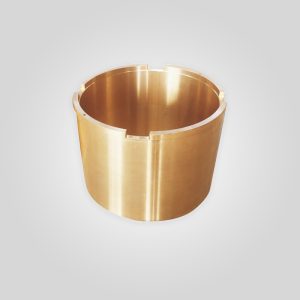
If you observe the adjustment ring “jumping” or “bouncing” on the mainframe, the liners may be worn unevenly (bell-mouthed). This uneven force distribution can damage the bronze bushings and must be addressed immediately.
3. Throughput Drop
A 15-20% drop in tons per hour (TPH) usually indicates that the liner corrugations (teeth) are worn flat. Continuing to run in this state is energy-inefficient.
Performance Data: Mn18Cr2 vs Standard Mn13
| Application | Material | Service Life (Hours) | Cost Per Ton |
|---|---|---|---|
| Granite Quarry | Standard Mn13 | 550 | Base |
| Granite Quarry | Our Mn18Cr2 | 780 (+41%) | -22% |
Installation and Maintenance Best Practices
[Expert Tip] Never attempt to rotate a bowl liner or mantle once installed. They are fixed in place with epoxy backing compound. Instead, ensure you rotate your feed distribution. A segregated feed (coarse on one side, fine on the other) causes uneven wear known as “oval wear,” which halves the life of your liners. Additionally, always use a new Torch Ring and check the Mantle Nut torque (approx. 650-700 Nm) when installing a new set.
Compatibility Check: Before ordering, please verify your specific chamber configuration (Extra Fine, Fine, Medium, Coarse). Using a Coarse liner for Fine crushing applications will result in poor product gradation and excessive recirculating load.
“Authoritative Engineering Data: All critical metallurgical specifications and dimensional tolerances (e.g., ±0.05mm) are strictly governed by the master English documentation. While localized versions are provided for operational reference, the English original remains the sole binding authority for quality inspection and technical compliance.”

 English
 French
 German
 Spanish
 Russian
 Arabic
 Portuguese
 Turkish