

Crusher Spare Parts Product Specifications Overview
| Parameter | Jaw Crusher Parts | Cone Crusher Parts | Impact Crusher Parts |
|---|---|---|---|
| Primary Material | Mn13Cr2 / Mn18Cr2 | Mn18Cr2 / Mn22Cr2 | High Chromium Cast Iron (Cr26) |
| Hardness (HB) | 180–220 (as-cast); work-hardens to 500+ | 200–240 (as-cast); work-hardens to 550+ | 58–65 HRC |
| Dimensional Tolerance | ±0.5 mm on mating surfaces | ±0.3 mm on seating surfaces | ±0.2 mm on rotor fit |
| Maximum Wear Limit | Tooth height reduction >30% | Liner thickness <25 mm | Blow bar length reduction >20 mm |
| Bolt Torque (Main Fixing) | 680–750 Nm (M30 grade 10.9) | 820–900 Nm (M36 grade 10.9) | 450–520 Nm (M24 grade 10.9) |
| Installation Clearance | 0.1–0.15 mm (jaw plate to frame) | 0.05–0.10 mm (mantle to head) | 0.02–0.05 mm (blow bar to rotor slot) |
| Operating Temperature Range | -20°C to +80°C | -20°C to +90°C | -20°C to +100°C |
| Surface Treatment | Shot blasted, anti-rust coated | Shot blasted, primer coated | Precision ground, phosphate treated |
| Applicable Standards | ISO 9001 / ASTM A128 | ISO 9001 / DIN 1.3401 | ISO 9001 / BS EN 12513 |
| Lead Time (Standard) | 7–15 business days | 10–20 business days | 7–15 business days |
Why the Wrong Crusher Spare Parts Cost More Than You Think
A jaw crusher operating at a copper mine in northern Chile failed its primary jaw plate within 340 operating hours — roughly half the expected service life. Post-failure analysis revealed the plate had been cast using Mn13 steel without chromium modification, making it entirely unsuitable for the site’s highly abrasive quartzite feed. The unplanned shutdown cost the operation an estimated $180,000 USD in lost production over four days, not counting expedited freight for emergency replacement parts. That figure dwarfs the $2,400 price difference between the substandard plate and a properly specified Mn18Cr2 component.
This is not an isolated case. Across mineral processing plants and aggregate quarries worldwide, the selection of crusher spare parts is still treated as a cost center rather than an engineering decision. The result is a repeating cycle of premature wear, unplanned downtime, and reactive procurement — all of which are preventable with the right technical framework.
What Crusher Spare Parts Actually Cover
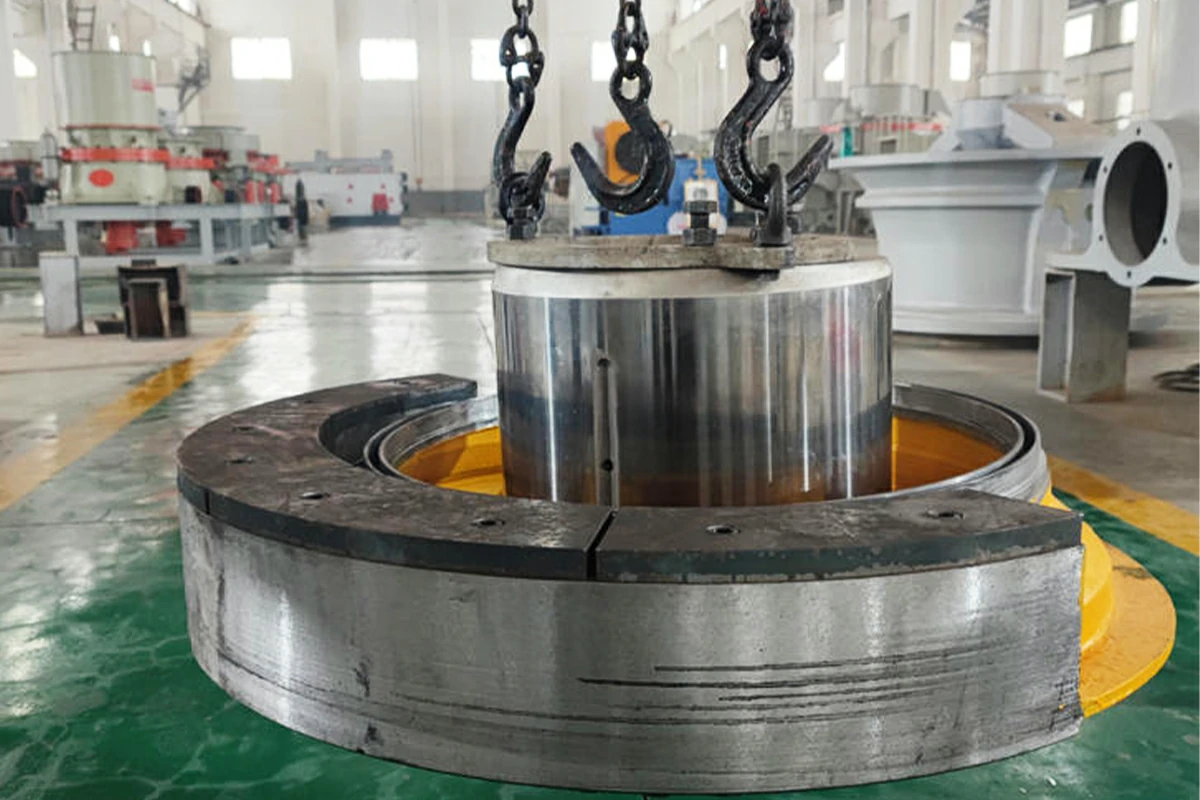
The term crusher spare parts encompasses a wide category of components, each with distinct failure modes and material requirements. For jaw crushers, the primary wear items are the fixed and movable jaw plates, toggle plates, pitman assemblies, cheek plates, and bearing housings. Cone crushers consume mantles, bowl liners, head assemblies, eccentric bushings, and thrust bearings. Impact crushers demand the most frequent attention to blow bars, rotor discs, impact plates, feed plates, and side liners.
Beyond these primary wear parts, the broader category of crusher replacement parts also includes shafts, flywheels, tension rods, springs, hydraulic seals, and v-belt drives. Grouping all of these under a single procurement strategy is a mistake. Each subgroup requires its own material specification, inspection protocol, and replacement interval — and treating them identically is how sites end up with warehouses full of the wrong stock.
Material Composition Analysis and Comparison
The material science behind crusher wear parts is more nuanced than most procurement teams appreciate. The two dominant alloy families are high manganese steel and high chromium white iron, and choosing between them — or among their sub-grades — requires an honest assessment of your feed material’s abrasion index and impact severity.
| Alloy Type | Mn Content | Cr Content | As-Cast Hardness | Best Application |
|---|---|---|---|---|
| Standard Mn13 | 11–14% | 0% | 180–200 HB | Low-abrasion, high-impact applications |
| Mn13Cr2 | 11–14% | 1.5–2.5% | 190–220 HB | Medium abrasion, moderate impact |
| Mn18Cr2 | 17–19% | 1.5–2.5% | 210–240 HB | High abrasion, high-impact primary crushing |
| Mn22Cr2 | 20–23% | 1.5–2.5% | 220–250 HB | Extreme abrasion, fine crushing environments |
| High Cr White Iron (Cr26) | <1% | 23–28% | 58–65 HRC | High abrasion, lower impact — impact crusher blow bars |
A critical point that is frequently overlooked: high manganese steel relies on work hardening to achieve its service hardness. This means the component must experience sufficient impact stress during operation before it reaches peak surface hardness. In low-impact or fine-feed applications, Mn13 may never fully harden and will wear rapidly. Conversely, high chromium white iron offers excellent abrasion resistance from day one but is brittle under high-impact loads — a misapplication can result in catastrophic fracture rather than gradual wear.
Some of the most reliable aftermarket crusher wear parts available today are manufactured using bi-metallic casting techniques, combining a tough manganese steel backing with a chromium carbide wear face. These components are particularly well-suited to secondary cone crushing stages where both abrasion and moderate impact are present simultaneously.
A Field Engineer’s Perspective
I have spent more than two decades commissioning and auditing crushing circuits across sub-Saharan Africa, Southeast Asia, and South America. In that time, I have inspected failed components from nearly every major crusher OEM — Metso Outotec, Sandvik, Thyssenkrupp, FLSmidth, Kleemann, and others. The single most consistent finding is not that the parts themselves were defective, but that they were applied incorrectly.
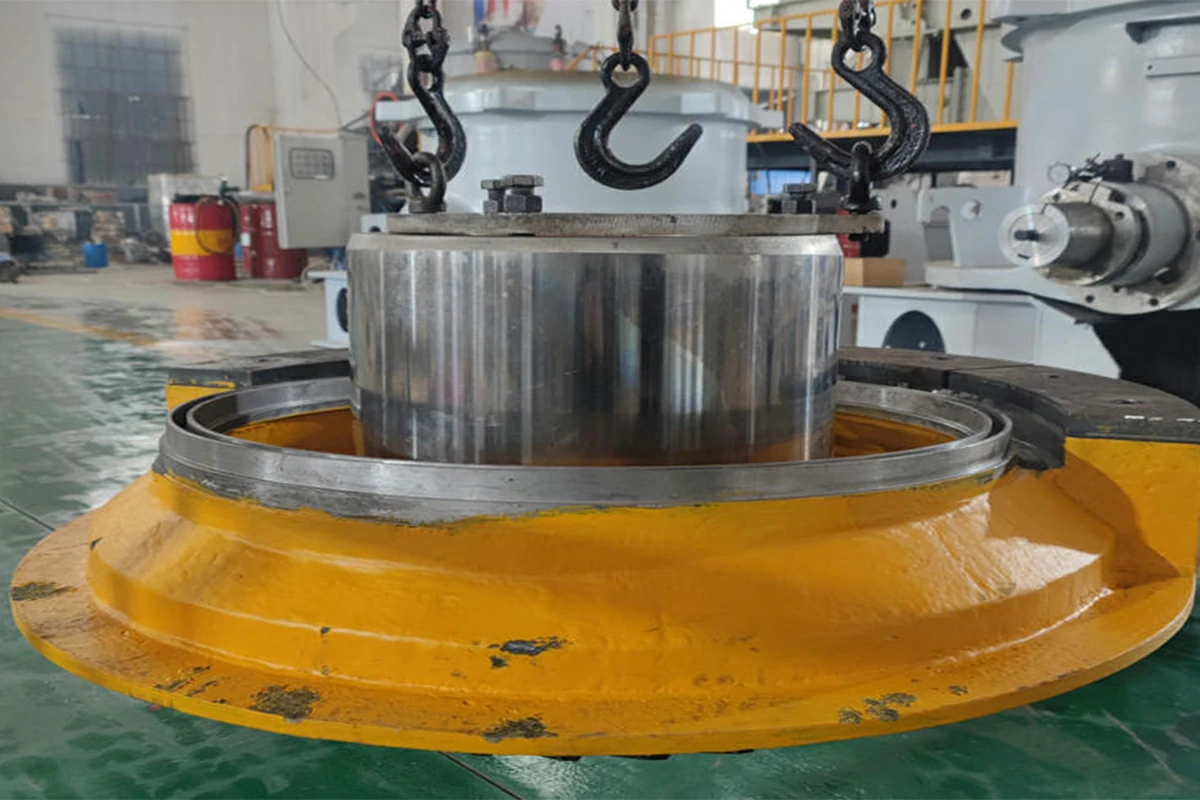
I recall a site visit to an iron ore operation running a Thyssenkrupp gyratory crusher where the maintenance team had been sourcing replacement concaves from three different suppliers simultaneously to manage cost. The result was a mismatch in liner profile geometry — tolerances that should have been held to within 0.5 mm had drifted to over 2 mm across adjacent liner segments. The eccentric throw was loading unevenly, the main shaft was running 12°C above its thermal baseline, and the site was burning through spider bearing assemblies at double the expected rate. Switching to a single qualified supplier and re-validating liner geometry reduced bearing replacement frequency by 60% within two quarters.
The lesson is straightforward: crusher spare parts are not interchangeable commodities. Engineering traceability, dimensional certification, and material verification are non-negotiable — particularly for high-load components operating inside gyratory and cone crusher assemblies.
Preventive Maintenance Recommendations for Crusher Wear Parts
A structured preventive maintenance program built around crusher spare parts management is the single most effective way to reduce unplanned downtime. The following framework reflects best practices derived from field experience and aligns with ISO 55000 asset management principles.
- Establish a baseline wear profile: During the first 100 operating hours with new liners or jaw plates, take dimensional measurements at four equidistant points across the wear surface. Document these as your baseline. Re-measure every 250 hours thereafter. This allows you to project remaining service life with confidence rather than relying on visual inspection alone.
- Monitor bearing temperature continuously: For cone and gyratory crushers, install thermocouples on the eccentric bushing and thrust bearing assemblies. A sustained rise of more than 15°C above baseline is an early indicator of lubrication degradation or geometric misalignment — both of which accelerate wear on surrounding spare parts.
- Rotate blow bars at 50% wear: On horizontal shaft impact crushers, do not wait until blow bars reach the discard limit before rotating them. Rotating at the 50% wear point distributes impact stress more evenly across the rotor disc and significantly extends rotor service life. Track cumulative tonnage rather than operating hours, as feed density varies considerably across shifts.
- Inspect toggle plates after every 500 hours: Toggle plates are sacrificial components designed to fail before the pitman or frame in an overload event. Cracks or surface deformation beyond 1.5 mm should trigger immediate replacement. Sourcing a buffer stock of at least two toggle plates per machine is standard practice on any serious aggregate operation.
- Verify fastener torque after the first 8 hours of operation: Crusher spare parts that involve bolted connections — jaw plates, liner segments, blow bars — will experience initial seating and micro-movement during the break-in period. Re-torque all critical fasteners to specification after the first shift. For M30 grade 10.9 bolts on jaw plates, the target torque is 680–750 Nm. Failure to re-torque is one of the most common causes of premature liner loosening and accelerated wear.
- Implement a parts traceability system: Every replacement component that enters your crusher should carry a batch number, material certificate, and installation date. A simple spreadsheet is sufficient for smaller operations; larger plants benefit from integration with their CMMS. Without traceability, it is impossible to identify whether a wear issue originates from the part itself, the operating conditions, or the installation procedure.

Sourcing Crusher Spare Parts Responsibly
The global market for aftermarket crusher parts has grown substantially over the past decade, driven by the rising cost of OEM components and the improving quality of independent manufacturers. However, the quality gap between the best and worst aftermarket suppliers remains significant — and the consequences of a substandard component in a primary crusher are severe enough to warrant careful due diligence.
When evaluating a crusher parts supplier, request the following as a minimum: a current ISO 9001 certification, material test certificates (MTCs) issued per EN 10204 3.1 or 3.2 standard, dimensional inspection reports for the specific part number, and at least three references from operations running comparable equipment. Suppliers who cannot provide these documents on request should not be considered for critical wear components regardless of price competitiveness.
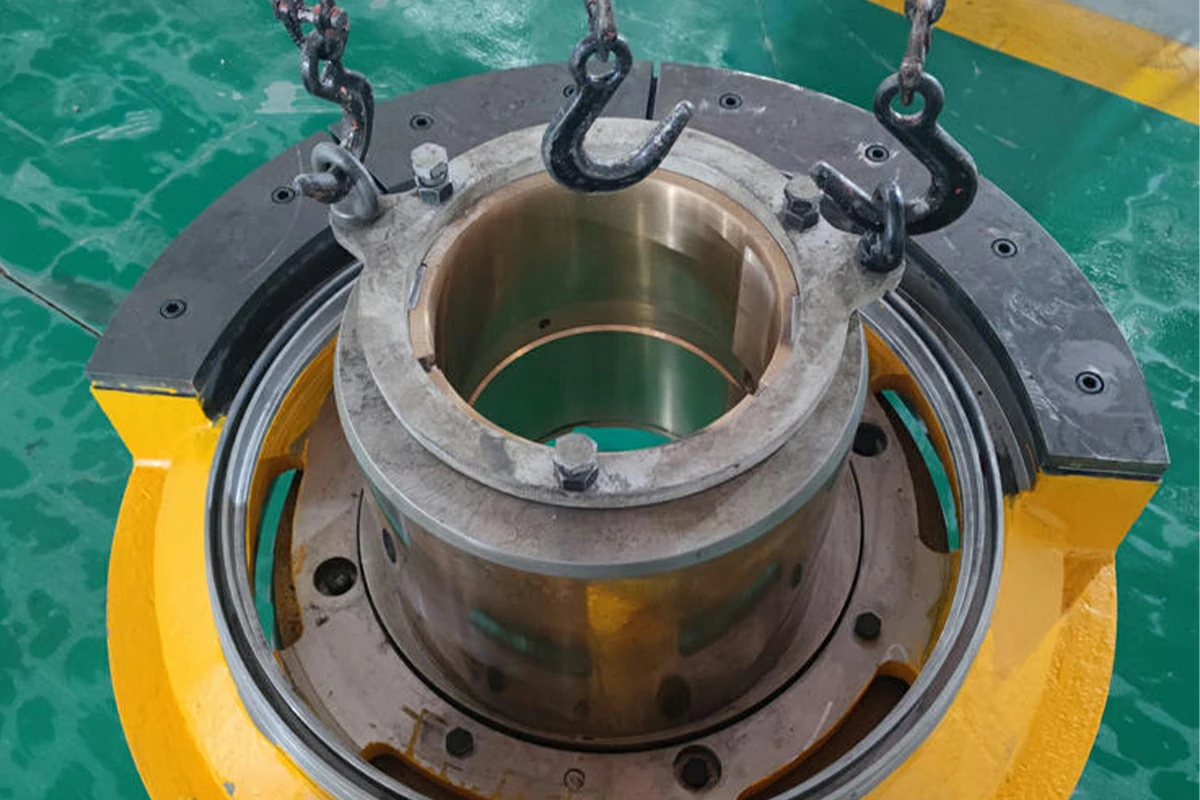
For operations running equipment from Thyssenkrupp, FLSmidth, or Krupp — whose legacy gyratory and jaw crusher designs remain in service at a significant number of older mineral processing plants — the availability of OEM parts has become increasingly inconsistent. This has created a legitimate and growing market for professionally engineered aftermarket crusher spare parts that replicate original geometry and material specifications. The key differentiator among these suppliers is their reverse engineering capability and their willingness to provide dimensional certification against original drawings.
Frequently Asked Questions
How do I verify that aftermarket crusher spare parts meet the same material standard as OEM components?
Request a material test certificate (MTC) issued to EN 10204 standard, specifically 3.1 (manufacturer-verified) or 3.2 (third-party verified). The certificate should specify chemical composition, hardness values, and heat treatment records. If you have access to a portable XRF analyzer on site, you can spot-check alloy composition against the certificate at goods receipt. For high-value components such as mantles, concaves, or gyratory liners, consider engaging an independent inspection laboratory to conduct verification testing before installation.
What is the best way to store crusher spare parts to prevent degradation before installation?
Crusher wear parts — particularly manganese steel castings — should be stored in a dry, covered environment away from direct ground contact. Use timber dunnage or pallet racking to ensure airflow beneath the components and prevent moisture accumulation. Anti-corrosion coating applied at the foundry typically provides 6–12 months of protection under standard storage conditions. For components held in stock longer than 12 months, re-apply a rust-inhibiting primer before installation. Rubber seals, O-rings, and polyurethane components should be stored separately in sealed packaging away from UV exposure and ozone sources; elastomers degrade rapidly when stored near electric motors or welding equipment.
What is a realistic transit time for crusher spare parts ordered internationally, and how should emergency procurement be handled?
Standard sea freight for crusher spare parts from major manufacturing hubs in China, India, or Europe to most mining destinations runs 20–45 days depending on port congestion and customs clearance. Air freight reduces this to 5–10 days but carries a significant cost premium — typically 6–10 times the sea freight rate for heavy castings. For operations where downtime cost exceeds $50,000 USD per day, the economics of air freight are straightforward. The best mitigation strategy is maintaining a minimum safety stock of the highest-wear, longest-lead-time components on site. Identify your top five failure-frequency parts, calculate consumption rate against lead time, and size your warehouse buffer accordingly. A well-managed spare parts inventory reduces the frequency of emergency procurement by 70–80% in most operations.


 English
 French
 German
 Spanish
 Russian
 Arabic
 Portuguese
 Turkish