

Crusher Bushings | Socket Liner For Cone Crusher
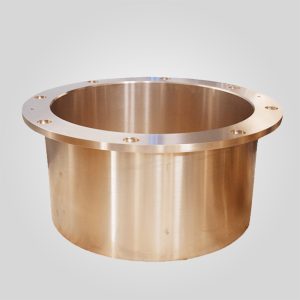
Robust Construction: Heavy-duty ring structure with central bore for main shaft protection
Precision Engineering: 8 evenly spaced mounting holes for secure installation
Superior Material: High-grade bronze alloy (C93200/SAE 660 equivalent) with natural lubricating properties
Wear Resistance: Specially hardened surface to withstand continuous impact and abrasion
Thermal Stability: Maintains structural integrity under temperatures up to 200°C
库存 182 件
PRODUCT
Description
| Technical Specification | Data / Standard |
|---|---|
| Part Name | Socket Liner / Spherical Bearing Seat |
| Compatible Series | Symons 3′ – 7′ Standard & Short Head |
| Material Grade | High-Leaded Tin Bronze (ASTM B505 C93700 / SAE 64) |
| Casting Method | Centrifugal Casting (High Density) |
| Chemical Composition | Cu: 80%, Sn: 10%, Pb: 10% (High Lubricity) |
| Hardness | 65 – 80 HBW |
| Machining Tolerance | Spherical Radius ±0.02mm |
| Operating Temp | Optimal: 38°C – 55°C (Max Peak: 80°C) |
Symons Cone Crusher Socket Liner: Premium C93700 Bronze Replacement
The Socket Liner (often referred to as the Socket Sealing Ring or Crusher Bushing) acts as the primary thrust bearing in Symons and Nordberg style cone crushers. It cradles the Head Ball, supporting the massive vertical load of the crushing head while accommodating the eccentric “wobble” motion. Unlike static bushings, this component requires a perfect spherical geometry to maintain the hydrodynamic oil film essential for operation.
We manufacture these critical crusher spares using ASTM C93700 High-Leaded Tin Bronze via a Centrifugal Casting process. This ensures a dense, porosity-free grain structure capable of withstanding the hydraulic shock loads typical in aggregate and mining applications. Our liners are engineered to be direct replacements for Symons 3ft, 4ft, 4¼ft, 5½ft, and 7ft models.
Metallurgy: The Case for High-Leaded Bronze
Standard bearing bronze (C93200) is insufficient for the socket liner application due to the risk of oil starvation. We utilize C93700 for specific reasons:
- Emergency Lubrication: The 10% Lead content exists as microscopic free pools within the alloy. If the oil film ruptures due to a pump failure or overload, the lead smears onto the Head Ball, preventing catastrophic welding (seizing).
- Embeddability: The material hardness (65-80 HBW) is tuned to allow abrasive silica particles to embed into the liner surface rather than scoring the expensive steel Head Ball.
Field Diagnosis: When to Replace
Failure to replace a worn socket liner can destroy the Head Ball. Monitor these indicators:
1. “Head Spin” (Coupling Drag)
When running empty, the crusher head should rotate slowly or be stationary. If it spins rapidly with the countershaft (Head Spin), the socket liner friction is too high due to poor lubrication or contact. This requires immediate inspection.
2. The “Step” Test
During liner changes, run your finger across the spherical surface. If you feel a distinct ridge or “step” at the edge of the head ball’s travel path, the liner is worn beyond limits and cannot maintain oil pressure.
3. Glitter in Oil
Inspect the return oil filter. Fine gold dust is normal break-in wear. Large, distinct bronze flakes indicate delamination or severe grinding.
Performance Comparison
| Feature | Standard Sand Cast (C93200) | Our Centrifugal C93700 | Benefit |
|---|---|---|---|
| Structure Density | Porous (Risk of Leakage) | 100% Dense | Maintains Oil Pressure |
| Anti-Seize Property | Low (7% Lead) | High (10% Lead) | Protects Head Ball |
| Service Life | Baseline | +35% Extended | Lower Maintenance Cost |
Installation Expert Advice
[Expert Tip] Do not simply bolt the new liner in.
1. Interference Fit: Many socket liners are designed for a light interference fit. Use Dry Ice to shrink the liner for easier installation without damaging the socket bore.
2. Blueing Check: Before final assembly, apply Engineer’s Blue to the Head Ball and seat it on the new liner. Rotate it slightly. You must see at least 80% contact area. If the contact is only a ring (point loading), the oil film will fail, and the liner will burn within hours.
Applications: Primary and Secondary crushing in Granite, Basalt, and Iron Ore processing plants.
“Authoritative Engineering Data: All critical metallurgical specifications and dimensional tolerances (e.g., ±0.05mm) are strictly governed by the master English documentation. While localized versions are provided for operational reference, the English original remains the sole binding authority for quality inspection and technical compliance.”



 English
 French
 German
 Spanish
 Russian
 Arabic
 Portuguese
 Turkish