
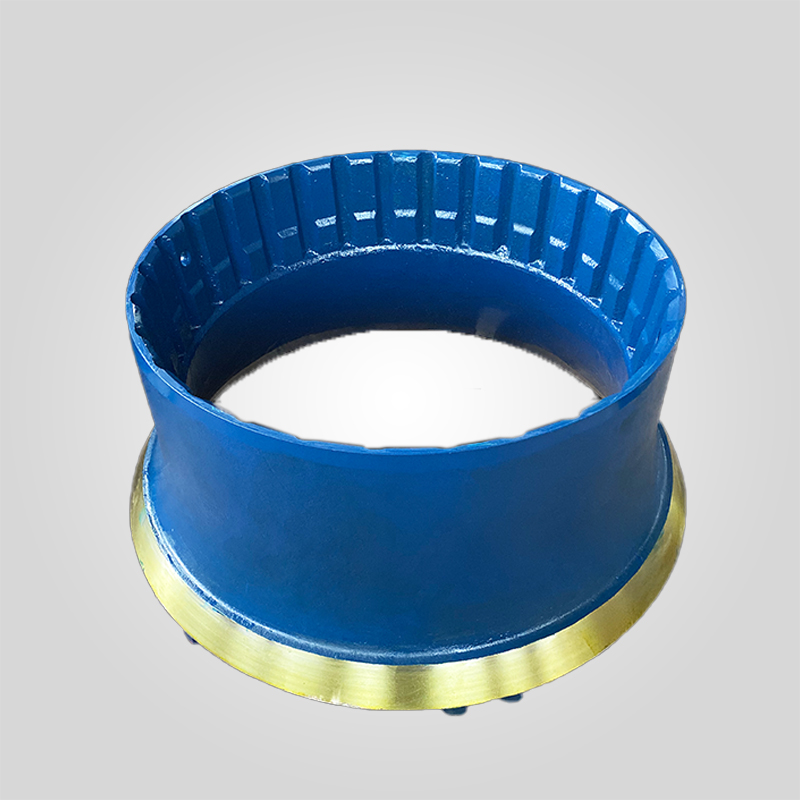

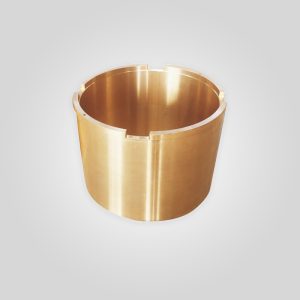
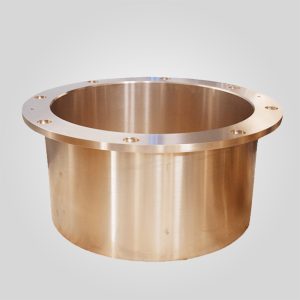
CONCAVE EC 452.3027-001 Sandvik Cone Crusher Concave for H4800 H4000 CH440
Part Number: EC 452.3027-001
Compatible Models: Sandvik H4800, H4000, CH440
Component Type: Cone Crusher Concave (BOWL LINER)
库存 182 件
PRODUCT
Description
Technical Analysis: EC 452.3027-001 Concave for Sandvik CH440 and H4800 Cone Crushers
Premature wear in secondary crushing stages often manifests as distinct “cupping” near the discharge zone, a failure mode that typically indicates a mismatch between the feed material’s compressive strength and the metallurgy of the wear liner. For operators running Sandvik H4800, H4000, or CH440 cone crushers, the EC 452.3027-001 concave represents a critical component where dimensional precision meets metallurgical science. Achieving the target service life of 3,000+ hours in medium-abrasive applications requires more than just correct geometry; it demands a strict adherence to ASTM A128 standards and precise installation protocols.
This technical dossier analyzes the material composition, installation torque specifications, and tribological behavior of this Mn13Cr2 cone crusher part to ensure optimal throughput and reduced downtime costs.
Engineering Specifications and Compatibility Data
The following technical data correlates with OEM standards for the EC 452.3027-001 part number. All dimensional tolerances adhere to ISO 8062-3:2007 (grade DCTG 9 for casting).
| Specification Category | Technical Parameter |
|---|---|
| OEM Part Number | EC 452.3027-001 |
| Compatible Equipment | Sandvik H4800, H4000, CH440 |
| Component Weight | 784 kg (± 2% casting tolerance) |
| Material Standard | ASTM A128 Grade A (Mn13Cr2 Modified) |
| Initial Hardness | 200 – 220 HBW |
| Work-Hardened Capability | 450 – 550 HBW (Surface) |
| Tensile Strength | ≥ 800 MPa |
| Yield Strength | ≥ 350 MPa |
| Machining Tolerance | Ra ≤ 6.3 μm (Mating Surfaces), ±0.05mm fit |
Material Science: The Physics of Mn13Cr2 Work Hardening
The performance of the EC 452.3027-001 relies heavily on the austenitic manganese steel structure. While standard carbon steel relies on inherent hardness, Mn13Cr2 (13% Manganese, 2% Chromium) functions through a unique tribological phenomenon known as work hardening.
Upon casting, the microstructure is fully austenitic, providing high toughness (Impact energy ≥ 100J/cm²) but relatively low initial hardness (approx. 220 HBW). When rocks impact the concave surface inside the crushing chamber, the crystal lattice deforms. This plastic deformation triggers a phase transformation in the surface layer from austenite to martensite. This transformation creates a hardened “skin” reaching up to 550 HBW, which is highly resistant to gouging abrasion, while the core remains ductile to absorb shock loads up to 180 MPa without cracking.
[Option B: Pro-Tip] Ideally, the feed material must be hard enough to trigger this hardening effect. If you are crushing soft limestone (Compressive Strength < 80 MPa), the manganese steel may wear out via abrasion before it has a chance to work-harden. In such low-stress applications, consider switching to a modified alloy with higher initial hardness to prevent rapid abrasive wear.
Chromium Alloy Enhancement
The addition of 2% Chromium (Cr) to the standard Hadfield steel matrix modifies the carbide precipitation. It reinforces the grain boundaries and increases the yield strength. This is particularly crucial for the H4800 and CH440 models, which exert significant hydro-set pressures. Without the chromium stabilization, standard Mn13 parts risk plastic deformation—commonly known as “mushrooming”—where the metal flows under pressure, altering the chamber geometry and potentially locking the mantle in place.
Critical Installation Protocols and Tolerance Checks
Improper installation accounts for nearly 30% of premature concave failures. The fitment between the concave and the top shell of the Sandvik CH440 must be precise to prevent movement during operation.
1. Surface Preparation and Inspection
Before installing the EC 452.3027-001, technicians must clean the seating surface of the top shell. Any debris or old backing compound thicker than 2mm can cause point-loading stresses. Inspect the mating surfaces for wear; if the top shell seating area has a roughness greater than Ra 12.5 due to fretting, it must be repaired or machined.
2. Backing Compound Application
The void between the concave and the top shell must be filled with a high-compressive strength epoxy backing compound.
- Mixing Ratio: Strictly adhere to the manufacturer’s resin-to-hardener ratio.
- Pouring Temperature: Ensure ambient temperature is above 15°C to facilitate flow.
- Volume Calculation: For the H4800, calculate the volume precisely to avoid air pockets. Voids behind the manganese can lead to catastrophic cracking when the crusher handles uncrushable material (tramp iron).
3. Torque Sequence
The fixing bolts or wedges must be tightened to the specific torque values outlined in the Sandvik maintenance manual. This is not a “tighten until it stops” scenario. Uneven torque can distort the concave ring, leading to stress concentration points that act as crack initiation sites under cyclic loading.
Preventative Maintenance via Oil Analysis and Wear Patterns
While the concave is a wear part, its condition directly affects the crusher’s lubrication system. A worn-out concave changes the crushing angle, increasing the vertical force component and causing “ring bounce.”
[Option C: Field Case Snippet] We recently diagnosed a CH440 unit in a granite quarry experiencing frequent high-temperature alarms. The oil analysis showed Copper (Cu) levels spiking to 500 ppm and Lead (Pb) at 150 ppm. While the maintenance team suspected a bushing failure, the root cause was actually a concave worn beyond 70%. The excessive wear had altered the crushing geometry, causing severe chatter that hammered the eccentric bushing against the main shaft. Replacing the EC 452.3027-001 concave resolved the vibration issues and normalized the oil samples.
Visual Wear Indicators
Operators should conduct weekly inspections focusing on:
- Galling: Signs of metal transfer near the top, indicating loose fitment.
- Spalling: Flaking of the surface metal, suggesting excessive impact pressure or defective casting heat treatment.
- Uneven Wear: If one side wears faster than the other, check the feed distribution. An off-center feed will drastically reduce the lifespan of any crusher spares.
Total Cost of Ownership (TCO): OEM Standard vs. Low-Cost Aftermarket
Procuring crusher spares involves a balance between unit price and operational expenditure (OPEX). A low-cost generic foundry might offer a replica of EC 452.3027-001 at a 30% discount, but the metallurgical inconsistencies often result in a hidden cost structure.
Consider a standard operation running 2,000 TPH.
- Premium Mn13Cr2 Concave: Cost $X, Lifespan 2,500 Hours. Cost per hour = $0.0004X. Changeout downtime: 1 shift per 4 months.
- Low-Grade Alternative: Cost $0.7X, Lifespan 1,500 Hours. Cost per hour = $0.00046X. Changeout downtime: 1 shift per 2.5 months.
The “cheaper” part actually increases the hourly wear cost by 15% and nearly doubles the production revenue lost due to downtime. Furthermore, lower manufacturing tolerances in aftermarket parts can lead to poor fitment, necessitating hours of grinding during installation—a labor cost often overlooked in the purchase order.
Conclusion and Expert Recommendation
The EC 452.3027-001 concave is integral to the efficiency of Sandvik H4800 and CH440 crushers. By utilizing ASTM A128 Grade A Mn13Cr2 steel, properly backed with epoxy and monitored through rigorous wear analysis, operators can maximize their secondary crushing stages.
Expert Reminder: Always verify the chamber configuration (Extra Fine, Fine, Medium, Coarse) before ordering. Installing a “Medium” concave when the feed distribution requires a “Coarse” profile will result in immediate bridging, reduced throughput, and potential main shaft damage. Ensure your closed side setting (CSS) calibration is adjusted post-installation to account for the new wear profile.
Frequently Asked Questions (FAQ)
Q1: How do I know if Mn13Cr2 or Mn18Cr2 is better for my application?
Mn13Cr2 is the industry standard for medium abrasion and moderate impact. If you are crushing extremely hard, abrasive river stone or granite (Silica content > 70%) and experiencing rapid wear without work hardening, upgrading to Mn18Cr2 or Mn22Cr2 wear parts may prolong service life, provided the impact energy is sufficient to harden the steel.
Q2: What is the correct procedure for breaking in a new concave?
Avoid running at full load immediately. Operate the crusher at 50% feed rate for the first 4-8 hours to allow the concave surface to undergo initial work hardening and stabilize the backing compound. Retighten all fixing bolts after the first shift to compensate for any thermal expansion or settling.
Q3: Can I reuse the backing compound from the previous installation?
Absolutely not. The old backing compound becomes brittle and loses its compressive strength. It must be completely chipped away to ensure the new EC 452.3027-001 concave sits flush against the top shell. Reusing old backing leads to air gaps, vibration, and eventual cracking of the manganese steel.
“Authoritative Engineering Data: All critical metallurgical specifications and dimensional tolerances (e.g., ±0.05mm) are strictly governed by the master English documentation. While localized versions are provided for operational reference, the English original remains the sole binding authority for quality inspection and technical compliance.”

 English
 French
 German
 Spanish
 Russian
 Arabic
 Portuguese
 Turkish