

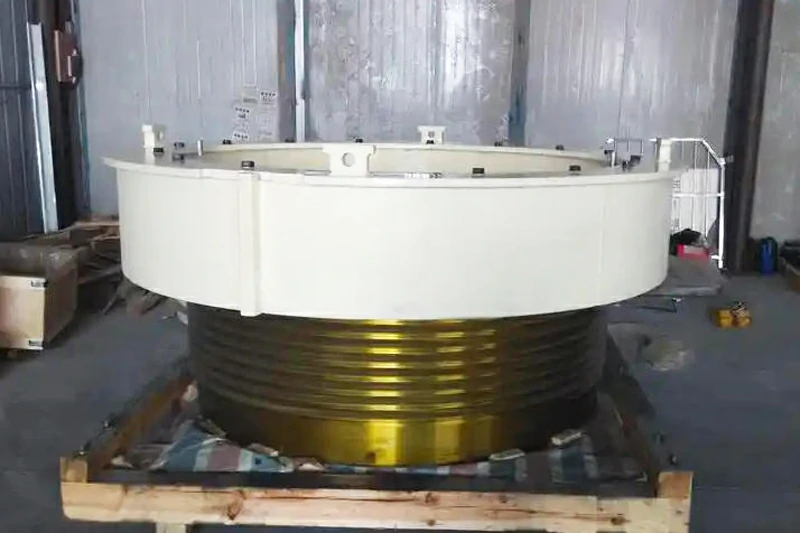
Cone Crusher Bowl Assembly METSO
A purchasing mistake in crusher spares rarely shows up on the invoice first. It shows up when a jaw die will not seat flat, when a cone mantle settles after the first shift, when a blow bar loses balance at high rotor speed, or when a bushing runs hot because the oil groove and bore finish were treated as minor details. Buying Crusher Spare Parts Wholesale can reduce purchasing cost, but only when the buyer controls specifications, inspection, inventory planning, and supplier accountability. A low unit price without engineering control can become the most expensive decision in the crushing circuit.
For mines, quarries, cement plants, aggregate yards, and mobile crushing contractors, wholesale buying is not simply bulk ordering. It is a maintenance strategy. A primary jaw crusher may consume fixed jaws, swing jaws, cheek plates, wedges, toggle seats, and bolts at different rates. A secondary cone crusher may require mantles, concaves, torch rings, dust seals, eccentric bushings, socket liners, countershaft bushings, and hydraulic components. An impact crusher may need blow bars, impact plates, apron liners, rotor protection plates, side liners, and wear blocks. If each item is bought only when it fails, freight cost, downtime, and emergency labor will keep rising. If parts are bought wholesale with the wrong metallurgy or poor fit, the warehouse becomes full of unusable metal.
Start with Part Criticality Before Negotiating Price
The first step is to separate crusher spare parts by risk. A jaw plate wearing out is predictable. A main shaft failure is not. A cheek plate can usually be replaced during a planned stop. A failed eccentric bushing on a cone crusher can shut down the whole plant and damage the head, gear set, and lubrication system. Wholesale procurement should not treat all parts equally. Wear parts, mechanical drive parts, hydraulic parts, sealing parts, and fasteners need different buying rules.
High consumption items are good candidates for Crusher Spare Parts Wholesale because demand is regular and measurable. These include jaw plates, mantles, concaves, blow bars, side liners, VSI shoes, anvils, screen wear liners, and chute liners. Critical precision parts require stricter inspection and may justify smaller batch sizes until the supplier proves consistency. These include eccentric bushings, countershaft bushings, sleeves, pinions, bearings, hydraulic cylinders, and lubrication pump components. When the part carries high mechanical risk, the lowest price should never be the main decision factor.

jaw crusher pitman
Build the Specification from the Machine and the Rock
A correct purchase order should say more than machine model and part name. It should include crusher model, serial reference when available, feed size, closed side setting, daily operating hours, rock type, compressive strength, abrasiveness, moisture, tramp metal risk, and current wear pattern. A 1100 mm by 800 mm jaw crusher processing blasted granite with 180 MPa compressive strength does not need the same jaw profile as a recycling jaw working on concrete and rebar. A cone crusher running secondary duty at a 28 mm closed side setting has different liner demands from a tertiary cone working near 10 mm.
For manganese wear parts, common grades include Mn13Cr2, Mn18Cr2, and Mn22Cr2. New manganese castings often show hardness around 180 HB to 220 HB before work hardening. Under correct impact and compression, the working surface can reach about 450 HB to 550 HB. For impact crusher blow bars, high chrome iron around 58 HRC to 62 HRC can work well in clean limestone, while martensitic steel around 45 HRC to 50 HRC is safer where impact and light contamination are expected. Ceramic inserts can extend life in abrasive feed, but they require stable rotor speed, controlled feed size, and strong tramp metal protection.
Do Not Buy Hardness Without Understanding Wear Mode
Many buyers ask for harder material because they assume harder always means longer life. Field experience says otherwise. Abrasion, impact, compression, gouging, and heat all attack parts differently. A very hard blow bar can crack when uncrushable steel enters the impact chamber. A high manganese jaw plate can wear quickly if the feed is too soft to create proper work hardening. A cone liner with a thick profile can reduce chamber volume and cause poor product shape if the design is not matched to the crushing stage.

jaw wear plates
A better wholesale program compares wear mode and operating load. For clean limestone with low silica, a high chrome blow bar may be a strong option. For basalt, river gravel, copper ore, or iron ore with high abrasion, liner profile and work hardening behavior become more important. For wet sticky feed, fines can pack the chamber and create rubbing wear instead of efficient breakage. A supplier that recommends one alloy for every application is not solving the problem. It is only selling inventory.
Fit Accuracy Is Where Wholesale Savings Are Protected
Wholesale savings disappear quickly when parts require cutting, grinding, shimming, or rework during shutdown. A jaw die that does not sit flat can loosen wedges and damage the seat. A cone mantle with poor taper contact can create point loading on the head. A concave segment with inaccurate seating can shift and damage the top shell. A bushing with an incorrect bore can overheat the shaft and contaminate the oil with bronze particles.
For machined components, tolerances may need to stay within 0.03 mm to 0.08 mm depending on part function. Surface roughness, concentricity, oil groove geometry, chamfer quality, hardness depth, and bore roundness should be checked with instruments. For wear castings, the requirements are different but still strict. Bolt holes must line up, lifting points must be safe, seating faces must be clean, and liner profile must preserve the intended nip angle or crushing chamber curve. Buying Crusher Spare Parts Wholesale only works when every batch is verified before the parts reach the site.
Use Supplier Audits to Reduce Hidden Cost
A supplier audit does not need to be complicated, but it must be practical. Ask how the supplier controls chemical composition, heat treatment, casting defects, machining, traceability, and packing. For manganese castings, review heat numbers, ladle analysis, quenching records, and hardness readings. For high chrome parts, check carbide structure, hardness range, and crack inspection. For bushings and sleeves, check material grade, bore inspection, surface finish, and lubrication groove dimensions.
Good suppliers can provide inspection reports, photos of critical dimensions, material certificates, and packaging records. Strong suppliers also ask application questions before quoting. They want to know the feed material, output target, installed power, chamber type, operating hours, and previous failure history. Weak suppliers quote fast but cannot explain why a part failed. The buyer should reward engineering response, not only low pricing.
Calculate Cost by Operating Result
A cheaper part is not always a cheaper operating choice. A jaw plate that costs 20 percent less but lasts 35 percent fewer hours increases replacement frequency and exposes workers to more shutdown risk. A cone liner that saves money on purchase price but creates flaky aggregate, high recirculating load, and increased power draw can reduce plant profit. A blow bar that breaks early may damage rotor seats, apron liners, and bearings.
A useful comparison should include purchase price, freight, customs, storage, inspection time, installation labor, expected wear life, power draw, product quality, safety exposure, and lost production. A plant producing 400 tonnes per hour loses 3200 tonnes during an eight hour unplanned stop. In a larger mine, one failed critical part can cost more than an entire wholesale order. The best procurement teams compare cost per operating hour and cost per tonne after each wear cycle.
Set Minimum Order Quantity with Real Consumption Data
Minimum order quantity can reduce unit price, but overbuying creates cash pressure and dead stock. Before placing a wholesale order, review at least three previous change cycles when possible. Record installation date, removal date, operating hours, tonnes processed, feed source, crusher setting, and reason for removal. If the primary jaw uses two swing jaws for every one fixed jaw, the order ratio should reflect that reality. If a cone crusher consumes torch rings and backing material with every liner change, those small parts must be included.
A practical stocking plan should include one complete wear set for the primary crusher, one liner set for the secondary crusher, fast moving fastening hardware, backing compound, seals, filters, wedges, torch rings, and selected critical bushings. Remote mines and export operations may need a larger buffer because freight delays, customs clearance, and port congestion can interrupt production. Mobile contractors should plan spares around job location, expected rock hardness, and machine travel schedule.
Standardize Parts Without Ignoring Application Differences
Wholesale buying becomes easier when a company standardizes crusher models and part numbers. Standardization reduces warehouse complexity, improves purchasing leverage, and makes maintenance training easier. However, standardization should not force one liner profile into every application. A quarry running two identical cone crushers may still need different liner chambers if one machine works secondary duty and the other works tertiary duty.
A good parts list should include exact part number, machine model, drawing revision, material grade, casting weight, machining requirement, safety stock level, and approved supplier. Old part numbers should be controlled carefully because many crushers have been rebuilt, upgraded, or modified during their service life. A twenty year old machine may not match the catalogue drawing if the bowl, head, frame, or hydraulic adjustment system has been changed.
Protect Cash Flow with Staged Wholesale Orders
Buying Crusher Spare Parts Wholesale does not always mean filling the warehouse with a year of inventory at once. Staged orders can protect cash flow while still securing better pricing. A buyer may negotiate a six month price agreement, place the first shipment for immediate stock, and schedule later releases based on consumption. This helps avoid urgent freight while keeping inventory under control.
Payment terms, warranty terms, packaging standards, and claim procedures should be agreed before shipment. Heavy castings need timber support, steel strapping, rust protection on machined surfaces, and clear identification. A 1300 kg mantle or a 900 kg jaw plate can be damaged by poor handling before it ever reaches the crusher. Packing quality is part of the real cost, especially for sea freight and long inland transport.
Inspect the First Batch More Strictly Than Later Batches
The first wholesale batch should be treated as a qualification run. Do not install every part across all machines immediately. Choose one crusher, install one wear set or one component group, and monitor the result. Check fit during installation, settlement after the first shift, bolt tightness, oil temperature, amperage, vibration, product gradation, and wear pattern. For cone liners, verify closed side setting after initial operation because new liners can settle. For jaw plates, inspect wedges and cheek plate contact after the first shift.
Keep photos from the same angle at fixed intervals. A good record at 100 hours, 300 hours, and 600 hours can reveal whether the part is wearing evenly. Measure liner thickness at consistent points. Compare tonnes processed, not only calendar days. Rain, clay, low feed rate, and different blasted material can distort the result. Once the first batch proves fit and life, repeat orders become much safer.
Reduce Freight Cost Without Creating Downtime Risk
Freight is often a hidden cost in crusher spares. Air freight can rescue production but destroy savings. Sea freight is cheaper but needs planning. For wholesale orders, group heavy castings with small parts that are needed for installation. A liner set without bolts, wedges, backing compound, or seals can still leave the maintenance team unable to complete the job.
Packaging density matters, but safety matters more. Castings should not be stacked in a way that damages machined faces, lifting lugs, or seating surfaces. Labels should remain visible after transport. For export buyers, documents should match packing lists exactly. Incorrect descriptions, wrong weights, or missing part numbers can delay customs clearance and create avoidable downtime.
Use Data to Keep Suppliers Accountable
After every shutdown, record what happened. Did the part fit without rework. Did it reach the expected operating hours. Did it affect product shape. Did it increase power draw. Did it arrive with correct documents. Did the supplier respond quickly to questions. This information turns procurement into a performance system rather than a price chase.
When performance is strong, share field data with the supplier so they can improve future batches. When performance is weak, provide photos, operating data, hardness readings, and wear measurements. A serious supplier will investigate and respond with a technical explanation. A poor supplier will blame operation without evidence. Long term savings come from supplier development, not constant switching to the lowest quote.
Final Purchasing Recommendation
Crusher Spare Parts Wholesale can lower cost, shorten lead time, and improve maintenance planning when it is managed with engineering discipline. The best results come from clear specifications, correct metallurgy, fit verification, supplier audits, staged inventory, and field performance tracking. The cheapest order is rarely the best order. The best order is the one that keeps the crusher running safely, protects product quality, and reduces cost per tonne over multiple maintenance cycles.
For high consumption wear parts, wholesale buying can be a strong strategy when the supplier has proven casting control, machining accuracy, and application knowledge. For precision or safety critical components, qualification should be slower and inspection should be tighter. Treat every spare part as a link in the crushing system. When buying decisions are based on real operating data, mines and quarries can cut costs without gambling with uptime.


 English
 French
 German
 Spanish
 Russian
 Arabic
 Portuguese
 Turkish