
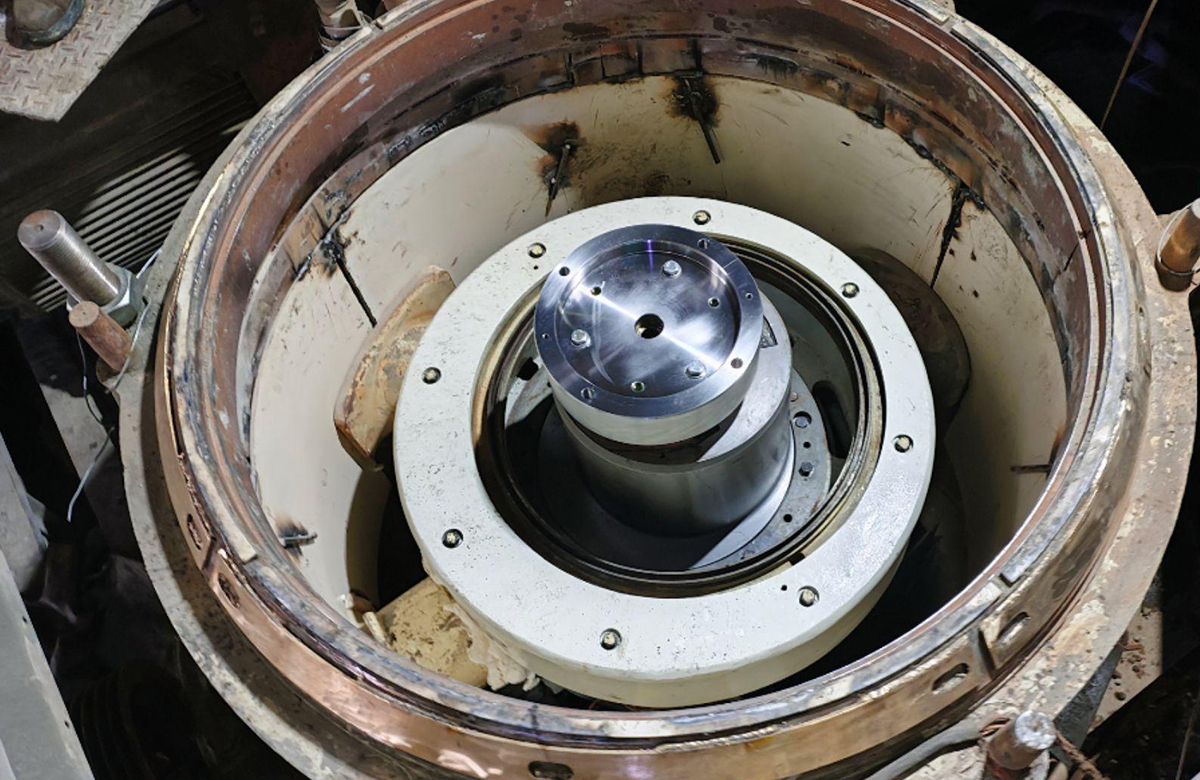
In high‑capacity mining operations, the socket liner plays a critical role in supporting the main shaft and protecting the crusher’s upper frame from wear. When this component reaches its wear limit, timely replacement is essential to maintain crushing efficiency, prevent structural damage, and avoid costly downtime.
This article provides a detailed, SEO‑optimized guide covering the socket liner replacement process, recommended service intervals, and the failures caused by delayed replacement—ideal for mining operators, maintenance teams, and equipment managers.
1. What the Socket Liner Does and Why It Matters
The socket liner is a replaceable bronze or alloy component located between the main shaft and the upper frame of a cone crusher. Its primary functions include:
- Providing a durable, low‑friction support surface
- Protecting the crusher frame from direct wear
- Maintaining proper alignment of the main shaft
- Ensuring stable crushing force distribution
Because the socket liner absorbs continuous load and vibration, it is considered a high‑wear, high‑impact spare part in mining crushers.
2. Step‑by‑Step Socket Liner Replacement Procedure
Below is a complete, field‑proven workflow used in modern mining sites. The steps apply to most major cone crusher brands.
Step 1: Shutdown and Safety Preparation
- Stop the crusher and feeding equipment
- Lock out and tag out all electrical and hydraulic systems
- Remove material from the crushing chamber
- Release hydraulic pressure and secure the upper frame
- Ensure the work area is clean and free of loose rock
This step prevents accidental movement and ensures safe access to the socket assembly.
Step 2: Remove the Upper Frame Assembly
- Disconnect lubrication and hydraulic lines
- Mark hose positions to avoid incorrect reassembly
- Loosen and remove the upper frame bolts in a cross‑pattern
- Use certified lifting equipment to raise the upper frame
- Move the assembly to a stable, supported position
Proper lifting prevents damage to the frame and avoids misalignment during reassembly.
Step 3: Remove the Worn Socket Liner
- Clean the area around the socket to improve visibility
- Identify the liner’s fastening method (bolts, clamps, or interference fit)
- Remove bolts, clamps, or locating pins
- Use pry bars or lifting tools to extract the old liner
- Avoid hammering directly on the crusher frame
Once removed, inspect the liner for wear patterns that may indicate lubrication or alignment issues.
Step 4: Inspect and Prepare the Mounting Surface
- Clean all mating surfaces thoroughly
- Remove old adhesive, rust, and debris
- Check for cracks, scoring, or deformation on the frame
- Measure flatness and clearance using feeler gauges
- Verify that the new socket liner matches the correct model and dimensions
This step ensures the new liner seats properly and maintains correct shaft alignment.
Step 5: Install the New Socket Liner
- Perform a dry fit to confirm proper seating
- Align locating holes or pins
- Install bolts or clamps and tighten in a cross‑pattern
- Apply the manufacturer‑recommended torque
- Ensure lubrication grooves and oil passages are unobstructed
High‑quality liners—such as NewReg crusher spare parts—offer precise machining and consistent fit, reducing installation time and improving reliability.
Step 6: Reassemble and Commission the Crusher
- Lower the upper frame into position
- Tighten all structural bolts to the specified torque
- Reconnect lubrication and hydraulic lines
- Refill oil and check pressure, flow, and temperature
- Perform no‑load testing to verify smooth rotation
- Gradually introduce material and monitor vibration and temperature
A proper commissioning process ensures the crusher returns to stable production.
3. Recommended Socket Liner Replacement Interval
The service life of a socket liner depends on ore hardness, crusher settings, lubrication quality, and production hours. Typical guidelines include:
• Standard mining conditions
8,000–12,000 operating hours before inspection
15,000–20,000 hours for planned replacement
• Hard or abrasive ore conditions
6,000–10,000 hours before inspection
Earlier replacement if wear exceeds 30–40%
• Condition‑based indicators
Replace immediately if:
- Contact surfaces show deep grooves or pitting
- The liner becomes loose or misaligned
- Oil temperature rises abnormally
- Vibration increases beyond normal levels
Using high‑quality aftermarket parts—such as NewReg socket liners, supplied to more than 50 countries—helps extend service intervals and reduce unplanned downtime.
4. Failures Caused by Delayed Socket Liner Replacement
Ignoring socket liner wear can lead to severe mechanical failures, including:
1. Upper Frame Wear or Structural Damage
A worn liner exposes the crusher frame to direct metal‑to‑metal contact, causing:
- Deep scoring
- Surface collapse
- Costly machining or frame replacement
This is one of the most expensive failures in cone crushers.
2. Main Shaft Misalignment and Fatigue
Uneven support from a worn liner causes:
- Shaft bending
- Fatigue cracks
- Potential shaft breakage
A broken main shaft results in long downtime and high replacement cost.
3. Increased Vibration and Component Failure
Abnormal vibration can damage:
- Bearings
- Drive couplings
- Hydraulic cylinders
- Foundation bolts
This creates a chain reaction of failures across the entire crushing plant.
4. Lubrication Problems and Overheating
Damaged contact surfaces disrupt oil film formation, leading to:
- Localized hot spots
- Oil degradation
- Accelerated wear of surrounding components
This often leads to emergency shutdowns.
5. Conclusion
The socket liner is a small component with a major impact on crusher reliability.
By following a structured replacement procedure, monitoring wear indicators, and using high‑quality spare parts such as NewReg socket liners, mining operations can:
- Reduce unplanned downtime
- Protect critical structural components
- Maintain stable production
- Lower long‑term maintenance costs



 English
 French
 German
 Spanish
 Russian
 Arabic
 Portuguese
 Turkish