
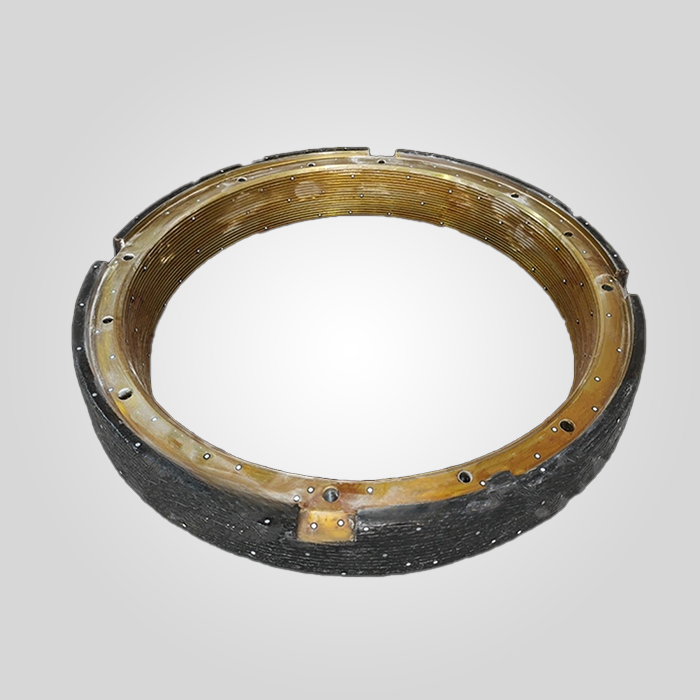
KB63-89 External Eye Nut 4470331 | Bronze Crusher Spares
Material:ZCuPb20Sn5, ZCuPb10Sn10 ZCuPb24Sn5
Model:KB63-89, KB54-75 , BK54-75, KB54-67, KB63-75
Weights(kg): 354kgs Item code: 4470331
库存 182 件
PRODUCT
Description
Technical Specifications: KB Series External Eye Nut
The External Eye Nut (Item 4470331) functions as the primary suspension interface for the main shaft assembly in Thyssenkrupp KB series gyratory crushers. Unlike simple fasteners, this 354kg bronze component is a precision-engineered bearing surface designed to allow vertical adjustment under massive tensile loads.
| Technical Parameter | Specification Data |
|---|---|
| OEM Item Code | 4470331 |
| Component Name | External Eye Nut / Outer Ring Nut |
| Compatible Model | Thyssenkrupp KB63-89, KB54-75, BK54-75, KB54-67 |
| Net Weight | 354 kg (±1.5% Precision Tolerance) |
| Material Grade | ZCuPb20Sn5 (High Leaded Tin Bronze) / DIN 1716 |
| Casting Method | Centrifugal Casting (Required for Structural Integrity) |
| Tensile Strength | ≥ 200 MPa |
| Hardness | 70 – 90 HBW (Optimized for Thread Protection) |
| Machining Precision | Thread Tolerance 7H / Surface Roughness Ra 1.6μm |
Core Advantages: Metallurgy & Manufacturing
In the heavy machinery sector, the reliability of crusher spares is dictated by the manufacturing process. For the External Eye Nut, the primary failure mode is thread stripping or seizing (galling) due to insufficient lubrication or material structural defects.
Centrifugal Casting vs. Sand Casting
We manufacture the 4470331 Eye Nut exclusively using Centrifugal Casting. This method is non-negotiable for high-leaded bronze parts weighing over 300kg.
- Elimination of Lead Segregation: In static sand casting, heavy lead (Pb) tends to sink to the bottom of the mold, creating a part with uneven material properties. Our centrifugal process spins the mold at high G-forces, locking the lead globules uniformly within the copper-tin matrix.
- Densification: The process forces impurities and gases to the bore (which is machined away), resulting in a casting with 15-20% higher tensile strength than standard gravity castings.
Material Science: ZCuPb20Sn5
This specific alloy (20% Lead, 5% Tin) provides exceptional emergency running properties. In the event of a lubrication failure in the suspension system, the high lead content acts as a solid lubricant, smearing across the threads to prevent the bronze nut from welding to the steel shaft, effectively saving the main shaft from catastrophic damage.
Performance Comparison: Durability Analysis
Field data comparing our centrifugal bronze nuts against standard aftermarket options reveals significant operational advantages.
| Metric | Standard Sand-Cast Nut | Our Centrifugal Nut (4470331) |
|---|---|---|
| Thread Strength | Variable (Risk of Porosity) | High (Dense Microstructure) |
| Anti-Seize Capability | Moderate | Superior (Uniform Lead Dispersion) |
| Load Handling | Standard Rating | Designed for Peak Loads |
| Service Life | Standard Cycle | +25% Extended Life |
Field Diagnostic & Maintenance Tips
As experienced crusher part suppliers, we advise the following inspection routine during scheduled maintenance:
1. Thread Profile Inspection:
Use a thread profile gauge to check the flank angle of the internal threads. If the threads show a “hooked” profile or thinning exceeding 10% of the original pitch, the nut has stretched and must be replaced immediately. Continued use risks catastrophic thread shear, dropping the main shaft.
2. Discoloration Check:
Inspect the bronze surface for “heat checking” (blue/black oxidation). This indicates the nut has operated above its temperature limit (typically >150°C), suggesting a lack of lubrication or extreme friction. This compromises the bronze’s structural integrity.
Quality Assurance
We ensure that this 354kg component is ready for the harsh environment of primary crushing:
- Ultrasonic Testing (UT): 100% inspection of the casting body to ensure no internal voids or cracks exist that could propagate under load.
- Coordinate Measuring (CMM): Verification of thread pitch diameter and concentricity to ensure smooth assembly with the main shaft.
Frequently Asked Questions (FAQ)
Q1: Can I use a different bronze alloy for longer life?
A: We generally advise sticking to the OEM-specified ZCuPb20Sn5. While harder bronzes (like Aluminum Bronze) are stronger, they lack the high lead content required for self-lubrication. Using a harder bronze increases the risk of damaging the expensive steel main shaft threads.
Q2: How do I store this 354kg bronze nut?
A: Bronze is susceptible to oxidation. The nut should be stored indoors, off the ground, and coated with a long-term rust inhibitor (Tectyl or equivalent). Avoid storing it near vibrating machinery to prevent “fretting” marks on the finished threads.
Q3: Is the item code 4470331 compatible with all KB series?
A: This specific item code is primarily for the KB63-89 and related large-frame models. Always verify the specific serial number of your machine, as slight variations in thread pitch exist between model generations.
Expert Note on Installation
From the Engineer’s Desk: The installation of the External Eye Nut is a critical safety procedure.
Cleanliness is paramount. Even fine grit trapped in the threads can initiate galling during the initial tightening sequence. We strictly recommend using a Molybdenum Disulfide (MoS2) paste on the threads during assembly.
Additionally, ensure the Eye Nut Inner (if replaced simultaneously) is matched in thread tolerance. Mismatched tolerances between inner and outer nuts can lead to uneven load distribution and premature thread stripping.
As
“Authoritative Engineering Data: All critical metallurgical specifications and dimensional tolerances (e.g., ±0.05mm) are strictly governed by the master English documentation. While localized versions are provided for operational reference, the English original remains the sole binding authority for quality inspection and technical compliance.”


 English
 French
 German
 Spanish
 Russian
 Arabic
 Portuguese
 Turkish