
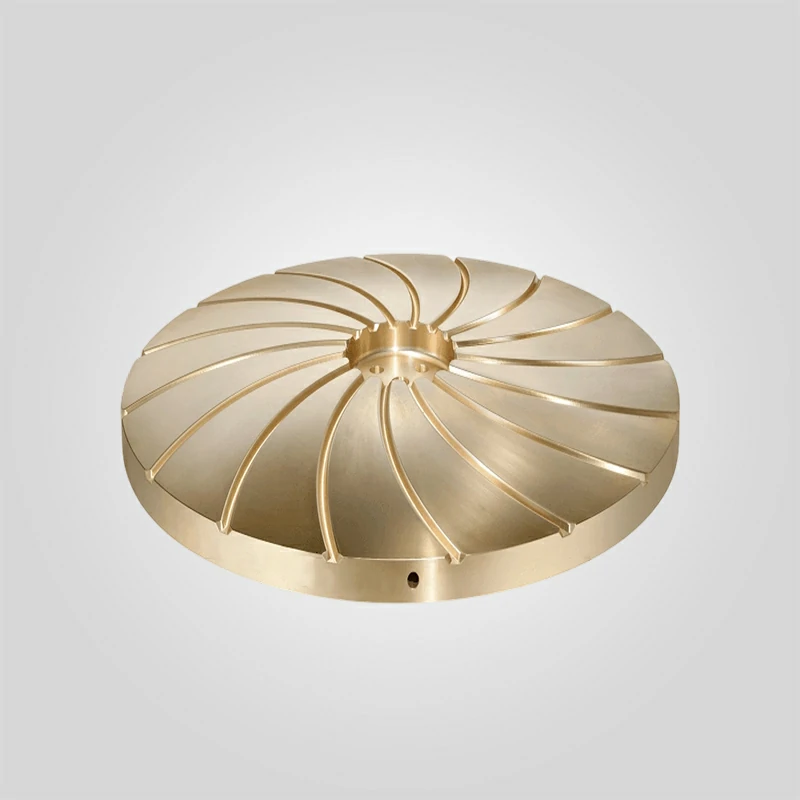
KB63-75 Gyratory Crusher Lower Thrust Bearing | Part No. 4207100
OEM Part Number: 420:7100
Compatible Crusher Model KB63-75 Gyratory Crusher
Component Type: Lower Thrust Bearing Assembly
Primary Function :Supports the vertical load of the main shaft and crushing head
Key Features :High load-bearing capacity, wear-resistant surfaces
库存 22 件
PRODUCT
Description
KB63-75 Lower Thrust Bearing: Critical Axial Support for Gyratory Crushers
The Lower Thrust Bearing (Part No. 4207100) is the hydrodynamic foundation of the KB63-75 Gyratory Crusher. Situated atop the hydraulic piston assembly, this component bears the total suspended weight of the main shaft and mantle, plus the dynamic downward vectors generated during the crushing of primary ore. Unlike generic wear parts, this bearing assembly dictates the vertical stability of the eccentric motion.
For mining maintenance teams sourcing from gyratory crusher parts specialists, reliability at this interface is non-negotiable. A failure here results in immediate main shaft scoring and prolonged downtime. Our assembly is engineered to maintain a consistent oil wedge under pressures exceeding 30 MPa, ensuring the longevity of your crusher spares inventory.
Core Engineering Advantages
- Compressive Yield Strength: Manufactured to withstand extreme axial loads. The alloy structure is designed to resist “creeping” or plastic deformation under the static weight of the crushing head (often exceeding 50 tons) combined with crushing forces.
- Hydrodynamic Efficiency: The bearing surface features precision-machined oil distribution patterns that facilitate the formation of a hydrodynamic film, separating the stationary piston from the rotating shaft to minimize friction coefficients.
- Thermal Conductivity: The specific bronze alloy composition is selected for its ability to rapidly dissipate heat generated by friction, preventing localized welding or “smearing” of the bearing material.
Technical Specifications & Material Composition
We strictly adhere to OEM metallurgy standards to ensure compatibility with the KB63-75 hydraulic support system. Our manufacturing process involves centrifugal casting to eliminate porosity.
| Parameter | Specification | Standard/Grade |
|---|---|---|
| OEM Reference | 4207100 | KB Series Compatible |
| Material Composition | High-Lead Tin Bronze | ASTM B505 / UNS C93700 (SAE 64) |
| Hardness | 90 – 100 HB (Brinell) | Engineered for Embeddability |
| Surface Finish | Ra 0.4μm – 0.8μm | Precision Lapped/Ground |
| Tensile Strength | > 240 MPa | EN 1982 Standard Compliance |
Performance & Manufacturing Precision
Sourcing from professional crusher part suppliers ensures you receive a component manufactured for performance, not just geometry:
- Wear Resistance: Our centrifugally cast bronze offers a 15-20% higher density than sand-cast alternatives, providing superior resistance to abrasive wear from oil contaminants.
- Embeddability: The high lead content allows small foreign particles (metal shavings, silica) to embed into the bronze rather than scoring the expensive steel mating surface of the main shaft.
- Dimensional Tolerance: Thickness tolerances are held to within ±0.05mm to ensure accurate initial Open Side Setting (OSS) and Closed Side Setting (CSS) calibration.
Field Diagnosis: Thrust Bearing Health
Preventative monitoring of the thrust bearing can save the main shaft. Watch for these indicators:
- Main Shaft “Drop”: If you notice the hydraulic position indicator rising to maintain the same CSS, it indicates the thrust bearing thickness is diminishing rapidly.
- Lubrication Temperature Spikes: A sudden rise in the return oil temperature often signals a breakdown of the oil film at the thrust bearing interface, leading to metal-on-metal friction.
- Bronze Glitter in Filter: The presence of coarse bronze flakes in the lube oil return filter is a definitive sign of thrust bearing disintegration or delamination.
Expert Engineer’s Note: Installation & Break-In
Critical Maintenance Advice: When replacing the 4207100 Lower Thrust Bearing, cleanliness is paramount. Even a 50-micron particle caught between the bearing and the piston can cause high spots and premature failure. We recommend a strict “Break-In” procedure: run the crusher empty for 2-4 hours while monitoring oil temperature to allow the new bronze surface to mate (burnish) with the steel shaft surface. Ensure your hydraulic system pressure is verified; insufficient lift pressure will prevent the formation of the initial oil film, causing immediate scoring on startup. Always verify the flatness of the supporting piston surface before installation.
“Authoritative Engineering Data: All critical metallurgical specifications and dimensional tolerances (e.g., ±0.05mm) are strictly governed by the master English documentation. While localized versions are provided for operational reference, the English original remains the sole binding authority for quality inspection and technical compliance.”


 English
 French
 German
 Spanish
 Russian
 Arabic
 Portuguese
 Turkish