
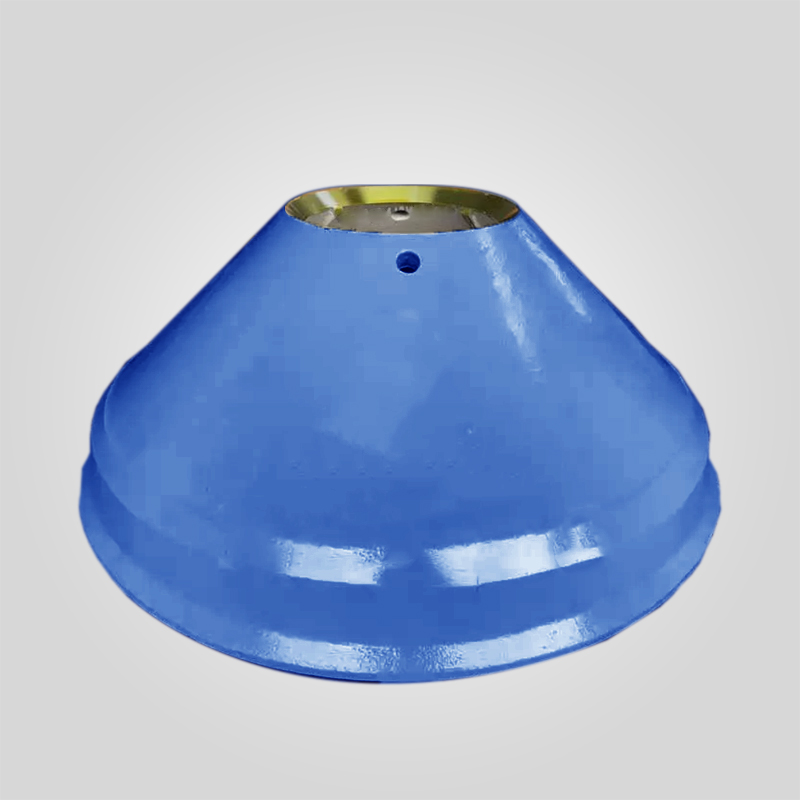
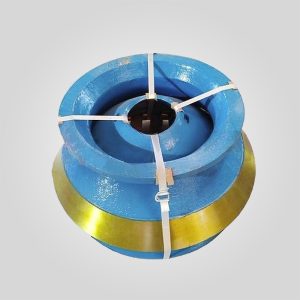
E-272-2332 Mantle Suit Telsmith 52sbs 57sbs Cone Crusher Parts
Part Name: Mantle
Part Number: E-272-2332, E272-2332, E 272 2332, E2722332
Suit to: Telsmith 52SBS Cone Crusher
Unit Weight: 820KG
Material: Mn18Cr2
Condition: New Wear Part
库存 182 件
PRODUCT
Description
Engineering Evaluation: Telsmith 52SBS Cone Crusher Mantle (E-272-2332)
Premature failure of the mantle in a Telsmith 52SBS cone crusher is rarely just about the steel quality; it is often a result of improper fitment tolerances causing stress risers on the head ball or inadequate work-hardening rates during the initial breaking-in period. When processing abrasive materials like granite or basalt with compressive strengths exceeding 200 MPa, standard OEM tolerances are the minimum requirement, not the gold standard. This technical analysis covers the metallurgical properties, installation protocols, and lifecycle performance of the E-272-2332 series mantle.
Core Technical Specifications
The E-272-2332 mantle serves as the moving wear component for the Telsmith 52SBS (Side Break Suspension) crusher. It is critical to verify the part number against the specific chamber configuration (Coarse, Medium, or Fine) to ensure the closed-side setting (CSS) remains within the hydraulic adjustment range.
| Specification Category | Technical Detail | Engineering Standard |
|---|---|---|
| OEM Part Number | E-272-2332 / Compatible with E2722332 | Telsmith OEM Spec |
| Compatible Equipment | Telsmith 52SBS Cone Crusher | SBS Series Fitment |
| Material Grade | Mn18Cr2 (High Manganese Alloy) | ASTM A128 Grade C / GB/T 5680 |
| Initial Hardness | 210 – 230 HBW | ASTM E10 |
| Work-Hardened Hardness | 480 – 550 HBW (In-service peak) | Field Measured |
| Unit Weight | 820kg (Tolerance ±1.5%) | ISO 2768-m |
| Machining Tolerance | Seating Surface Ra ≤ 6.3 μm | ISO 4287 |
Metallurgical Analysis: Why Mn18Cr2 Outperforms Mn13
For high-yield secondary and tertiary crushing stages, the material composition dictates the wear life. Standard Mn13Cr2 steel often fails to work-harden sufficiently before abrasive wear removes the surface material. This leads to a phenomenon known as “gouging wear,” where the rock cuts into the base metal deeper than the hardened skin.
Our E-272-2332 mantles utilize a modified Mn18Cr2 chemistry. By increasing the Manganese content to 18% and Chromium to 2%, we alter the austenitic grain structure. Under impact (high stress), the surface lattice structure deforms from austenite to martensite, creating a self-renewing wear-resistant layer reaching up to 550 HBW. Crucially, the core remains ductile (approx. 100 J/cm² impact toughness), preventing catastrophic shattering under uncrushable tramp iron events.
[Option C: Field Case Snippet]
“In a 2022 diagnostic at a copper mine in Chile, we replaced standard aftermarket mantles with this Mn18Cr2 specification. The previous liners suffered from vertical cracking due to low ductility. The Mn18Cr2 variant handled the 280 MPa andesite feed, extending the changeout interval from 450 hours to 720 hours, a direct 60% increase in operational lifespan.”
Failure Modes and Prevention Guidelines
Understanding why a cone crusher liner fails before its wear limit is key to preventative maintenance. The three most common failure modes for the 52SBS mantle are:
- Mushrooming (Plastic Deformation): This occurs at the bottom of the mantle. If the steel flows excessively, it can permanently lock the mantle to the head or damage the burning ring. Our casting process controls the carbon-to-manganese ratio to balance hardness and flow, significantly reducing mushrooming risk.
- Galling (Fretting Corrosion): Movement between the mantle interior and the head causes metal transfer. We recommend applying a molybdenum disulfide lubricant or a specialized epoxy backing compound to fill voids and prevent micro-movements.
- Spalling: Large flakes of steel breaking off indicate improper heat treatment or feed material that is too soft to work-harden the steel. Ensure your feed material is hard enough to trigger the Mn18 hardening effect.
Installation Best Practices for 52SBS Series
Correct installation is as vital as the casting quality. A poorly seated mantle will vibrate, pulverizing the backing material and damaging the precision-machined head.
1. Surface Preparation
Inspect the Telsmith 52SBS head for wear. If the head landing area has steps or depressions greater than 0.5mm, it requires weld repair and machining. Clean the seating surface thoroughly. Rust or old epoxy residues will create high spots, leading to stress concentration.
2. The Torch Ring Gap
[Option B: Pro-Tip]
“Always double-check the gap at the torch ring (locking nut). I have seen crews tighten the head nut without measuring the vertical clearance. If the mantle bottoms out on the head before it locks on the taper, it will spin. We recommend a minimum 5mm clearance at the bottom to allow for initial seating and thermal expansion.”
3. Backing Compound Application
Use a high-impact epoxy backing compound. Pour until the level reaches the top of the mantle locking area. Crucially, ensure the ambient temperature is above 15°C during curing, or use heating blankets. Cold backing becomes brittle and can shatter under the crushing force of the 52SBS.
Oil Analysis as a Wear Indicator
While visual inspection of the liner thickness is standard, analyzing the crusher’s lubrication oil provides early warning signs related to liner fitment. If the mantle is loose, vibrations transmit to the bronze bushings.
- High Copper (Cu) + Lead (Pb): Indicates eccentric bushing or socket liner wear, possibly caused by liner imbalance.
- High Silica (Si): Indicates dust seal failure. If the mantle is worn too thin, it may no longer protect the seal arrangement properly.
Total Cost of Ownership (TCO) Comparison
Procuring wear parts is often driven by the lowest purchase price, but the cost per ton tells the true story. Below is a comparison between a generic low-cost foundry product and our OEM-spec Mn18Cr2 E-272-2332 mantle.
| Cost Factor | Generic Aftermarket (Mn13) | Premium Mn18Cr2 E-272-2332 |
|---|---|---|
| Purchase Price | Base Price (100%) | Base Price + 25% |
| Wear Life (Granite) | ~400 Hours | ~650 Hours |
| Changeout Labor Cost | High (More freq. shutdowns) | Low (Reduced frequency) |
| Crane/Downtime Cost | $2,500 per event | $2,500 per event (fewer events) |
| Risk of Head Damage | High (Poor machining) | Negligible (CNC Precision) |
| Final Cost Per Ton | $0.18 / ton | $0.12 / ton |
By extending the wear cycle, you not only save on the spare parts cost but significantly reduce the exposure of maintenance crews to heavy lifting hazards, aligning with safety KPI targets.
Quality Assurance and Warranty
Every E-272-2332 mantle undergoes a rigorous rigorous inspection protocol before leaving the foundry. We utilize laser 3D scanning to verify dimensional accuracy to within ±0.3mm of the Telsmith original drawings. Ultrasonic testing (UT) is performed to ensure the casting is free from internal voids or porosity that could lead to cracking.
We stand behind our metallurgy with a warranty covering breakage during normal operation. A full material composition report and heat treatment curve are provided with every shipment, ensuring traceability for your ISO quality management systems.
Frequently Asked Questions (FAQ)
Q1: Can I use this Mn18Cr2 mantle if I am crushing soft limestone?
A: While Mn18Cr2 is premium, it requires impact to harden. For very soft limestone (under 100 MPa), Mn13Cr2 might actually be more cost-effective as the work-hardening threshold is lower. However, for mixed feeds containing silica, Mn18Cr2 remains the safer choice to prevent rapid abrasive wear.
Q2: How do I measure the remaining life of the E-272-2332 mantle?
A: We cast a “Gold Laser Cladding” wear indicator line at the critical wear zone. Alternatively, measure the mantle thickness at the bottom 150mm. Once the thickness reduces to approx 20-25mm, or if the production rate drops by >15% due to altered chamber geometry, replacement is necessary to protect the main frame.
Q3: Is this part interchangeable with the Telsmith 57SBS?
A: No. The 52SBS and 57SBS have different head diameters and tapers. Installing the wrong mantle will result in immediate mechanical failure. Always verify the casting number E-272-2332.
“Authoritative Engineering Data: All critical metallurgical specifications and dimensional tolerances (e.g., ±0.05mm) are strictly governed by the master English documentation. While localized versions are provided for operational reference, the English original remains the sole binding authority for quality inspection and technical compliance.”


 English
 French
 German
 Spanish
 Russian
 Arabic
 Portuguese
 Turkish