

Trio TC66 Cone Crusher Countershaft Assembly: Essential Guide
1. Power Reception and Transmission
The assembly receives power horizontally from the external motor via a sheave (pulley) and V-belts. The Countershaft then transmits this torque to the internal components. High-quality bearings and robust design are essential here to manage the input horsepower, which typically ranges from 160 kW to 185 kW for the TC66.
2. Speed Reduction and Force Conversion
The Pinion Gear, mounted on the Countershaft, is designed to mesh with the large Gear (often called the Crown Gear) attached to the Eccentric Assembly. This gear set performs the crucial task of reducing the shaft speed (from approximately 550-625 RPM down to the required crushing speed) and converting the rotational torque into the massive forces needed for crushing.
库存 2 件
PRODUCT
Description
Trio TC66 Countershaft Assembly: High-Torque Transmission for Cone Crushers
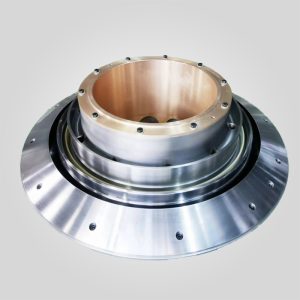
The Countershaft Assembly is the critical drivetrain interface for the Trio TC66 Cone Crusher, responsible for translating high-speed rotational energy (550-625 RPM) into the immense crushing force required for aggregate production. As a vital component of your crusher spares inventory, this assembly connects the external motor sheave to the internal eccentric mechanism.
Engineered to exceed standard OEM fatigue limits, our assembly addresses the common failure points of high-stress transmission. Whether you are a plant manager or a maintenance engineer sourcing crusher part suppliers, understanding the metallurgical composition and machining tolerances of this unit is essential for minimizing downtime.
Core Engineering Advantages
- Torque Management: Designed to handle input power ranging from 160 kW to 185 kW without torsional twisting, ensuring consistent energy transfer to the pinion.
- Thermal Dissipation: The assembly housing and bushing clearances are optimized to maintain oil film integrity (hydrodynamic lubrication) even under peak operating temperatures of 60°C – 80°C.
- Vibration Dampening: Precision balancing reduces harmonic vibrations that typically damage Wear parts and seals, extending the service interval of the entire drive train.
Technical Specifications & Material Composition
We utilize advanced metallurgy to ensure our Cone Crusher Liner drive components withstand shock loads. The pinion and shaft are manufactured using CNC precision machining and subjected to strict heat treatment protocols.
| Component | Material Specification | Hardness / Treatment | Manufacturing Process |
|---|---|---|---|
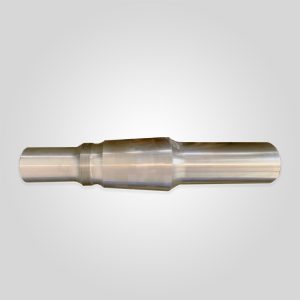
| Countershaft | AISI 4340 Alloy Steel | 280-320 HB (Quenched & Tempered) | CNC Turning & Precision Grinding |
| Pinion Gear | SAE 8620 / 18CrNiMo7-6 | 58-62 HRC (Case Hardened) | Hobbing & AGMA Class 10 Grinding |
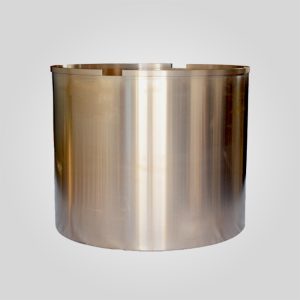
| Countershaft Bushings | C93700 High-Lead Tin Bronze | 90-100 HB | Centrifugal Casting |
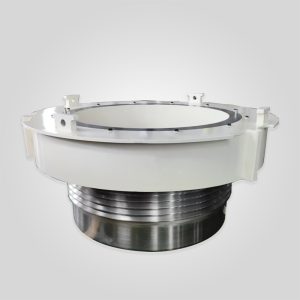
| Countershaft Box | ASTM A27 Grade 70-40 Cast Steel | Normalized | Sand Casting + Machining |
Performance & Manufacturing Precision
Replacing your current setup with our engineered assembly yields measurable operational improvements compared to standard sand-cast alternatives:
- Gear Mesh Efficiency: Our pinions feature a ground tooth profile that ensures 95% contact area, reducing noise by up to 15dB and minimizing backlash variability.
- Seal Life Extension: The seal seating areas are polished to Ra 0.4μm, significantly reducing lip wear on the oil flinger/seal, preventing dust ingress that contaminates the crusher spare parts lubrication system.
- Load Capacity: The use of centrifugally cast bronze bushings eliminates porosity, increasing the load-bearing capacity by approximately 20% compared to static cast equivalents.
Field Diagnosis: Countershaft Health Check
Early detection of countershaft issues can save your main frame and eccentric assembly. Look for these indicators:
- Pinion “Whine”: A high-pitched noise typically indicates improper backlash (too tight) or a deterioration of the gear tooth profile (pitting).
- Axial Vibration: If the countershaft box vibrates axially (in and out), it often signals that the bearings are worn beyond the maximum clearance tolerance, allowing the shaft to “float” excessively.
- Oil Leakage at Drive End: This is rarely just a bad seal; it usually indicates that the countershaft bushing wear has allowed the shaft to drop, deforming the seal lip.
Expert Engineer’s Note: Installation & Run-In
Critical Maintenance Advice: When installing a new Trio TC66 Countershaft Assembly, the “Backlash” and “Root Clearance” between the pinion and the ring gear are the most vital settings. We recommend setting the backlash strictly according to OEM manual specifications (typically 0.3mm – 0.6mm depending on size) and verifying it at four points 90 degrees apart to ensure the ring gear is concentric. Always replace the external oil seal when servicing this assembly. Furthermore, ensure the crusher spare parts used for the drive train are compatible with the specific tooth count of your existing gear to prevent immediate catastrophic binding.
“Authoritative Engineering Data: All critical metallurgical specifications and dimensional tolerances (e.g., ±0.05mm) are strictly governed by the master English documentation. While localized versions are provided for operational reference, the English original remains the sole binding authority for quality inspection and technical compliance.”


 English
 French
 German
 Spanish
 Russian
 Arabic
 Portuguese
 Turkish