
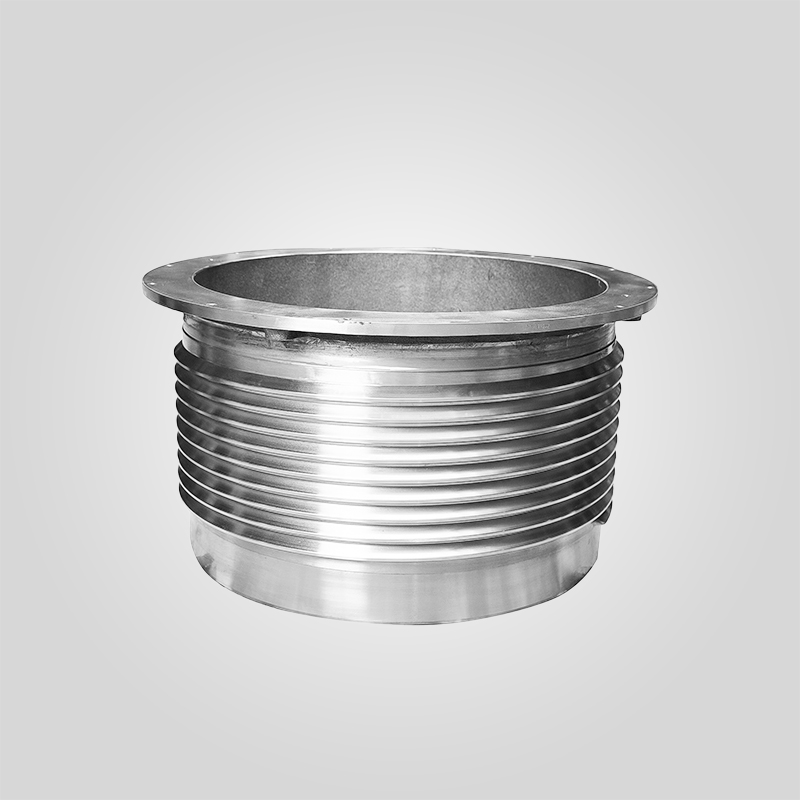
Cone Crusher Bowl – From Cone Crusher Parts supplier
Weight Range: 1.5-15 tons (model dependent)
Wall Thickness: 60-150mm with reinforced rib structure
Bowl Liner Compatibility: Standard and custom profiles available
Service Life: 2-3x longer than conventional alternatives in abrasive applications
库存 214 件
PRODUCT
Description
| Technical Parameter | Specification Standard | Engineering Benefit |
|---|---|---|
| Material Grade | ASTM A148 / DIN 17182 (GS-42CrMo4) | High yield strength to resist cyclic crushing loads without deformation. |
| Casting Method | Vacuum Degassed Sand Casting | Eliminates internal porosity and hydrogen embrittlement risks. |
| Heat Treatment | Normalizing & Tempering (Stress Relief) | Ensures dimensional stability and prevents thread distortion. |
| Machining Tolerance | ISO 2768-mK / Thread Class 7H | Guarantees smooth adjustment under load and precise liner seating. |
| NDT Inspection | Ultrasonic (UT) Level 2 / Magnetic Particle (MT) | 100% detection of surface cracks and subsurface voids. |
Cone Crusher Bowl: Heavy-Duty Structural Engineering
The Cone Crusher Bowl (often referred to as the Top Shell or Bowl Assembly) is the massive static component that transmits the crushing force from the hydraulic cylinders to the crushing chamber. Unlike wear parts, this structural assembly is not designed to wear out; it is engineered to withstand fatigue limits exceeding 250 MPa during the crushing of hard granite or iron ore. A structural failure here—often caused by poor casting homogeneity or thread deformation—can result in catastrophic machine downtime.
We manufacture replacement bowls that strictly adhere to OEM metallurgy, shifting away from generic steel to high-tensile alloy castings. This ensures compatibility with high-performance crushers like the Metso HP series, Sandvik CH/CS range, and classic Symons heavy-duty cycles.
Material Science & Manufacturing Precision
A common misconception in the aftermarket is using softer steels to reduce machining costs. Our bowls are cast from ASTM A148 Grade 90-60 or equivalent Alloy Cast Steel. We explicitly do not use Manganese steel for structural bowls, as its work-hardening nature makes precision thread machining impossible and leads to component seizure.
- Precision Threading: The large-diameter threads on the bowl exterior are CNC-machined in a single setup. This ensures perfect concentricity with the Adjustment Ring, preventing the dreaded “bowl float” or thread galling during setting adjustments.
- Reinforced Rib Structure: Utilizing Finite Element Analysis (FEA), our designs feature optimized rib thickness (60-150mm) to dissipate stress concentrations around the clamping cylinder points.
- Stress Relief Annealing: After casting, every bowl undergoes a strictly controlled heat treatment cycle to relieve residual casting stresses. This prevents the bowl from warping after it is machined, ensuring the cone crusher parts fit perfectly during field installation.
Field Diagnosis & Maintenance Intelligence
[Option B: Pro-Tip]
“In my 20 years on site, the #1 killer of Crusher Bowls is not overload, but ‘Thread Galling’. If your bowl becomes difficult to rotate during setting adjustments, do not force it. This often indicates that the thread geometry has distorted due to thermal stress or lack of lubrication. We recommend inspecting the bowl threads with a thread gauge every time you change the liner. If the pitch deviation exceeds 0.5mm, the bowl requires re-machining or replacement to prevent permanent locking.”
Performance Comparison: OEM vs. Low-Cost Spares
Cheap castings often skip the secondary refining process (LF/VD), leading to inclusions that act as stress risers. Our crusher spares prioritize structural integrity.
- Thread Life: Induction hardened threads resist wear from adjustment motors, extending the thread life by approximately 40% compared to standard normalized steel.
- Seating Surface Integrity: The mating surface for the bowl liner is precision ground to Ra 3.2. A perfect fit prevents the liner from “working” against the bowl, which is a primary cause of cracking in the upper flange.
- Weight Consistency: Controlled pouring ensures the finished weight falls within ±2% of the OEM specification, maintaining the dynamic balance of the crusher assembly.
Quality Assurance Protocols
Every structural casting leaving our foundry is subject to rigorous testing beyond standard visual checks:
- Chemical Analysis: Spectrometer verification to ensure Sulphur (S) and Phosphorus (P) levels are below 0.03% to maximize impact toughness.
- Dimensional Scan: 3D Laser Scanning of the mounting flange and thread profile to verify interchangeability with your existing Adjustment Ring and Hopper.
- Load Simulation: Virtual stress testing to validate the safety factor under maximum hydraulic clamping pressure.
Expert Recommendation
Replacing a Cone Crusher Bowl is a significant capital expenditure. Ensure your supplier understands the difference between a simple casting and a precision-engineered structural component. When ordering, consider the condition of your Adjustment Ring as well—mismatched threads between a new Bowl and an old Ring can lead to rapid failure. Contact our engineering team to discuss thread compatibility, specific alloy requirements for cold-climate operations, or lead times for your specific crusher model.
“Authoritative Engineering Data: All critical metallurgical specifications and dimensional tolerances (e.g., ±0.05mm) are strictly governed by the master English documentation. While localized versions are provided for operational reference, the English original remains the sole binding authority for quality inspection and technical compliance.”


 English
 French
 German
 Spanish
 Russian
 Arabic
 Portuguese
 Turkish