
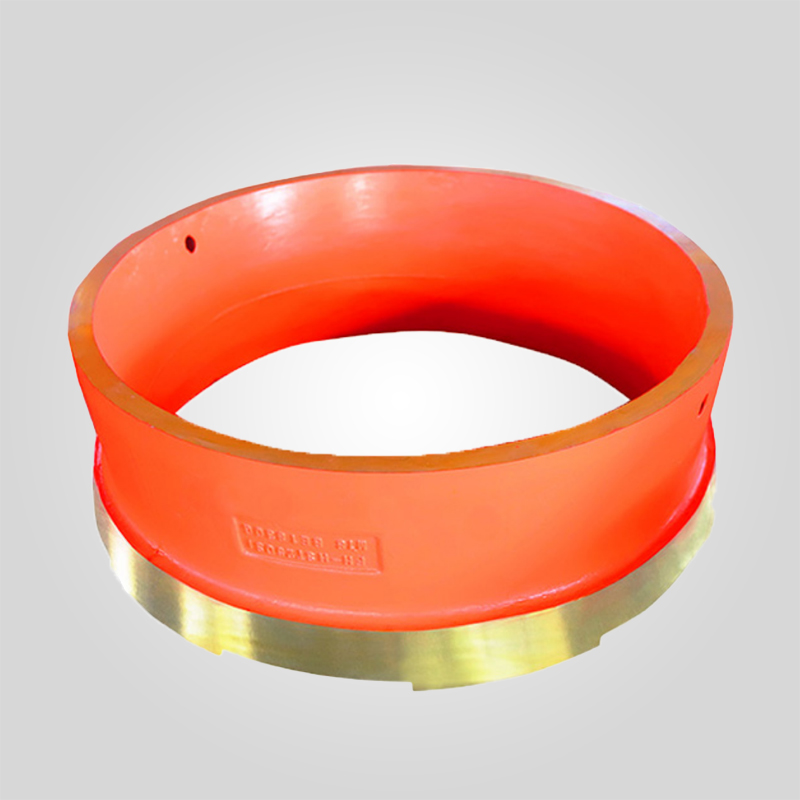
Premium Bowl Liner for Cone Crusher – High-Performance Crushing Solution
- Superior Wear Resistance: High-grade manganese steel construction
- Precision Engineering: Bowl Liner for Cone Crusher
- Optimized Crushing Surface: Special profile enhances particle shape
- Easy Identification: Clear model markings for quick replacement
库存 182 件
PRODUCT
Description
| Technical Specification | Data / Standard |
|---|---|
| Part Type | Bowl Liner / Concave Ring |
| Material Standard | Mn18Cr2 (ASTM A128 Grade C Modified) |
| Microstructure | Fine-Grained Austenite + Carbide Dispersion |
| Initial Hardness | 200 – 230 HBW |
| Work-Hardened Hardness | Up to 550 HBW (In-service) |
| Machining Tolerance | ISO 2768-m (Mounting Hooks/Flanges) |
| Compatible Series | Metso HP / Symons / Sandvik CH (Verify P/N) |
High-Performance Manganese Bowl Liners for Aggregate Crushing
The Bowl Liner is the critical stationary wear component in the crushing chamber, working in tandem with the moving mantle to reduce rock size through compression. Designed for demanding applications in mining and aggregate production, our bowl liners are engineered to optimize the “nip angle” and maintain a consistent product gradation throughout their service life. Unlike generic replacements, our liners feature a precise profile that prevents material slippage and maximizes throughput.
As one of the trusted crusher part suppliers, we manufacture these components using Mn18Cr2 High Manganese Steel. This alloy is specifically formulated to combat the high-impact wear found in hard rock crushing (Granite, Basalt, River Stone). The addition of 2% Chromium enhances the yield strength, preventing the liner from deforming (plastic flow) under extreme crushing loads.
Metallurgy: The Science of Impact Hardening
The durability of our bowl liners comes from the unique properties of Hadfield Steel (ASTM A128):
- Ductile Core: The liner is supplied with a ductile austenitic core (approx. 220 HBW). This toughness ensures the liner can withstand the shock of tramp iron passing through the chamber without shattering.
- Self-Hardening Surface: As rocks impact the liner surface, the metallic lattice structure transforms into Martensite, raising the surface hardness to 450-550 HBW. This provides a wear-resistant skin that constantly renews itself as it wears down.
Precision Manufacturing and Fitment
Poor fitment is the leading cause of premature liner failure. Our manufacturing process addresses this:
- CNC Machining: The mounting surfaces (hooks or flanges) are CNC machined to ensure 100% contact with the Adjustment Ring. This eliminates stress concentrations that lead to cracking.
- Backing Preparation: The rear surface is sandblasted to Sa 2.5 standard, ensuring optimal adhesion for the backing compound (epoxy resin).
Field Diagnosis: When to Replace Your Bowl Liner
Proactive replacement prevents damage to the crusher frame. Monitor these signs:
1. Profile Distortion
If the bottom 30% of the liner is worn thin while the top remains thick (“Bell Mouth” wear), your feed distribution is poor. However, if the liner is worn to less than 25mm thickness at any point, replace it immediately to prevent the backing material from disintegrating.
2. Production Loss
If you cannot maintain the Close Side Setting (CSS) because the adjustment ring is “bottomed out,” the liner is fully consumed. Continuing to operate will result in coarse product and high recirculating loads.
Installation and Expert Advice
[Expert Tip] Never reuse old backing compound. When installing this bowl liner, always pour fresh, high-impact epoxy backing. The backing acts as a shock absorber. Without it, the brittle manganese steel will vibrate against the steel bowl and crack within hours. Also, ensure the liner is centered; an eccentric installation will cause the crusher to “lope” and damage the bronze bushings.
Applications: Ideal for secondary and tertiary crushing stages in quarrying, mining, and demolition recycling plants.
“Authoritative Engineering Data: All critical metallurgical specifications and dimensional tolerances (e.g., ±0.05mm) are strictly governed by the master English documentation. While localized versions are provided for operational reference, the English original remains the sole binding authority for quality inspection and technical compliance.”


 English
 French
 German
 Spanish
 Russian
 Arabic
 Portuguese
 Turkish