

Metso Nordberg HP500 Cone Crusher Socket (1073817084): Specs, Function & Sourcing Guide for Reliable Cone Crusher Spares
Applicable Model: Metso Nordberg HP500 multi-cylinder hydraulic cone crusher
OEM Reference Numbers: Primary: 1073817084 | Alternate: Ona-1073817084, 1093050067
Net Weight: ~138 kg (304 lbs)
Material Options: High-grade cast steel (standard) or forged steel (for extreme impact loads); heat-treated for toughness
Primary Function :Supports the main shaft and socket liner, transferring crushing forces to the main frame while enabling smooth rotational movement
Installation Method :Interference fit with the main shaft; secured via circumferential bolts (torque specs: 2500-3000N·m)
库存 211 件
PRODUCT
Description
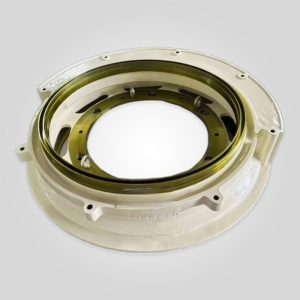
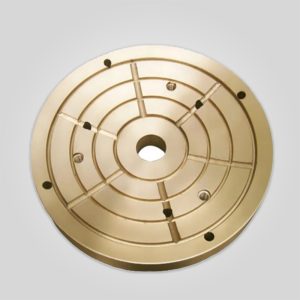
The Socket, also referred to as a spherical bearing housing or thrust support (OEM part number 1073817084), is a load-transfer and alignment component used in Metso Nordberg HP500 cone crushers. It supports the head and main shaft interface through the socket liner bearing surface, helping the crusher maintain stable load paths under varying feed conditions. Because this part sits in the primary load chain, sourcing and verifying it like other cone crusher spares should be handled with the same discipline you apply to major castings and critical bearings.
This page reviews the technical intent of Socket 1073817084, typical material and manufacturing expectations (with reference standards), inspection points, and practical field diagnostics to help maintenance teams reduce unplanned shutdown risk. All dimensions, torque values, and lubrication grades must be confirmed against the Metso parts book and the crusher serial number, because HP-series revisions can vary by year and configuration.
Socket 1073817084 Identification and Compatibility
Socket 1073817084 is specified for Metso Nordberg HP500 within the Metso HP series. Similar components exist across HP300, HP400, HP800, and HP900, but they are not interchangeable unless the OEM parts book confirms the same part number and revision. For mixed fleets, note that Sandvik CH series crushers (for example CH430, CH440, CH660, CH670, CH870) use different socket and spherical bearing geometries, so cross-brand substitution is not recommended.
| Parameter | Specification or Purchasing Note |
|---|---|
| Component name | Socket (spherical bearing housing, thrust support) |
| Applicable crusher model | Metso Nordberg HP500 cone crusher (HP series). Verify by serial number and parts book revision. |
| OEM reference numbers | 1073817084 (primary). Common alternate references seen in the aftermarket include 1093050067 and supplier codes such as ONA-1073817084. Always cross-check against the OEM drawing. |
| Typical scope of supply | Socket body only, or socket assembly. Confirm whether socket liner, dowels, seals, and fasteners are included. |
| Typical net weight | Approximately 138 kg. Weight can vary with casting revision and whether the liner is supplied assembled. |
| Socket body material (recommended practice) | Alloy cast steel to standards such as ASTM A148 or EN 10293. Manganese steel is not used for socket bodies because the socket is a structural support component, not a work-hardening wear liner. |
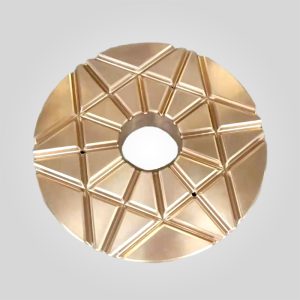
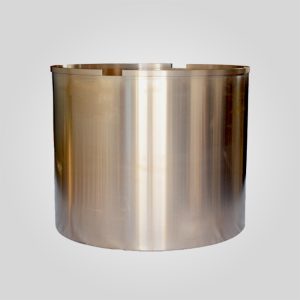
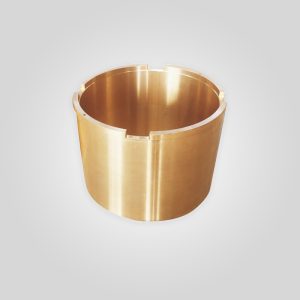
| Socket liner material (bearing surface) | Typically a copper-based bearing alloy such as tin bronze per ASTM B271 (centrifugal cast) or ASTM B584 (cast), depending on the OEM supplier’s material test report. |
| Heat treatment expectation | Steel casting normally receives quench and temper or normalize and temper, followed by stress-relief as required to stabilize dimensions and improve toughness. |
| Quality control expectation | Mill test report, heat-treatment record, hardness testing, and NDT for steel casting such as MT and UT where applicable. |
| Lubrication interface | Designed to operate with an oil film between head ball and socket liner. Lubricant grade must follow the OEM manual, commonly within ISO VG 100 to ISO VG 220 depending on ambient temperature and lube system design. |
Engineering Role Inside an HP500 Cone Crusher
In a multi-cylinder hydraulic cone crusher like the HP500, the crushing head and main shaft assembly generates combined axial and radial loads. Those loads are transferred through the head ball and socket liner interface into the socket and then into the main frame. The socket system also accommodates controlled angular movement of the head under load so the crusher can maintain stable crushing action without edge-loading the bearing surface.
From an engineering perspective, the socket system is a bearing problem and a load-path problem at the same time. The steel socket body must have adequate yield strength and impact toughness to resist cracking under shock loads. The socket liner must provide consistent conformal contact, embed small contaminants when they occur, and resist adhesive wear and scoring when lubrication quality fluctuates.
It is important not to confuse this component with manganese wear parts. In a cone crusher, the mantle and concave liners are typically high-manganese steel such as ASTM A128, designed to work-harden during crushing. The main frame and other major structures are cast steel, because they require dimensional stability and fracture resistance rather than work-hardening. The socket body follows the same logic as the main frame: it is generally an alloy cast steel. The bearing liner is typically bronze or a specified bearing alloy, because a steel-on-steel spherical interface is more prone to galling and seizure when oil film integrity is reduced.
Material and Mechanical Property Checks (HB, MPa) That Stay in Realistic Ranges
When auditing cone crusher spares, mechanical properties should make sense for the duty. Overly high hardness on a socket body can reduce toughness and increase crack risk. Overly low hardness on a bronze liner can accelerate wear. The best practice is to verify properties by mill test report and incoming inspection rather than relying on marketing descriptions.
| Item | Common standard references | Typical mechanical property range (reference) |
|---|---|---|
| Socket body (steel casting) | ASTM A148 or EN 10293 alloy cast steel grades used for high-strength machine components | Typical tensile strength about 600 to 900 MPa and yield strength about 400 to 700 MPa depending on grade and heat treatment. Typical hardness often in the range of 170 to 260 HB for toughness-focused castings. |
| Socket liner (bearing alloy) | ASTM B271 (centrifugal cast copper-base alloys) or ASTM B584 (cast copper alloys), with alloy selection per OEM design intent | Typical hardness often about 70 to 120 HB for many tin-bronze bearing alloys. The correct target depends on contact stress, lubrication regime, and the OEM specification. |
| Mantle and concave liners (wear parts) | ASTM A128 high-manganese steel | As-cast hardness commonly around 200 HB with work-hardening potential significantly higher in service. This is included here to prevent material mix-ups during sourcing. |
These ranges are provided as sanity checks, not as a substitute for the OEM drawing. If a supplier claims very high hardness for a structural cast steel socket body, ask for Charpy impact data and the full heat-treatment record, because toughness is often the limiting factor under shock loading.
Manufacturing Process Expectations for High-Confidence Sourcing
Socket Body: Casting, Heat Treatment, and Dimensional Stability
A reliable Socket 1073817084 normally starts with an alloy steel casting process appropriate for complex geometry. The primary risk in steel castings is not only chemistry, but also internal defects and residual stress. A robust manufacturing route typically includes controlled melting with spectrometer verification, proper feeding and riser design, and post-cast heat treatment. Stress-relief annealing after rough machining is commonly used to reduce distortion risk before final CNC machining.
Quality assurance should include at least traceable heat numbers, mill test report chemistry, and hardness checks. For critical castings, non-destructive testing such as magnetic particle inspection on surfaces and ultrasonic testing for internal soundness are standard expectations. Any welding repair must be documented and performed under a qualified procedure with post-weld heat treatment as required.
Socket Liner: Bearing Alloy Production and Surface Finish
For the socket liner, centrifugal casting to ASTM B271 is frequently used in the industry because it produces dense, sound bearing alloy with consistent microstructure. After casting, controlled machining on CNC equipment is required to maintain spherical geometry and achieve the surface finish needed for stable hydrodynamic lubrication. A practical target is a smooth bearing surface that supports an oil film, with inspection of roundness, sphericity, and surface roughness per the OEM requirement.
Bronze bearing alloys are selected for compatibility in mixed lubrication regimes. They are designed to be sacrificial compared to the steel head ball, so that wear occurs predictably in the liner rather than damaging major steel components.
Machining and Inspection: What “Precision” Should Mean
Instead of stating a single tolerance number that may not be realistic across all revisions, specify measurable inspection methods. Good suppliers can document critical dimensions using CMM inspection or calibrated gauges, and they can report bearing surface geometry checks. For incoming inspection, request the dimensional inspection sheet against the OEM drawing, not only a generic certificate of conformity.
Installation and Commissioning Practices That Reduce Early Failures
Socket and socket liner failures are often installation or lubrication related rather than purely material related. The following checklist is written to be practical for plant maintenance teams. Always follow the Metso service manual for your HP500 serial number.
- Lockout and handling: Treat the socket as a heavy component. Use certified lifting points, clean slings, and stable support blocks to avoid impact damage before installation.
- Cleanliness: Degrease and clean mating surfaces. Abrasive grit, old gasket fragments, or paint overspray can create high spots that later become crack initiation points.
- Fit verification: Confirm the correct seating and contact pattern between mating parts. The term “interference fit” is sometimes used loosely in the field. In practice, verify the actual diameters, seating depth, and contact area per the OEM drawing rather than relying on a generic clearance value.
- Fasteners: Use the correct bolt grade and lubrication condition specified by the OEM. Torque must follow the Metso torque table, because bolt size, thread condition, and lubrication state strongly affect clamp load.
- Lubrication alignment: Confirm that any oil grooves and feed passages align with the crusher’s lubrication ports. A misaligned groove can starve part of the spherical surface and cause localized scoring.
- Commissioning: After assembly, run the crusher according to OEM commissioning steps. Monitor lube oil pressure, lube oil temperature, and return-line flow. Abnormal temperature rise or unstable pressure is a reason to stop and investigate before loading the crusher.
Field Diagnostics: Wear Patterns That Tell You What Is Happening
A key advantage of a bronze socket liner is that it provides readable wear signatures. If you capture photos during shutdowns and track oil analysis data, you can often identify the root cause before the next failure. The patterns below are general diagnostic cues used across cone crusher spares, including HP-series spherical bearing systems.
Common socket liner wear patterns and likely causes
- Uniform polishing with gradual thinning: Often indicates normal mixed lubrication and stable alignment. Plan replacement based on thickness limits from the OEM manual and your historical wear rate.
- Localized scoring or deep grooves: Often linked to contamination, poor filtration, or oil starvation. Check lube filters, return-line screens, and confirm the correct lubricant viscosity for ambient conditions.
- Smearing or torn surface: Can indicate boundary lubrication, insufficient oil film, or incorrect oil grade. Also check for blocked oil ports and verify that the lube pump and relief valves are functioning.
- One-sided or wedge wear: Often linked to misalignment, uneven load distribution, or a seating issue. Check for improper seating of the socket, head ball geometry issues, or abnormal mechanical clearances.
- Heat discoloration on the liner: Indicates overheating and potential oil film breakdown. Check lube oil temperature trends and investigate before the bronze transfers material to the mating steel surface.
Oil analysis as an early-warning tool
Because the liner is often copper-based, oil analysis can be a practical condition-monitoring method. A rising trend of copper and tin can indicate accelerating liner wear. Rising iron can indicate steel wear or contamination. Use trend analysis and correlate with operating events such as liner changes, feed changes, or abnormal crusher power draw.
When the socket body itself becomes a concern
The socket body is typically a steel casting and should not wear quickly under normal conditions. Red flags include cracking, fretting damage at seating faces, or repeated liner failures that occur within short intervals. If cracking is suspected, perform a structured inspection using dye penetrant or magnetic particle methods as appropriate, and review the crusher for overload events, tramp release behavior, and lubrication loss incidents.
Maintenance Tips to Extend Socket System Life
For HP500 operators, improving socket and liner life usually comes from controlling lubrication quality and load stability rather than using the hardest material.
- Keep the lubrication system clean: Maintain filtration targets and change filters on condition. Contamination is a major driver of scoring on spherical bearing surfaces.
- Use the correct oil viscosity: Oil that is too thick can reduce flow at startup, while oil that is too thin can reduce film thickness at operating temperature. Select the ISO VG grade based on the OEM recommendation and your ambient temperature range.
- Stabilize feed conditions: Frequent tramp events, oversized feed, and high fines can all increase load fluctuations that impact the spherical bearing. Improve upstream screening and tramp protection where practical.
- Inspect at planned shutdowns: Record photos of the liner contact area and note any asymmetry. Simple documentation improves your ability to diagnose changes over time.
- Check lubrication passages during each liner replacement: Ensure that ports are open and that gasket or sealant does not block flow paths.
Procurement Checklist for Socket 1073817084 (Cone Crusher Spares)
When purchasing Socket 1073817084, treat it like a controlled part rather than a commodity casting. A supplier should be able to answer technical questions and provide traceable documentation.
- Compatibility confirmation: Provide the crusher serial number, the OEM part number, and the parts book revision. Ask for written confirmation that the supplier is manufacturing to the same revision.
- Material standards and MTR: Request mill test reports for the steel casting and the bearing alloy. For steel, confirm the standard such as ASTM A148 or EN 10293 and confirm heat-treatment condition.
- NDT records: Ask whether the socket casting receives MT and UT, and request the inspection report. This is a practical discriminator among cone crusher spares suppliers.
- Machining and inspection: Ask for a dimensional inspection sheet against the OEM drawing and evidence of CMM or calibrated measurement on critical features.
- Socket liner details: Confirm whether the liner is included, the liner alloy standard (such as ASTM B271), and whether grooves and oil ports match the OEM layout.
- Traceability and packaging: Require part marking, heat number traceability, and protective packaging to prevent bearing surface damage during shipment.
Conclusion and Technical CTA
Socket 1073817084 is a structural support and bearing-interface component for Metso Nordberg HP500 cone crushers. Correct material selection, controlled casting quality, stable machining, and verified lubrication flow matter more than generic claims about quality. If you maintain fleets across the Metso HP series or also run Sandvik CH series machines, keep socket and liner procurement disciplined to avoid cross-part confusion and premature bearing damage.
For a quotation and technical confirmation, send your OEM part number 1073817084, crusher model and serial number, and clear photos of the socket liner wear pattern. Include your ambient temperature range, lubricant grade in use, and any recent lubrication alarms. This information allows a supplier to confirm the correct revision, recommend the appropriate steel casting grade and liner alloy, and provide supporting documentation such as MTR, heat-treatment record, and inspection reports.
“Authoritative Engineering Data: All critical metallurgical specifications and dimensional tolerances (e.g., ±0.05mm) are strictly governed by the master English documentation. While localized versions are provided for operational reference, the English original remains the sole binding authority for quality inspection and technical compliance.”
 English
 French
 German
 Spanish
 Russian
 Arabic
 Portuguese
 Turkish