

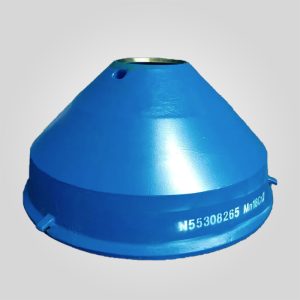
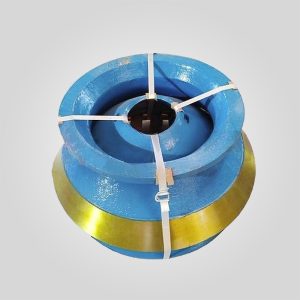
Sandvik CH430 Eccentric Bushing | 442.9875-01 | C93700 Bronze
Direct OEM Replacement: Exact dimensional match for CH430 crushers
Premium Material: High-grade bronze alloy (C93700) with superior wear resistance
Precision Engineering: Machined to ±0.03mm tolerance for perfect fit
Part Name : Crusher Eccentric Bushings
库存 182 件
PRODUCT
Description
| Technical Specification | Data / Standard |
|---|---|
| OEM Part Number | 442.9875-01 (Sandvik CH430 / H3800) |
| Material Standard | High-Leaded Tin Bronze (ASTM B505 C93700 / SAE 64) |
| Casting Method | Centrifugal Casting (High Density) |
| Lead Content (Pb) | 9.0% – 11.0% (Critical for Anti-Seize) |
| Tensile Strength | ≥ 241 MPa (35,000 psi) |
| Surface Hardness | 65 – 80 HBW (Optimized for Embeddability) |
| Machining Tolerance | ISO 2768-mK / H7 Bore Fit |
Sandvik CH430 Eccentric Bushing: 442.9875-01 Replacement
The Eccentric Bushing (P/N: 442.9875-01) dictates the kinematic performance of the Sandvik CH430 (formerly Svedala H3800) cone crusher. It acts as the primary interface between the stationary eccentric assembly and the rotating main shaft. Unlike general machinery bushings, this component must withstand the unique “gyratory” load vector and high-speed rotation (up to 380 RPM). Our replacement parts are engineered to match the OEM tribological requirements exactly.
We manufacture this component using ASTM B505 C93700 High-Leaded Tin Bronze via a Centrifugal Casting process. This method exerts high G-forces during solidification, pushing gas bubbles and impurities to the inner bore (which are then machined away). The result is a dense, porosity-free grain structure that offers 25% higher compressive strength than standard sand-cast crusher spares found in the aftermarket.
Metallurgy: The C93700 Advantage
For high-speed hydroset crushers like the CH430, standard bronze (RG7/C93200) is insufficient. We utilize C93700 for two specific reasons:
- Emergency Lubrication: The 10% Lead content exists as microscopic free pools within the alloy. If the oil film ruptures due to a sudden load spike, this lead smears onto the shaft, creating a sacrificial barrier that prevents catastrophic seizing (welding).
- Embeddability: The material is hard enough to support the load but soft enough (65-80 HBW) to absorb abrasive silica fines that bypass the dust seal, protecting the expensive Main Shaft from scoring.
Field Diagnosis: When to Replace
Failure to replace the bushing in time can ruin the eccentric assembly. Watch for these signs:
1. “Burnishing” (Mirror Finish)
Inspect the inner bore. It should have a matte bronze appearance. If you see bright, mirror-like patches (glazing), the bushing has overheated (>120°C) locally. The surface pores are closed, and it can no longer retain an oil film.
2. Counter-Rotation (Spinning)
If the crusher head spins rapidly when running empty (no feed), the bushing clearance has tightened due to thermal expansion or deformation. This “clamping” effect creates excessive heat and will fail shortly.
3. Debris in Oil
Large, non-magnetic gold/bronze flakes in the filter indicate structural fatigue or delamination. This is different from the fine “grey paste” caused by normal wear.
Installation Best Practices: Cryogenic Fit
[Expert Tip] Avoid using a hydraulic press to install the 442.9875-01 bushing if possible. The preferred professional method is Thermal Contraction (Freezing).
- Cooling: Use Dry Ice or Liquid Nitrogen to cool the bushing to -50°C. This will shrink the outer diameter by approximately 0.06mm – 0.08mm.
- Insertion: The shrunk bushing will drop freely into the eccentric bore without force, eliminating the risk of galling or scoring the housing.
- Alignment: You have a critical 30-second window to align the oil feed holes with the eccentric galleries before the bushing warms up and locks in place.
Performance Comparison
| Performance Metric | Standard Sand Cast | Our Centrifugal C93700 | Operational Gain |
|---|---|---|---|
| Lead Distribution | Uneven / Segregated | Uniform Dispersion | Consistent Lubricity |
| Fatigue Resistance | Moderate | High | +20% Life in Hard Rock |
| Porosity Risk | High | Near Zero | No Oil Pressure Loss |
Note: We recommend replacing the Eccentric Bushing and the Main Shaft Step Washer together. A worn step washer can cause the shaft to run at an angle, leading to uneven edge loading on the new bushing. Consult our technical team for the matching step washer part number.
“Authoritative Engineering Data: All critical metallurgical specifications and dimensional tolerances (e.g., ±0.05mm) are strictly governed by the master English documentation. While localized versions are provided for operational reference, the English original remains the sole binding authority for quality inspection and technical compliance.”




 English
 French
 German
 Spanish
 Russian
 Arabic
 Portuguese
 Turkish