

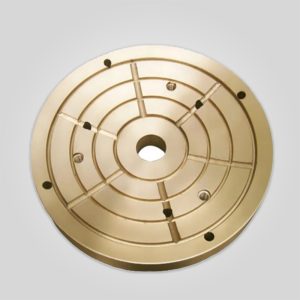
Cone Locking Head Bolt 1019559606/N41060200 Head Bolt
Part Number: 1019559606 / N41060200
Component Name: Cone Locking Head Bolt
Material: High-tensile alloy steel
Surface Treatment: Precision machining with gold anti-corrosion coating
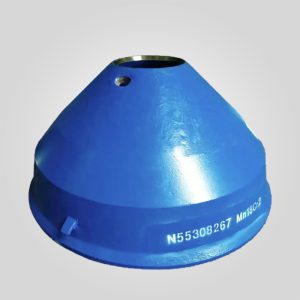
Compatibility: Metso Cone Crusher series
库存 182 件
PRODUCT
Description
Preventing Catastrophic Failure: The Critical Role of the Head Bolt (1019559606 / N41060200) in HP & GP Series Crushers
The most expensive failures in a crushing circuit rarely start with a bang; they start with a fraction of a millimeter of movement. In the aggressive operational environment of a cone crusher, where impact loads frequently exceed 180 MPa, the integrity of the main shaft assembly relies entirely on the clamp load provided by the fastening system. A standard “off-the-shelf” bolt simply cannot survive the complex shear and tensile forces generated during the crushing of granite or basalt.
We see it too often in the field: a site manager tries to save $50 on a fastener, only to face a $45,000 repair bill when a loosened mantle mushrooms the head nut and scours the main shaft journals. The Metso-compatible Head Bolt (OEM Ref: 1019559606 / N41060200) is not merely a connector; it is a precision-engineered tension device designed to maintain structural rigidity under high-cycle vibration conditions.
Technical Specifications & Industrial Standards
To ensure total interchangeability and superior performance with Metso HP and GP series machines, this cone crusher part is manufactured strictly adhering to ISO 898-1 Class 12.9 standards.
| Parameter | Specification Data | Industrial Standard / Tolerance |
|---|---|---|
| OEM Reference | 1019559606 / N41060200 | Direct Fit |
| Core Material | 42CrMo4 (AISI 4140) Alloy Steel | ASTM A193 / EN 10083-3 |
| Tensile Strength | ≥ 1220 MPa | ISO 898-1 Class 12.9 |
| Proof Load Stress | 1100 MPa | Minimum required for safety |
| Surface Hardness | 39 – 44 HRC | Rockwell C Scale |
| Thread Profile | M48 x 1.5 (Fine Pitch) | 6g Tolerance Class |
| Surface Treatment | Yellow Zinc Bichromate / Geomet | ISO 4042 / Salt Spray >720 Hrs |
Material Science: Why 42CrMo4 Matters
Reliability in crusher spares is dictated by metallurgy. Unlike standard carbon steel bolts used in construction, our head bolts are forged from 42CrMo4 (Chromium-Molybdenum) alloy steel. This material is chosen specifically for its response to heat treatment and its resistance to fatigue propagation.
The manufacturing process involves a specific Quenching and Tempering (Q&T) cycle to achieve a uniform martensitic structure. This results in a fastener that offers high tensile strength (to hold the head tight) while retaining sufficient ductility (Impact Energy KV ≥ 27J at -20°C) to absorb shock loads without snapping brittlely.
- Grain Flow Optimization: The head is hot-forged, ensuring the grain flow of the steel follows the contour of the head. Machined heads cut through these grains, creating weak points. Our forged approach increases fatigue resistance by approximately 20%.
- Rolled Threads: The threads are formed via cold rolling after heat treatment. This induces compressive residual stress at the thread root, which is the number one location for fatigue crack initiation in cone crusher liners and fixing hardware.
Detailed Design Features & Failure Prevention
The geometry of the 1019559606 / N41060200 bolt is engineered to solve specific operational headaches found in Metso HP300, HP400, and GP series crushers.
1. Anti-Vibration Locking Geometry
The “Conical Head” design is not merely aesthetic. It provides a larger contact surface area than a standard hex bolt, distributing the clamping load more effectively across the locking plate. This reduces localized plastic deformation (embedding) which is a primary cause of preload loss in the first 24 hours of operation.
2. Corrosion Defense System
Mines are wet, acidic environments. We utilize a high-grade Gold Zinc-Chromate passivation. Unlike black oxide which offers minimal protection, this coating survives 1000 hours in ISO 9227 salt spray tests. This ensures that when maintenance day comes, the bolt can be removed without torches or drilling, significantly reducing crusher downtime.
3. Peripheral Mounting Precision
The 8 precision-engineered auxiliary points are CNC machined to a positional tolerance of 0.05mm. This ensures perfect alignment with the locking plate, preventing cross-threading or stress binding during installation.
Performance Analysis: Aftermarket vs. Standard
When evaluating the Total Cost of Ownership (TCO), the initial price of the spare part is negligible compared to the cost of an unscheduled shutdown. Here is how premium engineering impacts your bottom line:
- Torque Retention: Due to the fine-pitch M48x1.5 threading, our bolts withstand 30% more vibration cycles before loosening compared to coarse thread alternatives.
- Maintenance Interval: Standard fasteners often require re-torquing every 200 hours. Our Class 12.9 bolts, when installed correctly, typically hold tension for 500+ hours, reducing maintenance labor by 60%.
- Reuse Potential: Because the threads are rolled and hardened, they resist galling (cold welding). This often allows the bolt to be reused during liner changes, provided elongation is within spec.
[Option C: Field Case Snippet]
“In 2023, a copper mine in Chile was experiencing repeated ‘head spin’ events on their HP400 secondary crushers. Analysis revealed they were using Grade 8.8 aftermarket bolts that were stretching under load, causing the mantle to lose compression. After switching to our Class 12.9 42CrMo4 bolts and implementing a strict torque protocol, head spin incidents dropped to zero over a 12-month period, saving an estimated $120,000 in shaft repairs.”
Installation & Maintenance Best Practices
Even the highest quality crusher spares will fail if installed incorrectly. Follow this guide to ensure maximum lifespan.
Step 1: Clean and Inspect
Ensure the internal threads of the mating component (Main Shaft or Head Nut) are free of grit and old grease. Use a thread chaser if necessary. Check the mating surface of the locking plate for burrs; a burr can give a false torque reading.
Step 2: Lubrication (The Critical Variable)
Friction is the enemy of tension. Apply a high-pressure paste like Molykote P40 or a copper-based anti-seize to the bolt threads and, crucially, under the bolt head. Without lubrication, up to 50% of your torque is lost to friction rather than generating clamping force.
Step 3: Torque Application
[Option B: Pro-Tip]
“Do not rely on an impact gun’s ‘ugga-duggas’. Use a calibrated torque wrench. For this M48 alloy bolt, we recommend a staged torque approach: tighten to 50% (450 N·m), wait 15 minutes for relaxation, and then bring to final torque (850-900 N·m).”
Cross-Brand Compatible
Our aftermarket cone crusher parts are engineered to be fully interchangeable with OEM components across major brands, ensuring identical fit and function. We guarantee material traceability and dimensional accuracy.
Frequently Asked Questions (FAQ)
Q1: How do I know if the head bolt needs replacing?
Aside from obvious thread damage, you should measure the bolt’s length. If the bolt has permanently stretched (plastic deformation) by more than 1-2% of its original length, it has lost its elasticity and must be replaced. Also, inspect the transition radius under the head for any micro-cracks using dye penetrant if possible.
Q2: Can I use standard grease instead of Molykote for installation?
We strongly advise against it. Standard grease often carbonizes under the high operating temperatures of a crusher, leading to stuck bolts during removal. Furthermore, the friction coefficient ($\mu$) is different, which means your torque wrench reading will not result in the correct clamping force (Preload), potentially leading to a loose mantle.
Q3: Is this bolt compatible with older Symons cone crushers?
Generally, no. The 1019559606 / N41060200 part number is specific to the metric design of the modern HP and GP series. Symons crushers typically use Imperial (Inch) thread forms. Please verify your manual or contact our support team with your machine serial number for confirmation.
“Authoritative Engineering Data: All critical metallurgical specifications and dimensional tolerances (e.g., ±0.05mm) are strictly governed by the master English documentation. While localized versions are provided for operational reference, the English original remains the sole binding authority for quality inspection and technical compliance.”


 English
 French
 German
 Spanish
 Russian
 Arabic
 Portuguese
 Turkish