
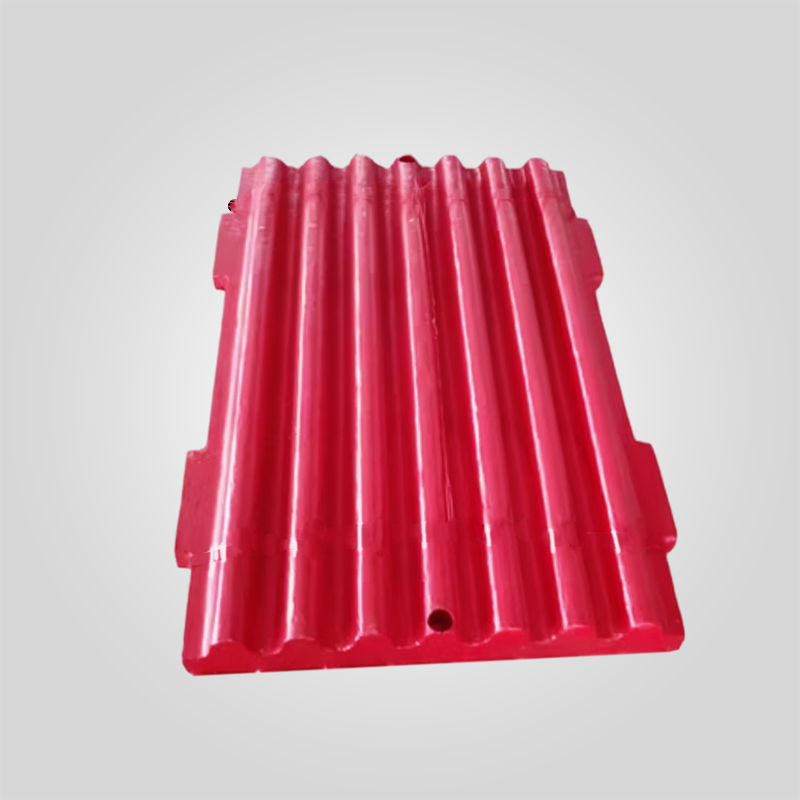
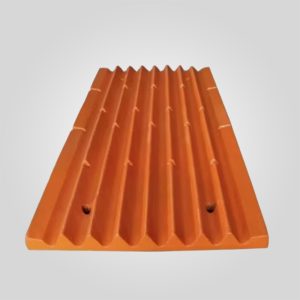
Red Interchangeable Jaw Plates | Mn18Cr2 Crusher Spares for C-Series
- Surface Hardness: 220-280 HB
- Ridge Height: 12±0.5mm
- Impact Resistance: ≥150J/cm²
- Temperature Range: -40°C to 350°C
- Compressive Strength: ≥950MPa
库存 182 件
PRODUCT
Description
Premium Interchangeable Jaw Plates (Mn18Cr2) | Heavy-Duty Crusher Spares
Maximize your primary crushing efficiency with our Interchangeable Jaw Plates. Engineered from ASTM A128 Grade C standard manganese steel, these wear parts are designed to withstand the most abrasive aggregate and mining applications. Unlike generic castings, our plates undergo a proprietary water-toughening heat treatment process to ensure a refined grain structure, preventing premature cracking under high-impact loads.
Technical Specifications & Material Data
Our jaw dies are manufactured using precision sand casting followed by CNC machining of the seating surfaces to ensure a zero-gap fit against the main frame.
| Parameter | Specification | Standard / Value |
|---|---|---|
| Material Grade | Ultra-High Manganese | Mn18Cr2 (ASTM A128 Grade C) |
| Initial Hardness | As-Cast / Treated | 220 – 260 HB |
| Work Hardened | Operational Hardness | Up to 550 HB (under impact) |
| Yield Strength | Physical Property | ≥ 450 MPa |
| Impact Toughness | Charpy V-Notch | ≥ 150 J/cm² |
| Compatibility | OEM Interchangeability | Fits C-Series (C80, C100), CJ Series, and Custom Frames |
Performance & Engineering Advantages
Why choose Mn18Cr2 over standard Mn13? The addition of 2% Chromium significantly enhances the yield strength, preventing the jaw plate from “flowing” or deforming under extreme compressive stress.
- Work-Hardening Technology: The surface hardness increases automatically from ~220HB to >500HB as it impacts rock, while the core remains ductile to absorb shock.
- Reversible Design: Symmetrical mounting allows the plate to be rotated 180 degrees (“flipped”) to distribute wear evenly, effectively doubling the service life.
- Precision Machined Back: Unlike rough-cast backs, our machined surfaces prevent point-loading on the jaw wedge, reducing the risk of toggles breaking.
Field Diagnosis: When to Replace Your Jaw Plates?
Proactive maintenance prevents downtime. Look for these critical signs:
- Tooth Profile Loss: When the corrugations (teeth) are worn flat for more than 30% of the height, crushing efficiency drops by 40%, increasing power consumption.
- “Peening” or Curving: If the plate begins to bow away from the frame, the manganese has expanded due to over-work. Immediate replacement is required to save the frame.
- Thickness Reduction: Replace when the plate thickness at the bottom (discharge zone) is reduced by 50%.
Frequently Asked Questions (FAQ)
Q1: Are these jaw plates compatible with Metso C Series or Sandvik CJ Series?
Yes. We manufacture aftermarket crusher spares that meet or exceed OEM dimensional tolerances for major series including C80, C96, C100, and CJ411. Please provide your part number for confirmation.
Q2: Why do you use Mn18Cr2 instead of Mn22Cr2?
For 90% of applications (Limestone, Granite, Basalt), Mn18Cr2 offers the perfect balance of hardness and toughness. Mn22 is harder but more brittle; unless you are crushing extremely abrasive quartzite, Mn18Cr2 is the safer, more reliable choice to prevent snapping.
Q3: Do I need to use a backing compound during installation?
Absolutely. While our plates are machined, jaw frames deform over time. Applying high-quality epoxy backing compound fills the voids between the plate and the frame, acting as a shock absorber. Installing without backing is the #1 cause of premature breakage.
👨🔧 Engineer’s Expert Tip:
“Never ignore the cheek plates (side liners). If your cheek plates are worn thin, they create a gap where rocks can get wedged against the side of your new jaw plate, causing localized high-stress points. Always inspect and potentially rotate cheek plates when changing the main jaw dies to ensure your new investment lasts its full cycle.”
“Authoritative Engineering Data: All critical metallurgical specifications and dimensional tolerances (e.g., ±0.05mm) are strictly governed by the master English documentation. While localized versions are provided for operational reference, the English original remains the sole binding authority for quality inspection and technical compliance.”

 English
 French
 German
 Spanish
 Russian
 Arabic
 Portuguese
 Turkish