
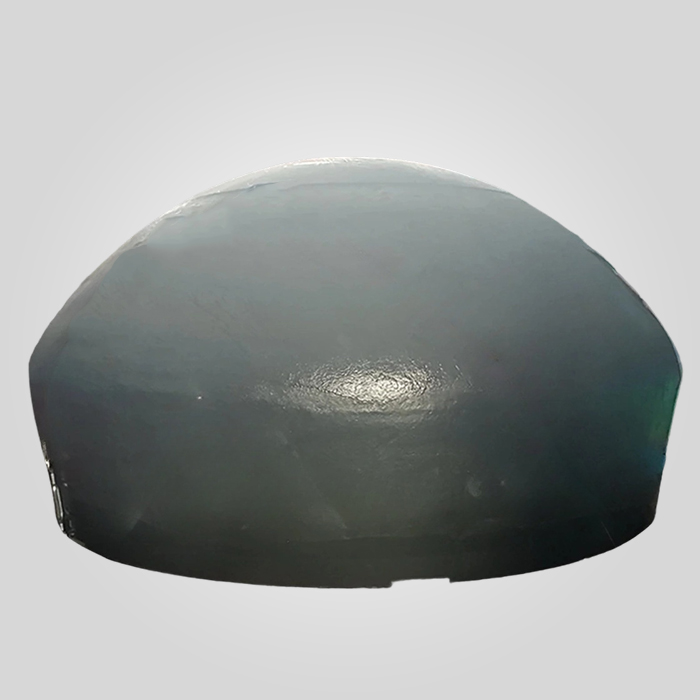
KB Series Spider Cap , Gyratory Crusher Part 4350760
Model: KB63-89 Weights: 7344kg Item code: 4350760
Casting Material: Mn13, M13Cr2, Mn18Cr2, Mn22Cr2
Applicable Material: Gravel, Granite, Basalt, Ore, Limestone, Sandstone ,Quatz,Cobblestone
Applications: Mining , Quarry, Construction ,Cement and Materials ,Recycling
库存 182 件
PRODUCT
Description
Managing Gigajoules of Impact Energy: The Critical Role of the KB63-89 Spider Cap
Dropping a 4-ton boulder from a height of three meters into a primary gyratory crusher generates immense kinetic energy that must be absorbed instantly. The first line of defense against this destructive force is not the concave or the mantle, but the spider cap. For operators of KB Series 63-89 gyratory crushers, the structural integrity of Item 4350760 (Protective Cap) is the only barrier standing between routine operation and a catastrophic failure of the spider hub assembly.
Ignoring the wear profile of this 7,344kg component inevitably leads to the erosion of the spider arm substrate. Once the parent metal of the spider assembly is compromised, repair costs skyrocket from the price of a simple casting replacement to hundreds of thousands of dollars in downtime, on-site machining, and structural welding. This technical analysis explores the metallurgy, installation protocols, and lifecycle management of heavy-duty spider caps designed for the harshest hard rock applications.
In 2021, I audited a copper mine in Chile that delayed changing their spider cap to align with a scheduled liner change three weeks later. The cap had already worn through on the drive-side arm. By the time they shut down, the abrasive flow of quartz-heavy ore had washed away 40mm of the spider arm’s structural steel. The site had to bring in a mobile line-boring team and spent 96 hours rebuilding the arm geometry. The cost of the delay exceeded the price of the spare part by factor of ten. Do not treat the spider cap as a “run-to-destruction” component.
Technical Specifications: KB63-89 Assembly
The KB63-89 spider cap is a massive monolithic casting. Precision in mass balancing and dimensional tolerance is required to ensure it seats correctly on the spider hub without creating stress risers.
| Specification Parameter | Technical Data |
|---|---|
| OEM Item Code | 4350760 |
| Compatible Equipment Model | KB Series 63-89 Gyratory Crusher |
| Net Weight | 7,344 kg (±2% Casting Tolerance) |
| Material Standards | ASTM A128 Grade C / Mn18Cr2 (Standard) |
| Hardness (As Cast) | 200 – 220 HBW |
| Hardness (Work Hardened) | > 500 HBW |
| Impact Toughness | ≥ 100 J/cm² (Charpy V-Notch) |
| Surface Finish | Ra 12.5 µm (Non-machined surfaces), Ra 3.2 µm (Mounting faces) |
Metallurgical Selection: Why Mn18Cr2 is the Industry Standard
Procurement teams often question the variety of material options available for gyratory crusher parts. While Mn13 (Hadfield Steel) was the historical standard, modern primary crushing circuits—handling Granite, Basalt, and Taconite—demand superior performance.
The Physics of Work Hardening
The spider cap operates in a zone of high impact but moderate abrasion. This specific tribological environment necessitates the use of austenitic manganese steel. Upon impact, the surface layer of the Mn18Cr2 alloy undergoes a phase transformation from austenite to martensite. This creates a surface hardness exceeding 500 HBW, while the core remains ductile (around 220 HBW) to absorb shock without cracking.
Material Grade Comparison
- Mn13 (ASTM A128 Gr A): Suitable for softer limestone applications. In hard rock, it may wear prematurely because it lacks the initial hardness to resist gouging before the work-hardening effect kicks in.
- Mn18Cr2 (ASTM A128 Gr C): The optimal balance. The addition of 2% Chromium increases the yield strength and initial hardness. This prevents the “mushrooming” effect where the metal flows under impact, which can jam the spider arm clearance.
- Mn22Cr2: Reserved for extreme high-stress applications. While it offers the longest wear life, the increased manganese content raises the cost and requires precise heat treatment controls to avoid brittleness.
Manufacturing Protocol: The Challenge of Heavy Casting
Casting a 7.3-ton single component requires sophisticated foundry capabilities. The solidification process of such a large mass of manganese steel is prone to shrinkage voids and carbide precipitation if not controlled strictly.
Heat Treatment and Water Quenching
The critical step in manufacturing Item 4350760 is the solution annealing process. The casting must be heated to approximately 1050°C – 1100°C and held for a duration calculated based on the thickest section of the cap (usually 1 hour per inch of thickness). Following this, it must be rapidly water quenched. If the quench delay exceeds 30 seconds, carbide precipitation occurs at the grain boundaries, resulting in a brittle casting that could shatter under the first impact of a rock load.
We ensure every spider cap undergoes Level II Ultrasonic Testing (UT) to verify that the heavy sections near the lifting lugs and the central hub are free from internal shrinkage porosity.
Installation and Maintenance Strategies
Replacing a KB63-89 spider cap is a major maintenance event involving heavy rigging. Ensuring the installation is performed correctly is vital for the safety of the crew and the longevity of the machine.
1. The “Rock Box” Effect
The design of the spider cap often includes pockets or ribs intended to trap ore. This is intentional. The trapped rocks form an autogenous layer, meaning rock impacts rock rather than metal. When inspecting a worn cap, verify that these pockets are retaining material. If they are washing out, the ore trajectory or feed chute alignment may need adjustment to optimize the dead-bed protection.
2. Mating Surface Preparation
Before lowering the new 7,344kg cap onto the spider, the mating surface on the spider hub must be cleaned to bare metal. Any localized high spots caused by previous fretting or corrosion must be ground flush. We recommend applying a layer of heavy-duty epoxy backing compound or bitumen between the cap and the spider. This fills microscopic gaps, preventing the cap from “chattering” or moving under load, which is the leading cause of sheared mounting bolts.
3. Bolt Tensioning and Protection
The mounting bolts for the spider cap are subjected to shear forces. They must be torqued to specific OEM values (consult your machine manual, typically requiring hydraulic torque wrenches for this size). Crucially, the bolt heads must be capped or buried in silicone/rubber plugs. If the bolt heads are exposed to the ore stream, they will wear away within weeks, making removal of the cap during the next service interval extremely difficult and requiring thermal lancing.
Lifecycle Management: When to Replace
Visual inspection of the spider cap should be part of the weekly preventative maintenance route. However, viewing the cap while the crusher is operating is impossible, and viewing it while stopped is often obstructed by material.
Key Wear Indicators:
- Arm Guard Transition: Check the transition point where the spider cap meets the spider arm guards. If a step or gap develops here, turbulent flow will accelerate wear on the arm guards.
- Lifting Lug Deformation: If the lifting lugs are beginning to wear thin, plan the replacement immediately. You do not want to reach a point where the lugs are compromised, making the removal of the 7-ton weight dangerous.
- Through-Holes: Any breach in the casting that exposes the spider hub steel is a critical failure criteria. Immediate replacement is mandatory.
Supply Chain and Logistics for Heavy Spares
Transporting a component with a gross weight exceeding 7 tons requires specialized logistics. Unlike smaller cone crusher liners, the spider cap cannot simply be palletized. It requires a custom steel cradle for transport to prevent damage to the machined underside.
As a manufacturer of crusher parts, we provide comprehensive documentation with every KB63-89 spider cap. This includes a 3.1 Material Certificate detailing the chemical composition (C, Mn, Si, Cr, P, S) and a dimensional inspection report verifying the mounting geometry. By stocking semi-finished castings, we can reduce the lead time for these critical path components, ensuring your mine site minimizes the risk of extended stock-outs.
For operations processing highly abrasive quartzite or river gravel, we can further customize the casting by adding hard-facing overlays in high-wear zones, although for most applications, the work-hardening properties of Mn18Cr2 provide the most economic cost-per-ton performance.
“Authoritative Engineering Data: All critical metallurgical specifications and dimensional tolerances (e.g., ±0.05mm) are strictly governed by the master English documentation. While localized versions are provided for operational reference, the English original remains the sole binding authority for quality inspection and technical compliance.”


 English
 French
 German
 Spanish
 Russian
 Arabic
 Portuguese
 Turkish