

A Liner Swapped at 87 Days Instead of 120 — and the Work Hardening Rate That Explained the Gap
The call came from a copper mine in Western Australia. Their primary gyratory — a Fuller 60-89 running 3,200 tonnes per hour on 45 MPa UCS porphyry copper ore — had pulled its concave liner set at 87 operating days, 33 days short of the target campaign. The Mn content on the failed liner checked out at 17.8%, squarely within the Mn18 specification. The chemical analysis was clean. But when we examined the cross-section under optical microscopy, the answer was immediately visible: the austenitic matrix had barely work-hardened beyond 280 HBW at the wear surface. A properly responding Mn18Cr2 liner under those impact conditions should have reached 420–450 HBW within the first 200 operating hours. The mine had been buying manganese steel. They had not been buying the right manganese steel — and no one had told them the difference.
For large open-pit operations running primary gyratory crushers on 24-hour schedules, gyratory crusher spare parts represent one of the highest-leverage cost variables in the comminution circuit. The liner set alone on a 60-89 or 60-110 gyratory weighs 18,000–28,000 kg. The crane lift, personnel, and lost production during a change-out event typically cost more than the parts themselves. Getting the material selection and maintenance strategy right is not an incremental improvement — it is a structural operational advantage.
Part One: Manganese Steel Liners — Understanding the Dynamic Balance
Work Hardening Rate, Not Manganese Content, Determines Campaign Life
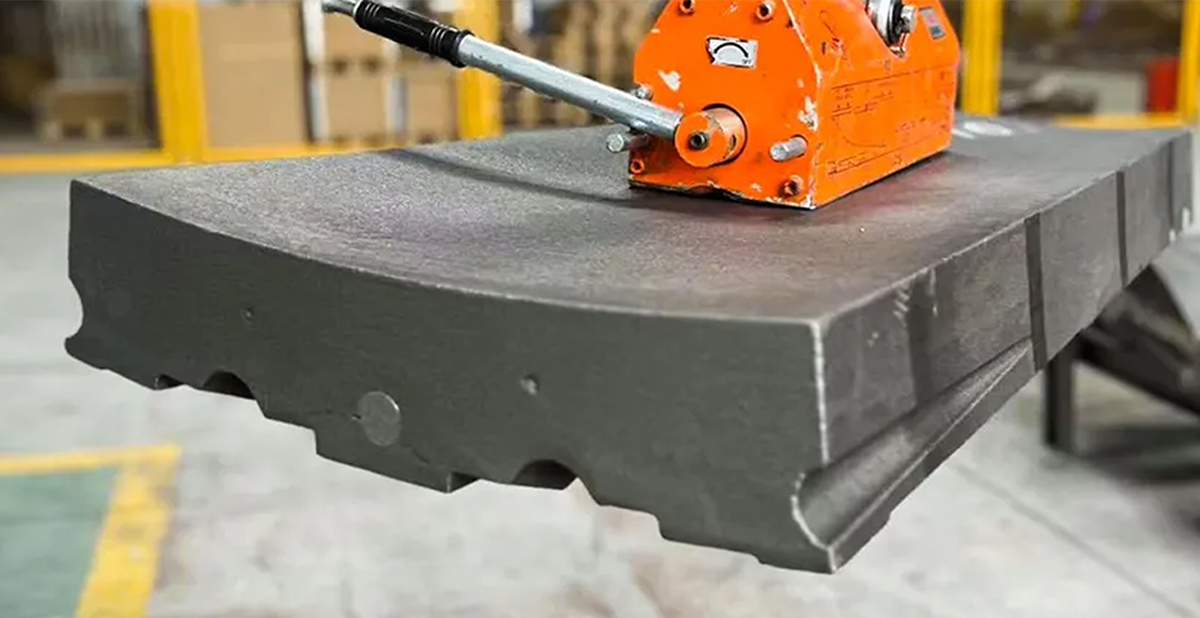
Hadfield manganese steel — the family of alloys used in gyratory crusher spare parts liners since the 1880s — derives its wear resistance not from inherent hardness but from a dynamic transformation that occurs under impact loading. The austenitic face-centered cubic structure transforms progressively to martensite under repeated impact, raising surface hardness from a casting value of 180–220 HBW to a service value of 400–550 HBW at the wear face while the body of the liner remains tough and ductile to resist cracking.
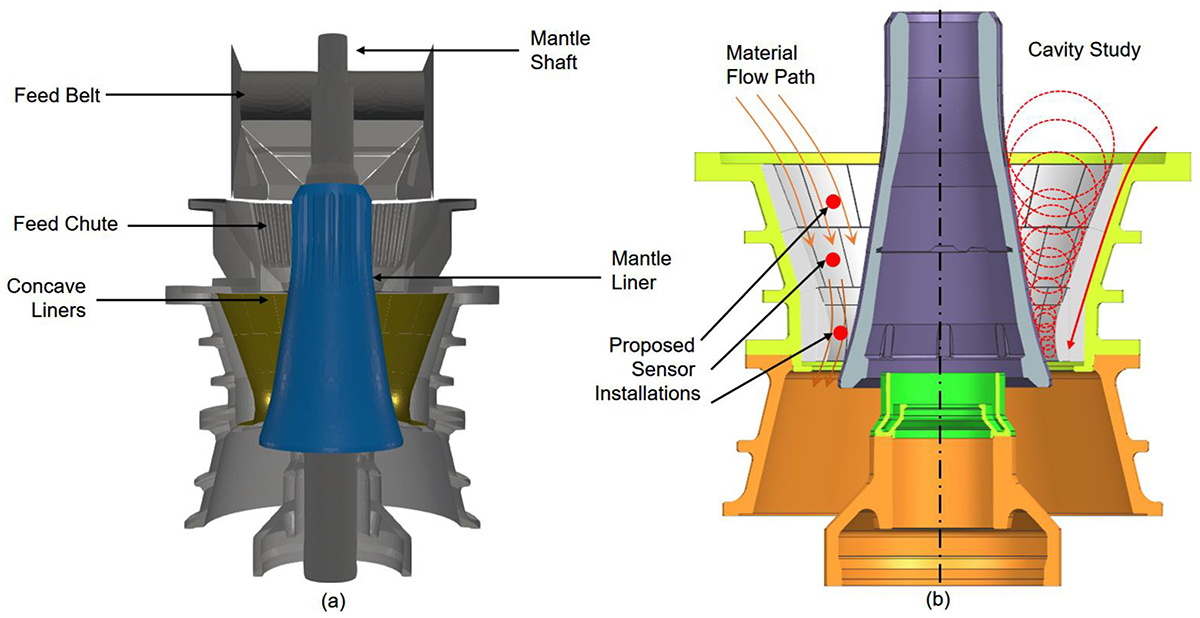
The speed and depth of this transformation — the work hardening rate — is what separates a liner that reaches its full campaign from one that exits service early due to accelerated material loss before the protective hard layer has fully developed. This rate is controlled primarily by two compositional variables: manganese content and chromium addition.
| Grade | Mn % | Cr % | As-cast Hardness | Peak Work-Hardened Hardness | Best Application |
|---|---|---|---|---|---|
| Mn13 | 12–14% | 0–0.5% | 190–210 HBW | 350–380 HBW | Soft to medium ores, <40 MPa UCS |
| Mn18Cr2 | 17–19% | 1.5–2.5% | 200–230 HBW | 420–460 HBW | Medium-hard ores, iron ore, copper porphyry |
| Mn22Cr2 | 21–23% | 2.0–3.0% | 210–240 HBW | 450–500 HBW | Hard abrasive ores, granite, taconite >55 MPa UCS |
Chromium content at 1.5–2.5% in the Mn18Cr2 grade performs two distinct functions. First, it refines the austenitic grain size during solidification, which reduces the free path length for dislocation movement and accelerates the work-hardening response in the first 100–200 hours of impact loading. Second, it forms fine carbide precipitates (Cr₇C₃) at grain boundaries that increase abrasion resistance by approximately 12–18% over plain Mn18 at equivalent manganese content — measurable through pin-on-disk wear testing per ASTM G65 standard.
Backing Material: The Silent Variable in Liner Performance
Even the correctly specified liner will underperform if the backing compound application is substandard. Gyratory crusher concaves and mantles rely on a filled backing material — typically a two-component epoxy resin system with a cured compressive strength of 90–110 MPa — to transfer crushing loads evenly across the full contact area between the liner and the structural frame. Voids in the backing compound create localized load concentration points where the liner flexes under impact. In hard ore applications where peak impact forces exceed 180 MPa at the liner surface, this flexure induces fatigue cracking that propagates from the void boundaries outward, resulting in spalling failure that is often misattributed to alloy deficiency.
Pro-Tip from the Field: I use a simple knock test before accepting any backing compound pour during installation. After the resin has cured for 48 hours, I systematically tap the liner outer face with a 500g hammer in a grid pattern with 150mm spacing. A hollow sound — distinctly different from the solid thud of a fully backed section — indicates a void that must be injected with low-viscosity epoxy before the machine goes back into service. I have found voids at rates as high as one per four panel sections in poorly supervised pours, particularly around the lower contact band of the concave where the resin is most prone to running before cure.
Part Two: Bronze Bushings — Centrifugal Casting and Metallurgical Integrity
Why the Gyratory Eccentric Bushing Burns Out
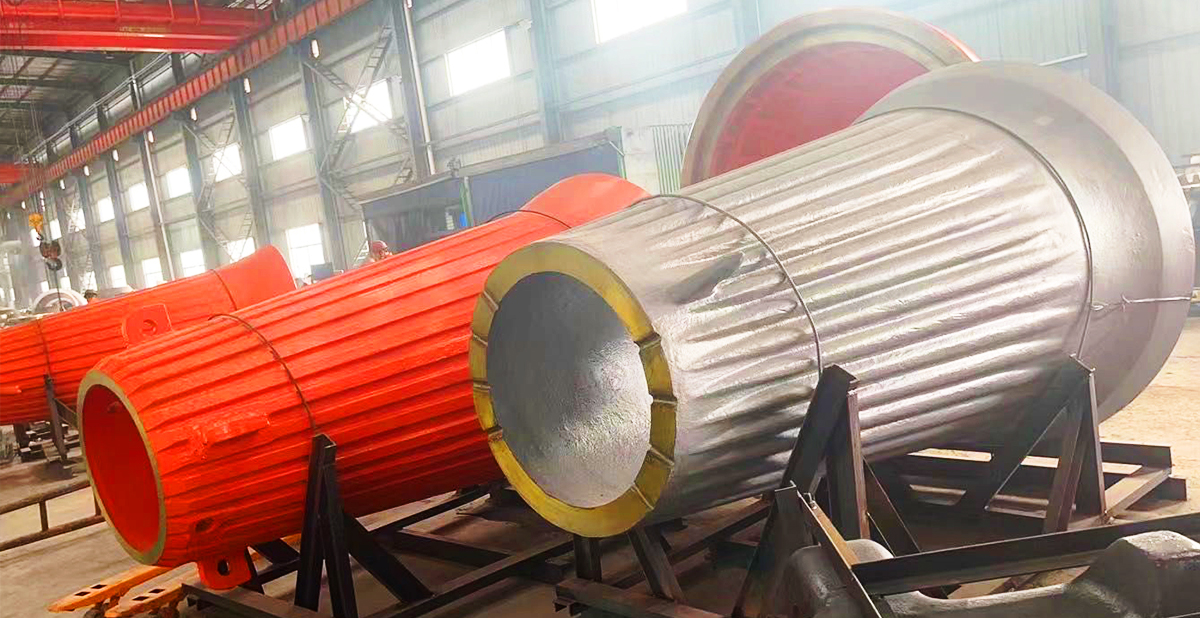
The eccentric bushing in a primary gyratory crusher operates under conditions that would challenge any bearing material. At full load, the eccentric assembly carrying the main shaft generates a journal surface velocity of 0.8–1.4 m/s at the bushing bore, under a projected contact pressure of 10–18 MPa, with oil supply maintained at 2.5–4.0 bar and a flow rate of 60–120 L/min depending on machine size. When any one of these parameters degrades — oil temperature rising above 70°C, flow dropping below minimum, or contamination raising the oil particle count above ISO 4406 class 19/17/14 — the hydrodynamic oil film that separates the steel journal from the bronze bushing collapses within seconds. Metal-to-metal contact follows, galling initiates, and a bushing failure that costs USD 8,000–15,000 in parts and USD 120,000–400,000 in downtime begins with an oil temperature alarm that someone silenced to keep the shift running.
The material specification for gyratory eccentric bushings has converged on two alloys: C93200 (SAE 660, with Sn 6–8%, Pb 6–8%, Zn 2–4%, Cu remainder) for standard operating conditions, and high-lead C93800 (Sn 7–8%, Pb 13–15%, Cu remainder) for applications where boundary lubrication events are more frequent. The lead phase in both alloys serves as a solid lubricant reservoir — under boundary conditions when the hydrodynamic film collapses, lead smears across the journal surface as a thin film, reducing the coefficient of friction from 0.12 to approximately 0.04 and providing critical protection for the 20–60 seconds it takes for oil flow to re-establish the full film.
Centrifugal Casting: Why Process Determines Performance for Gyratory Spare Parts
The self-lubricating benefit of lead-bronze bushing alloys is only realized when the lead phase is uniformly distributed and the surrounding bronze matrix is free of microporosity. Static sand casting — the older and lower-cost process — allows the molten alloy to solidify under gravity alone. Lead, being denser than the tin-copper matrix phase, tends to segregate toward the lower sections of the casting. Gas porosity, trapped during solidification, distributes randomly throughout the cross-section. In a finished gyratory crusher spare part bushing produced by static casting, the outer wall — which is the primary load-bearing and heat-dissipating zone — can contain 1.5–3.0% volumetric porosity and exhibit non-uniform lead distribution that varies by up to 40% between the upper and lower arcs of the ring.
Centrifugal casting eliminates both problems through applied rotational force. Mold spin speeds of 600–900 RPM for the bushing diameters used in primary gyratories (typically 800–1,400mm outer diameter for 54-75 to 60-110 class machines) generate centrifugal accelerations of 50–75G at the mold wall. The denser metallic phases are forced outward uniformly, establishing consistent lead distribution around the full 360° of the bushing circumference. Gas porosity, driven toward the inner bore by buoyancy under high-G conditions, concentrates in the first 8–12mm of wall thickness and is removed entirely during finish boring to the design clearance specification.
The result is that gyratory crusher spare parts bushings produced by centrifugal casting achieve outer wall porosity below 0.3% — compared to 1.5–3.0% for static casting — with hardness at the load-bearing bore surface of 65–72 HBW versus 55–62 HBW for equivalent alloy static castings. Under the sustained boundary lubrication events inevitable in primary gyratory service, this structural integrity difference translates directly to whether the bushing survives the event or initiates galling that destroys the journal.
Part Three: Structural Precision — Where Millimeter Accuracy Meets Thousand-Tonne Forces
Spider Liner Wear Design and CNC Conformance
The spider assembly of a primary gyratory carries the upper main shaft bearing and routes feed material from the crushing chamber into the crusher cavity. Spider arm liners — typically cast from Mn14Cr1 or chromium-molybdenum white iron with hardness of 550–620 HBW — protect the structural spider arms from direct contact with feed material. However, the spider liner interface at the arm contact faces must achieve a bearing area of at least 85% across the mating surfaces to prevent rocking under impact loads that can exceed 200 kN per arm at peak feed conditions. Poorly machined contact faces — those with flatness deviations above 0.5mm over a 500mm bearing length — concentrate load at high spots, accelerating wear at the contact boundary and generating fretting damage on the structural spider arms themselves.
CNC machining of mating surfaces on gyratory crusher spare parts — particularly the main shaft sleeve, eccentric outer surface, and top shell sealing face — is not a premium option. It is the minimum acceptable process standard for components where the design running clearances are specified to H7/h6 fit tolerances. For the eccentric assembly of a 60-89 Fuller gyratory, this translates to a bore diameter tolerance of +0.090mm / 0mm on a nominal 1,100mm bore. Achieving this with conventional boring bar setups on castings with residual stress is marginal; achieving it consistently across a production run requires CNC vertical turning with in-process gauging and thermal compensation.
Field Case Study: Extending Liner Campaign from 90 Days to 122 Days on Hard Iron Ore
A large open-pit iron ore operation in the Pilbara region had been running their primary gyratory — a Metso Superior 60-110E — on a 90-day liner campaign that their benchmark data suggested should be achievable at 110–120 days. Ore hardness was averaging 52 MPa UCS with a Bond Work Index of 14.8 kWh/t — firmly in the territory where Mn18Cr2 grade is appropriate, and the operation was already specifying it. The issue was chromium content: their previous supplier’s certification showed Cr at 0.8–1.1%, below the 1.5% minimum that delivers measurable grain refinement benefit. They were paying for Mn18Cr2 and receiving Mn18Cr1 in practice.
After switching to a verified Mn18Cr2 supply with certified Cr at 2.1–2.3% and third-party OES analysis per batch, the first full campaign reached 122 days. The value calculation was straightforward: one saved change-out event per 18-month period eliminated one 36-hour planned shutdown, recovering approximately 130,000 tonnes of production at USD 95 per tonne — a campaign improvement worth USD 12.35 million in recovered output, against an incremental liner cost increase of approximately USD 48,000. No capital investment required.
Preventive Maintenance: Using Oil Analysis to Protect Gyratory Crusher Spare Parts
Oil sample analysis from the gyratory lube circuit provides the earliest available warning for bushing degradation — earlier than temperature trends, earlier than vibration changes, and far earlier than visual inspection at the next planned shutdown. For gyratory eccentric and thrust bushings, the key watch parameters are:
- Copper (Cu) concentration: a reading above 80 ppm indicates active bronze surface wear. Trending from below 40 ppm to above 80 ppm over two consecutive 500-hour sample intervals signals an accelerating wear condition requiring inspection at the next available opportunity.
- Iron (Fe) concentration: levels above 120 ppm suggest wear on the steel journal, eccentric body, or mainframe bore surfaces — typically caused by inadequate clearance, contamination, or oil film breakdown.
- Oil cleanliness (ISO 4406): target 18/16/13 or better for long bushing life. Particle counts consistently above 20/18/15 indicate either a filtration system issue or contamination ingress that must be resolved before the next planned campaign.
- Viscosity at 40°C: deviation of more than ±10% from the ISO VG 150 specification indicates oil degradation or contamination and requires an oil change regardless of the scheduled interval.
The Total Argument: Why Quality Gyratory Crusher Spare Parts Are a Production Investment
Procurement teams working from a unit-price framework will consistently undervalue the operational impact of gyratory crusher spare parts quality. The concave liner that costs 18% more per tonne because it specifies Mn18Cr2 with verified Cr at 2.1% instead of 0.9% does not cost 18% more per campaign tonne processed — it costs significantly less, because it runs 30–40% longer before change-out and does not generate the secondary damage costs associated with early liner failure: backing compound contamination of the lube circuit, frame scoring from loose liner movement, and the unplanned downtime events that occur when liners fail between scheduled windows.
The same logic applies to centrifugally cast eccentric bushings. The price premium of 25–35% over static-cast equivalents is recovered within the first operating cycle when a single boundary lubrication event is survived rather than causing journal galling that requires shaft removal and regrinding at costs of USD 30,000–80,000.
If you are managing accelerated wear on your primary gyratory crusher — whether from ore hardness changes, campaign length shortfalls, or recurring bushing failures — the solution begins with specification verification, not just supplier substitution. Our technical team can review your existing material certifications, operating parameters, and wear data to identify whether a targeted alloy adjustment or process change would deliver measurable campaign improvement for your specific ore and machine configuration.


 English
 French
 German
 Spanish
 Russian
 Arabic
 Portuguese
 Turkish