
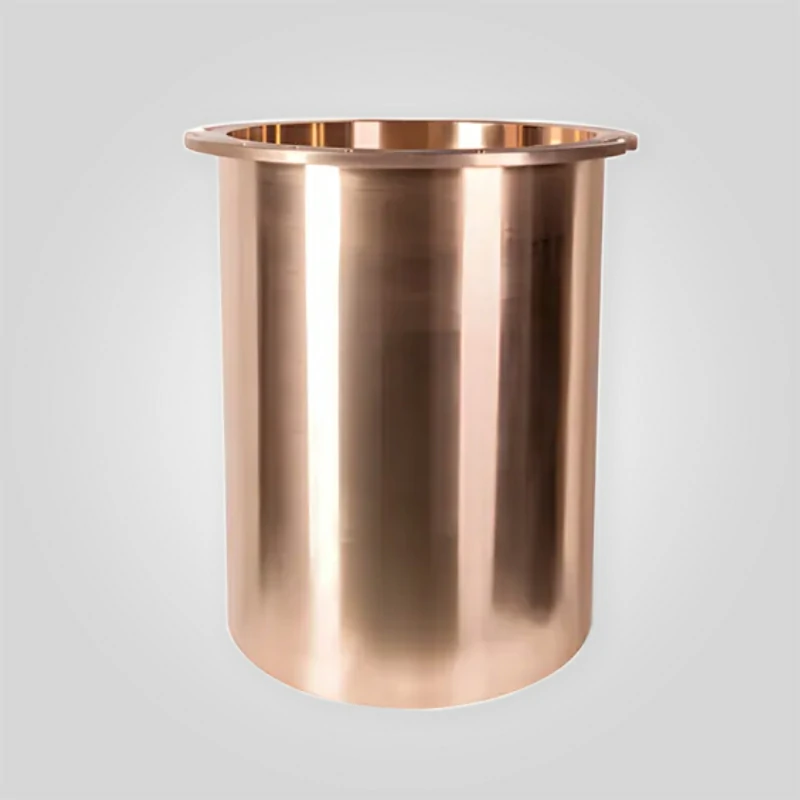
Cone Crusher Countershaft Bushing | C93700 Bronze Spares
Material Grade : High-Lead Bronze (SAE 660/CC491K)
Hardness :70-85 HB
Compressive Strength :≥ 120 MPa
Density : 8.8-9.0 g/cm³
Maximum Operating Temperature : 260°C –
Compatibility : All major crusher brands
库存 50 件
PRODUCT
Description
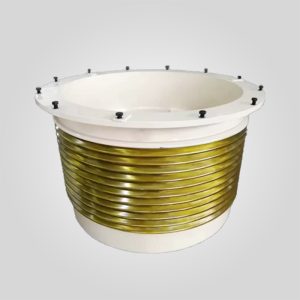
Premium Cone Crusher Countershaft Bushing (Pinion Bushing)
The Countershaft Bushing (also known as the Pinion Shaft Bushing) is the primary hydrodynamic bearing supporting the drive train of a cone crusher.
Positioned within the countershaft box, it supports the high-speed rotation (typically 800–1200 RPM) of the pinion shaft.
Unlike static wear parts, this component demands zero-defect metallurgy to maintain the critical oil wedge that prevents metal-to-metal contact.
As a specialized cone crusher parts supplier, we manufacture these bushings using Centrifugal Casting technology.
This process creates a denser, stronger bronze structure compared to standard sand-cast parts, ensuring our crusher bronze parts deliver extended service life even under the heavy vibration and shock loads of hard rock crushing.
Core Engineering Advantages
We do not compromise on material science. Our bushings are engineered to act as a “fail-safe” for your drive train.
- Superior Metallurgy: Manufactured from C93700 High-Lead Tin Bronze (SAE 64).
This alloy contains 8-10% Lead and 9-11% Tin, providing superior “anti-seize” properties compared to standard SAE 660.
It allows the bushing to conform to minor shaft misalignments without wiping the bearing surface. - Centrifugal Integrity: Spun at high G-forces during casting, our bushings are free from the porosity and blowholes common in sand casting.
This ensures uniform strength and prevents premature fatigue cracking. - Precision Oil Grooves: CNC-machined oil grooves are calculated to distribute lubricant evenly across the bearing length, ensuring rapid heat dissipation.
Technical Specifications
The following table outlines the material standards for our universal aftermarket bronze bushings, compatible with major brands like Symons, Metso, and Sandvik.
| Technical Parameter | Specification Details |
|---|---|
| Material Grade | UNS C93700 / SAE 64 (High-Lead Tin Bronze) |
| Manufacturing Method | Centrifugal Casting (Permanent Mold) |
| Hardness | 60 – 80 HB (Brinell) – Optimized for Embeddability |
| Tensile Strength | ≥ 240 MPa (35,000 psi) |
| Yield Strength | ≥ 125 MPa (18,000 psi) |
| Density | 8.9 – 9.0 g/cm³ |
| Machining Tolerance | ISO 2768-mK / Bore Tolerance H7 |
Performance & Maintenance Diagnosis
Monitoring the condition of your countershaft bushing is key to preventing pinion gear failure.
- Vibration Analysis: An increase in drive-end vibration often indicates excessive clearance in the countershaft bushing.
If clearance exceeds OEM limits (typically >0.4mm), the pinion teeth will not mesh correctly with the ring gear, leading to gear tooth breakage. - Temperature Monitoring: A sudden spike in oil return temperature suggests the oil film is breaking down.
This “boundary lubrication” condition will rapidly scour the bronze. - Oil Analysis: Presence of “glittery” bronze/copper particles in your oil filter is the first warning sign of bushing distress.
Expert Installation Guidance
Installation is Critical:
Most bronze bushing failures are due to improper installation.
The bushing is typically an interference fit (shrink fit) in the countershaft box.
Use Dry Ice or Liquid Nitrogen to shrink the bushing for installation.
Never hammer the bushing in directly, as this deforms the soft bronze and ruins the bore geometry.
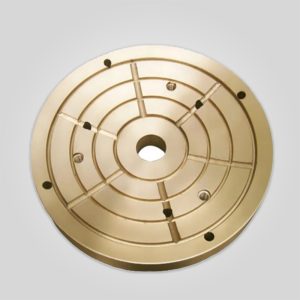
Always align the oil supply hole in the bushing perfectly with the housing channel to prevent oil starvation.
Protect your crusher’s drive train.
Contact our engineering team today for a quote on high-performance C93700 Countershaft Bushings.
“Authoritative Engineering Data: All critical metallurgical specifications and dimensional tolerances (e.g., ±0.05mm) are strictly governed by the master English documentation. While localized versions are provided for operational reference, the English original remains the sole binding authority for quality inspection and technical compliance.”
 English
 French
 German
 Spanish
 Russian
 Arabic
 Portuguese
 Turkish