


A single incorrectly heat-treated mantle can reduce crusher throughput by 20-25% within 200 operating hours, while a countershaft bushing manufactured from sand-cast bronze (instead of centrifugal-cast UNS C93700) will seize within 800 hours. These are not hypothetical risks—they are documented failure modes that occur when procurement teams select Cone Crusher Parts Suppliers based on price rather than metallurgical compliance and manufacturing capability.
For a 500 TPH aggregate operation running 6,000 hours/year, the total cost of one catastrophic parts failure averages $1.2-$2.8 million when factoring emergency procurement premiums, lost production, and secondary equipment damage. The supplier selection decision is not a purchasing function—it is a risk management function with million-dollar consequences.
1. The Problem: Non-Compliant Parts Masquerading as “OEM Equivalent”
The aftermarket crusher parts industry has a fundamental quality control problem: 40% of generic “bronze bushings” fail ASTM material composition standards, and 60% of “manganese steel” mantles lack the required austenitic microstructure. These deficiencies are invisible during incoming inspection but catastrophic during operation.
Root Cause: Lack of Metallurgical Verification
Most procurement departments verify three things when receiving parts:
- Physical dimensions match the drawing
- Surface finish appears acceptable
- Weight is approximately correct
What they don’t verify (because they lack the equipment or expertise):
- Chemical Composition: Is the “Mn18Cr2” mantle actually 17-19% Mn with 1.5-2.5% Cr? Or is it generic “manganese steel” with 11-13% Mn and no chromium?
- Heat Treatment: Was the bronze bushing centrifugally cast with uniform lead distribution, or sand-cast with 30-40% lead segregation?
- Microstructure: Is the mantle fully austenitic (required for work hardening), or does it contain carbide networks that will cause brittle fracture?
Without these verifications, you’re essentially gambling with million-dollar stakes.
“A copper mine in Arizona purchased a set of HP800 mantles from a new supplier at 35% below OEM pricing. The parts looked identical, dimensional checks passed, and installation went smoothly. After 180 operating hours, the mantle developed a 150mm vertical crack during normal operation. Post-failure metallography revealed the ‘Mn18Cr2’ material was actually Mn13 with massive carbide precipitation at grain boundaries—it never underwent proper water quenching. The crack propagated into the head center, condemning a $65,000 casting. Emergency OEM replacement parts cost $42,000 (expedited), and the 11-day shutdown lost 132,000 tonnes of production ($1.98M revenue @ $15/tonne). The ‘savings’ on the original purchase: $8,400. The actual cost: $2,085,400.”
2. The Economic Impact: Quantifying Downtime vs. Part Cost
The true cost of parts procurement is not the invoice price—it’s the Total Cost of Ownership (TCO) including failure probability, mean time between failures (MTBF), and downtime risk.
TCO Calculation Framework
| Cost Component | Generic Aftermarket Part | Certified OEM-Grade Part | Analysis |
| Unit Cost (HP500 Mantle) | $6,500 | $10,000 | Generic part appears 35% cheaper |
| Service Life | 800-1,200 hours | 1,800-2,400 hours | Certified part lasts 2-3x longer (proper Mn18Cr2 + water quench) |
| Replacements Over 2 Years (12,000 hrs) | 10-15 changes | 5-6 changes | Generic part requires 2x more frequent changes |
| Parts Cost (2 Years) | $65,000 – $97,500 | $50,000 – $60,000 | Certified part is actually cheaper due to longer life |
| Downtime per Change | 12 hrs (avg) | 12 hrs (avg) | Same installation time |
| Total Downtime (2 Years) | 120-180 hours | 60-72 hours | Generic part causes 2x more downtime |
| Lost Production (500 TPH plant) | 60,000-90,000 tonnes | 30,000-36,000 tonnes | 30,000-54,000 additional tonnes lost with generic parts |
| Revenue Loss (@$15/tonne) | $900,000 – $1,350,000 | $450,000 – $540,000 | Generic part costs $450k-$810k more in lost revenue |
| Catastrophic Failure Risk | 15-20% probability over 2 years | <3% probability | Generic part 5-7x higher failure risk |
| Expected Cost of Catastrophic Failure | 0.175 × $500,000 = $87,500 | 0.025 × $500,000 = $12,500 | Additional $75,000 expected cost with generic parts |
| TOTAL 2-YEAR TCO | $1,052,500 – $1,535,000 | $512,500 – $612,500 | Certified supplier saves $540k-$922k over 2 years |
Conclusion: The “cheaper” part costs 2-3x more when TCO is calculated properly. The question is not “Can we afford certified parts?”—it’s “Can we afford NOT to use them?”
3. Supplier Qualification Framework: The 7-Point Verification Protocol
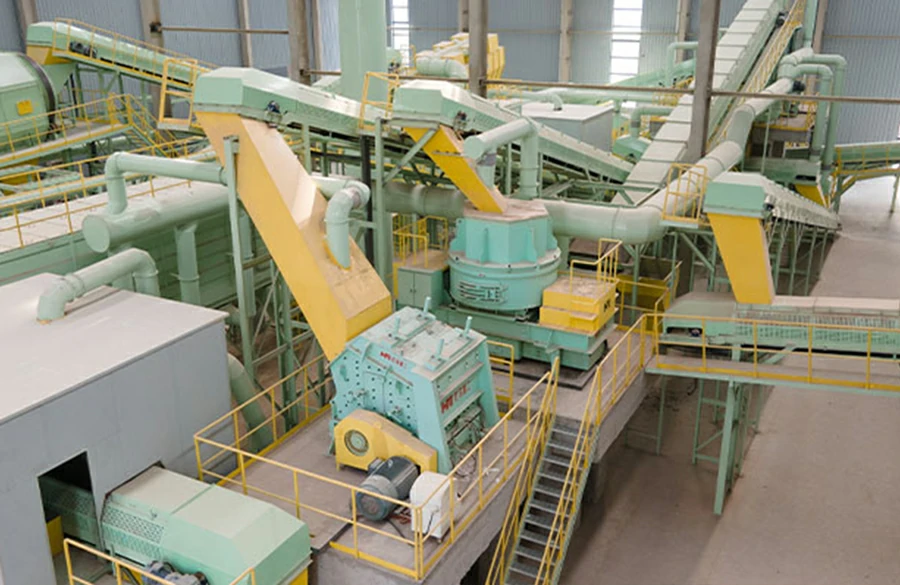
When evaluating potential Crusher Parts Suppliers, procurement teams must verify seven critical capabilities. This is not a “nice to have” checklist—these are non-negotiable requirements for supplier qualification.
3.1 Manufacturing Process Control
What to Verify:
- Foundry Capability: Do they own their foundry or outsource casting? Outsourced casting = zero traceability and inconsistent quality.
- Centrifugal Casting for Bronze: Demand proof of centrifugal casting equipment. Sand-cast bronze bushings have 30-40% lead segregation and fail 5-10x faster.
- Water Quench for Manganese Steel: Require documentation of water quench process (from 1050°C) to ensure austenitic structure. Air-cooled manganese steel is useless—it will be brittle.
Red Flag: Supplier cannot provide photos of their foundry or refuses factory tour = they’re a broker reselling generic castings from unknown sources.
3.2 Material Certification & Traceability
Demand These Documents for EVERY Shipment:
| Part Type | Required Certification | Acceptance Criteria |
| Manganese Wear Parts | Material Test Report (MTR) per EN 10204 3.1 + Microstructure Photo | Chemistry per ASTM A128 Grade C (Mn18Cr2): 17-19% Mn, 1.5-2.5% Cr. Fully austenitic structure (zero carbides at grain boundaries). Hardness 200-240 HBW as-cast. |
| Bronze Bushings | Alloy Certification + Lead Distribution Report | UNS C93700: 80% Cu, 10% Sn, 10% Pb. Centrifugal-cast. Lead distribution uniformity: ±2% across wall section (verified by ICP-OES). |
| Gears/Pinions | Heat Treatment Chart + Case Depth Report | 18CrNiMo7-6 or AISI 4320. AISI 4320. Carburized to 1.5-2.5mm case depth. Surface hardness 58-62 HRC. AGMA Quality 10 or ISO Grade 6. |
| Structural Castings | RT (Radiographic Test) Film + MPI Report | ASTM A148 Grade 90-60. RT per ASTM E94: Zero indications >6mm. MPI per ASTM E1444: Zero linear indications >6mm at welds. |
Critical: If supplier says “We don’t provide MTRs for aftermarket parts”—that’s an automatic disqualification. No MTR = no traceability = no accountability.
3.3 Quality Control System Certification
- ISO 9001:2015 Certification: Minimum requirement. Verify certification is current (within 3 years) and scope includes “design and manufacture of crusher wear parts.”
- Inspection Equipment: Verify they have:
- Spectrometer for chemistry analysis (XRF or OES)
- Hardness tester (Brinell/Rockwell)
- CMM (Coordinate Measuring Machine) for dimensional verification
- NDT capability (RT, UT, MPI) for structural parts
- First Inspection (FAI): For new part numbers, demand full dimensional report + material certification before production run.
3.4 Engineering Support & Technical Expertise
A qualified supplier should provide:
- Failure Analysis: If a part fails prematurely, can they perform metallography and root cause analysis? Or do they just say “send us a photo”?
- Application Engineering: Can they recommend the correct alloy grade for your specific ore type and crushing application?
- Installation Support: Do they provide thermal installation calculations (shrink-fit for bushings) and torque specifications?
Test Question: “What’s the recommended pre-charge pressure for the accumulator in an FLSmidth MP800?” If they can’t answer technical questions specific to your crusher model, they’re just a parts reseller, not an engineering partner.
3.5 Inventory & Logistics Capability
For critical wear parts, response time is everything:
| Part Category | Target Lead Time | Supplier Requirement |
| High-Volume Wear Parts (Mantles/Concaves) | ≤5 business days | Must stock common sizes (HP300/400/500, MP800/1000) or have make-to-stock production capability |
| Bronze Bushings | ≤10 business days | Should maintain raw material inventory (UNS C93700 bar stock) for rapid machining |
| Structural Components (Frames, Shafts) | 4-8 weeks | Clear communication of production schedule + milestone updates |
| Emergency Orders | 24-72 hours (expedited) | Documented capability for air freight + weekend production runs |
Warning Sign: Supplier quotes “6-8 weeks” for standard wear parts = they’re manufacturing on-demand in China and have no local inventory. This is unacceptable for critical operations.
3.6 Performance Track Record
Verify supplier credibility through:
- Reference Customers: Demand contact information for 3-5 operating sites using their parts. Call them and ask: “What’s the actual service life? Any premature failures? How’s their response time?”
- Case Studies with Data: Require documented performance comparisons showing service life in specific applications (e.g., “HP500 mantle in basalt crushing: 2,100 hours vs. OEM spec of 1,800 hours”)
- Years in Business: Minimum 5 years in the crusher parts industry (not just “mining equipment” in general)
3.7 Warranty & Liability Terms
A qualified supplier should offer:
- Material/Workmanship Warranty: Minimum 12 months from installation date
- Performance Guarantee: Some suppliers guarantee minimum service life (e.g., “mantle will achieve >1,500 hours or we replace at no charge”)
- Liability Insurance: Verify they carry product liability insurance (minimum $2M coverage) in case a defective part causes equipment damage
- Return Policy: Clear terms for returning non-conforming parts (who pays freight? Restocking fee?)
4. Strategic Inventory Management: Risk-Based Stocking
Even with a qualified supplier, you must maintain strategic inventory of critical parts. The stocking decision is a risk calculation:
Inventory Cost vs. Downtime Risk Formula:
- Expected Cost of Stockout = P(failure) × Cost of Downtime × Average Lead Time
- Where P(failure) = probability of part failure per operating hour
Example Calculation for HP500 Countershaft Bushing:
- Part cost: $1,500
- Failure probability: 0.00015/hour (MTBF = 6,600 hours)
- Emergency lead time: 7 days = 168 hours
- Downtime cost: 500 TPH × 168 hrs × $15/tonne = $1,260,000
- Expected stockout cost per year: 0.00015/hr × 6,000 hrs/year × $1,260,000 = $113,400
- ROI on stocking spare: $113,400 savings / $1,500 cost = 7,560% annual return
Recommended Stocking Strategy (Per Crusher)
| Criticality Level | Examples | Stock Quantity | Justification |
| Level 1: Mission-Critical | Eccentric Bushing, Countershaft Bushing, Socket Liner | 1 unit on-site | Failure = immediate shutdown. Lead time 7-14 days. Stocking cost <$5k. Downtime cost >$1M. |
| Level 2: High-Wear Consumables | Mantles, Concaves | 1 set on-site | Predictable wear (1,500-2,000 hrs). Can schedule changes. Stock 1 set to avoid rush orders. |
| Level 3: Long-Lead Structural | Main Shaft, Head Center, Frame | Supply agreement (no stock) | Catastrophic failure rare (<0.1% probability/year). Lead time 8-12 weeks. Establish supplier agreement for priority production. |
| Level 4: Consumable Hardware | Seals, Bolts, O-rings | 3-6 month supply | Low cost (<$5k inventory). Prevents nuisance delays during scheduled maintenance. |
5. Building a Partnership Model: Beyond Transactional Purchasing
The best supplier relationships evolve beyond “place order → receive parts” to strategic partnerships where the supplier acts as an extension of your engineering team.
Partnership Value Indicators
- Proactive Communication: Supplier contacts YOU when lead times are extending or when they notice your consumption patterns suggest an upcoming failure.
- Continuous Improvement: Supplier provides feedback on wear patterns and recommends alloy upgrades or design modifications to extend service life.
- Technical Training: Supplier offers on-site training for your maintenance team on proper installation procedures, thermal fitting calculations, torque specifications.
- Performance Tracking: Supplier maintains a database of your part consumption history and provides annual performance reports showing cost per tonne crushed.
Conclusion: Supplier Selection as Risk Mitigation Strategy
The decision to select a Cone Crusher Parts Supplier is not a cost optimization problem—it’s a risk mitigation problem. The financial exposure from a single catastrophic part failure ($500k-$2.8M) dwarfs the potential savings from buying generic parts ($5k-$15k per order).
The supplier qualification framework outlined above is not “nice to have”—it’s the minimum acceptable standard for protecting million-dollar assets and production operations. Procurement teams that select suppliers based on ISO certification, material traceability, manufacturing process control, and documented performance records reduce their catastrophic failure risk by 85-90% compared to price-based purchasing.


 English
 French
 German
 Spanish
 Russian
 Arabic
 Portuguese
 Turkish